
May 14, 2026
What Will Change Under the Revised Weather Service Act? Part 2 New Life-Saving Rules Take Effect May 29, 2026



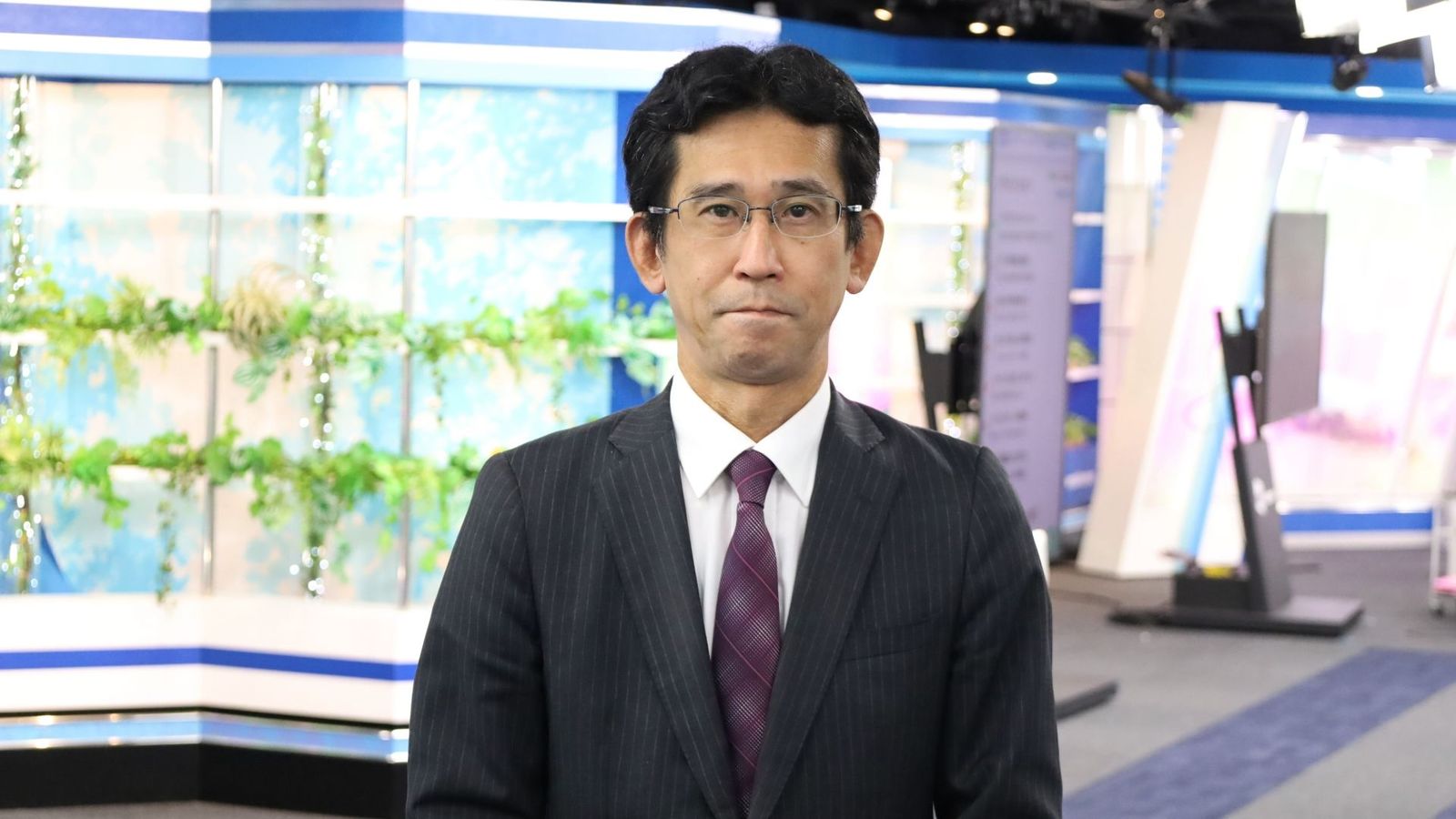
The Japan Meteorological Agency (JMA) will launch a new "Disaster Prevention Weather Information" system on May 29, overhauling the way advisories and warnings for heavy rain and other hazardous weather are organized and communicated.
If you've ever looked at a weather alert and thought, "Which one of these actually matters to me?" you're not alone. Japan's warning system has grown increasingly complex over the years, and the changes introduced through the partial revision of the Weather Service Act and the Flood Control Act are designed to fix exactly that: making it clearer, faster, and ultimately safer for everyone when disaster strikes.
We sat down with Takehisa Yamaguchi, a presenter on Weathernews LiVE, to break down what's changing and what you need to know.
Why Now? Background Behind this Revision
Back in the Showa era, disaster prevention weather information was relatively straightforward. "Heavy Rain Warnings" and "Heavy Rain Advisories" covered most situations. But since the Heisei era, weather events have grown more extreme and unprecedented disasters more frequent. In response, new high-risk categories were layered on: "Landslide Alert Information" in 2005, "Emergency Heavy Rain Warnings" in 2013, and more.
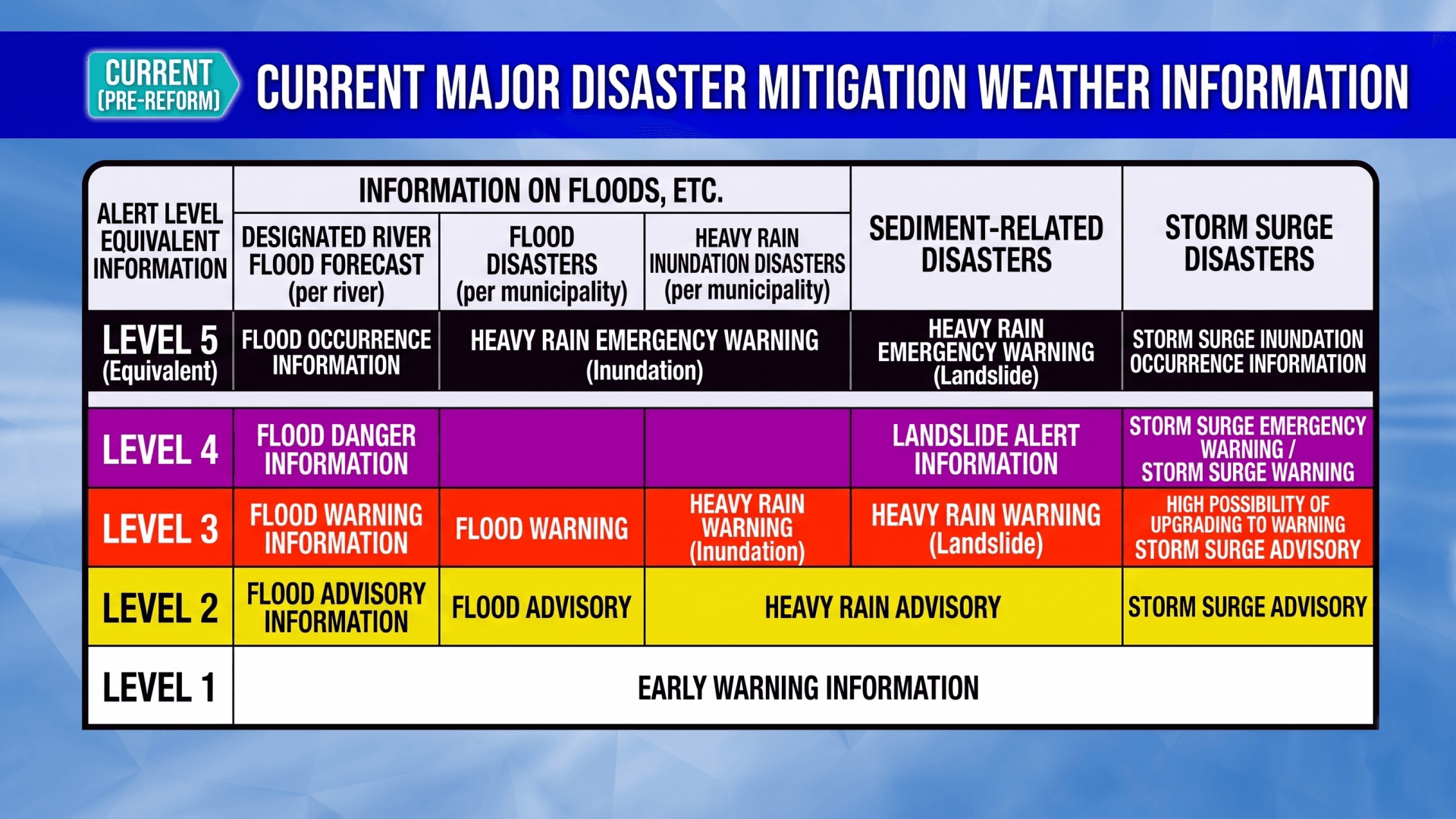
As the system became more complex, several issues emerged:
•Names didn't match alert levels. "Storm Surge Advisories" and "Storm Surge Warnings" (two very different-sounding terms) were both categorized under Alert Level 4.
•Information overlapped. Landslide risk could trigger either a "Heavy Rain Warning (Landslide Disaster)" or separate "Landslide Alert Information."
•Some hazards fell through the cracks. Major rivers had dedicated "Flood Risk Information," but there was little evacuation guidance for inland flooding caused by overwhelmed urban drainage systems and smaller rivers.
Under such conditions, both local governments issuing evacuation orders and residents receiving them struggled to make quick, confident decisions when it mattered most.
What's Changing? Three Major Updates
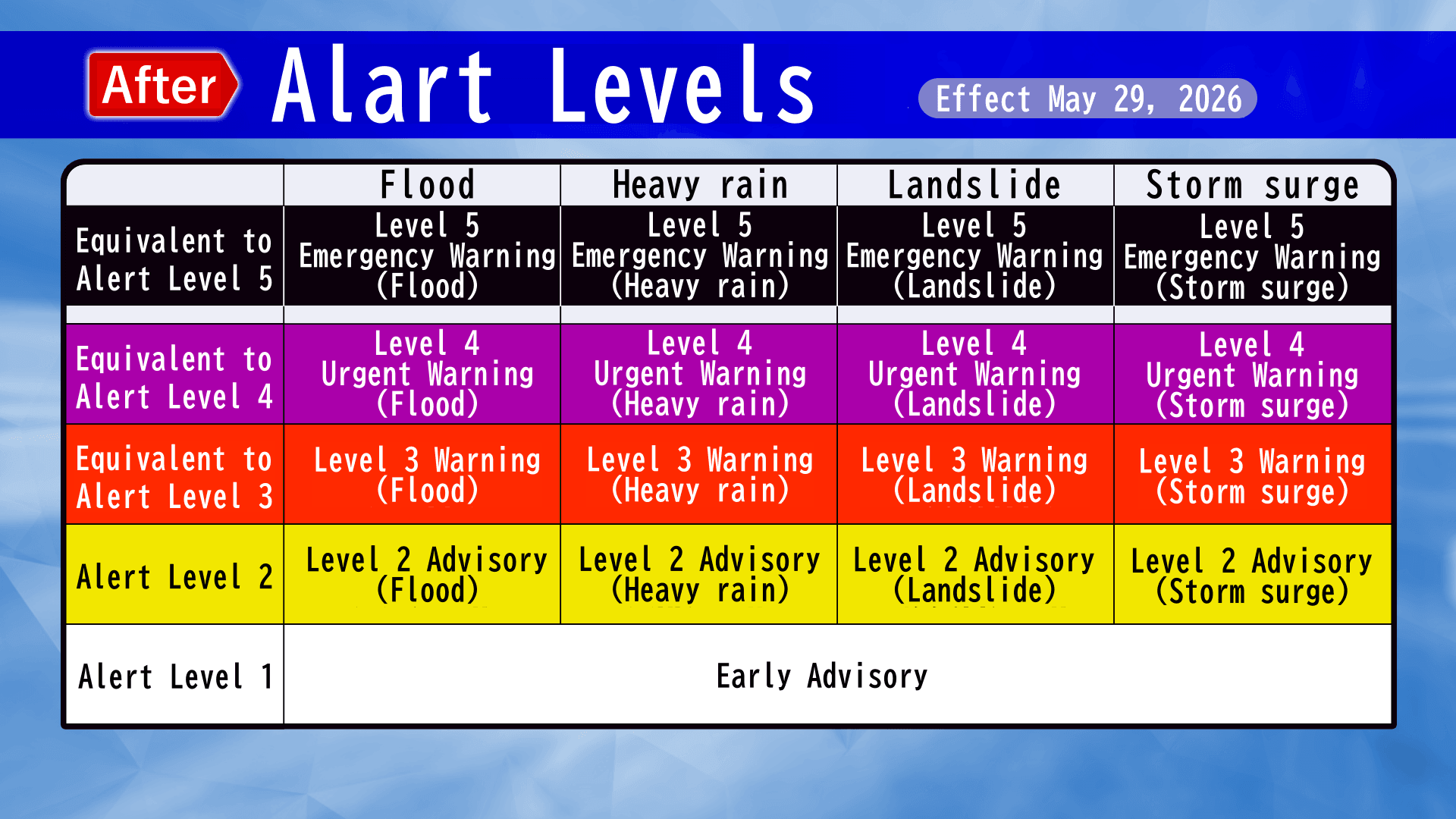
The revised system cuts through the complexity, making evacuation decisions more intuitive.
1. Alert Levels in the Name, So You Know the Risk Instantly
Previously, warning names alone didn't tell you much about severity. Under the new system, every advisory and warning will carry a numerical alert level right in its name.
Examples: • “Storm Surge Advisory” → “ Level 2 Storm Surge Advisory” • “Heavy Rain Warning (Flooding)” → “ Level 3 Heavy Rain Warning”
One glance at the name, and you know exactly how serious things are.
2. A New Category: "Urgent Warning"
The old system had three tiers: Advisory, Warning, and Emergency Warning. Now, a fourth category, "Urgent Warning," fills the critical gap at Alert Level 4.
Examples: • “Landslide Alert Information” → “Level 4 Landslide Urgent Warning ” • “Storm Surge Emergency Warning / Storm Surge Warning” → “Level 4 Storm Surge **Urgent Warning ** ”
3. "Weather Disaster Information": When Danger Is Happening Right Now
Several types of real-time hazard information ("Record-breaking Short-duration Heavy Rain Information," "Linear Rainband Information," "Tornado Advisories") used to be issued under separate, sometimes confusing names. They're now unified under a single new category: "Weather Disaster Information."
Examples:
• “Record-breaking Short-duration Heavy Rain Information” → “ Weather Disaster Information (Record-breaking Short-duration Heavy Rain)”
• “Information on Significant Heavy Rain” → “ Weather Disaster Information (Linear Rainband Occurrence)”
• “Tornado Advisory” → “ Weather Disaster Information (Tornado Advisory / Tornado Sighting)”
These aren't forecasts. They mean extreme weather is happening right now. If you see "Weather Disaster Information," treat it as an immediate, real-world threat.
4. The Exception: Snow and Wind Stay As-Is
Not everything is changing. Warnings related to heavy snow and strong winds will continue operating under the current system.
Why? The five-level alert system is built around encouraging evacuation, getting people to shelters. But during blizzards or severe wind events, heading outside can be more dangerous than staying put in a sturdy building. For that reason, special warnings for strong winds, heavy snow, blizzards, and related advisories will remain unchanged.
Everyone Should Evacuate Before Alert Level 4
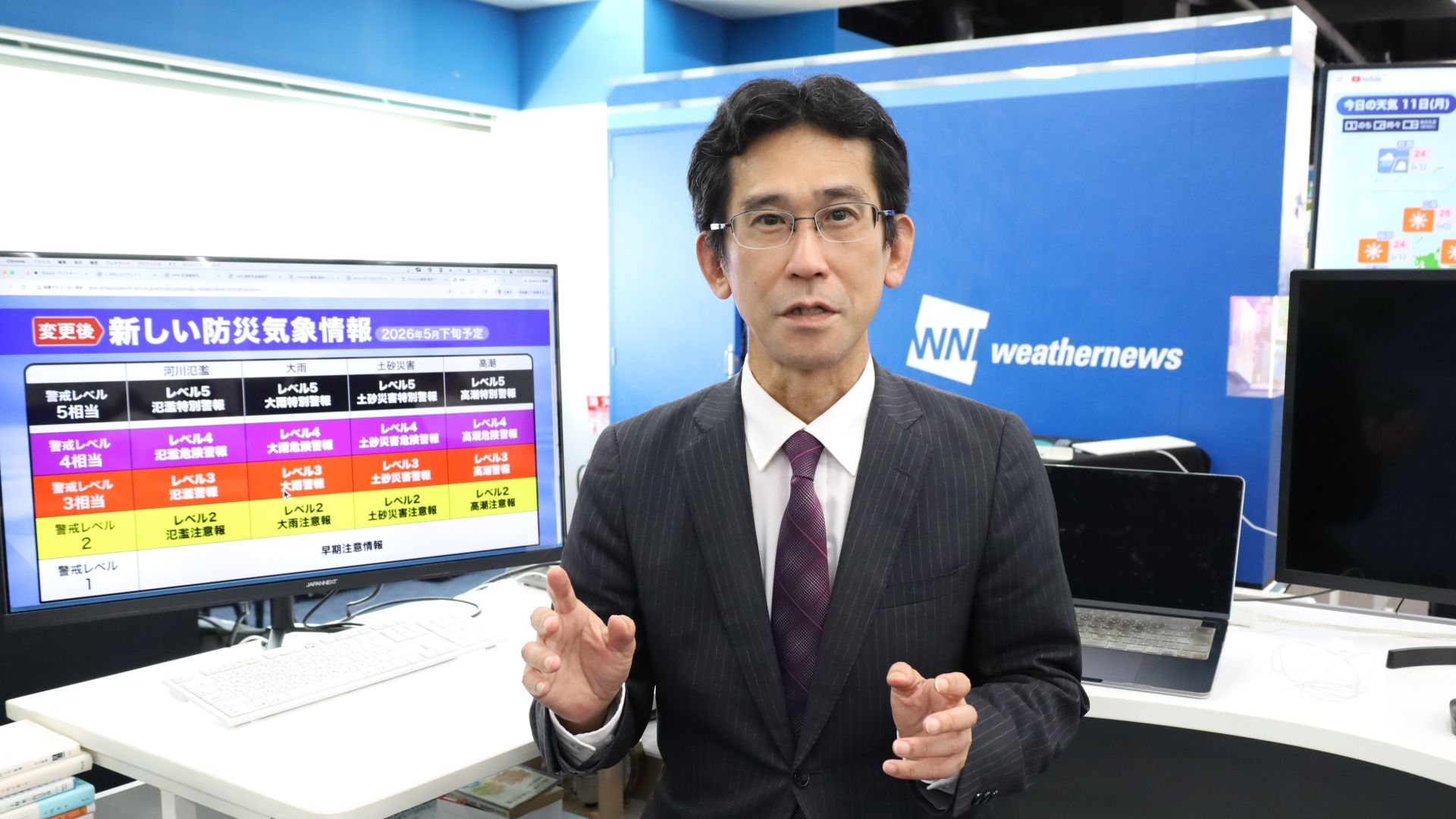
Names are changing. Categories are being reorganized. But the single most important principle stays exactly the same:
“Everyone should evacuate before Alert Level 4.”
- When Level 3 is issued: Elderly people and others who require more time to evacuate should begin taking action, while everyone else should start preparing to evacuate.
- When Level 4 (Urgent Warning) is issued: Evacuate immediately to a safe location.
- When Level 5 is issued: An extremely dangerous situation or an actual disaster is already occurring. Take whatever action is necessary to protect your life immediately.
Feeling overwhelmed by all the new terminology? Focus on the number. That's the whole point of this redesign.
Level 3 = Start preparing.
Level 4 = Get out.
With the May 29 launch just weeks away, Weathernews will continue working to make alert-level communication as clear and actionable as possible through our programs, our app, and every channel we have. When it matters most, we want you to know exactly what to do.
(Reference) Another Key Change: Stricter Rules for Unauthorized Weather Forecast Providers
The disaster information overhaul is the headline change, but the revised Weather Service Act also tightens regulations on who is allowed to distribute weather forecasts in Japan.
Following incidents where overseas operators distributed inaccurate warnings and unverified forecasts spread online, the revised law now requires foreign companies providing weather forecasting services in Japan to obtain proper authorization and comply with stricter procedures.
At the same time, AI has made weather information more accessible than ever, but it's also introduced new risks. AI systems may unknowingly reference data from unauthorized providers whose accuracy hasn't been verified, potentially leading users to trust unreliable forecasts or disaster information. Information literacy is becoming more important than ever.
For a deeper dive into these regulatory changes and what they mean for everyday life, see the related article below.
▶ Related Article: What Will Change Under the Revised Weather Service Act? Easy-to-Understand Explanation of Stronger Regulations on Weather Forecasting Services
Share
October 16, 2026
Chiba Torrential Rain Disaster: How Weathernews Protected Employees and Maintained Business Continuity
September 15, 2026
Behind the AI System Delivering Forecasters’ Messages to People Around the World in Just Three Lines
![[2026 Kumamoto Earthquake] How Weathernews LiVE Protects Lives Through User Reports and Expert Analysis](https://gvs.weathernews.jp/wni_blog_media/large_20260914_top_3958fce7fc.png)
September 14, 2026
[2026 Kumamoto Earthquake] How Weathernews LiVE Protects Lives Through User Reports and Expert Analysis