
April 24, 2026
Key Changes to the Meteorological Service Act: Strengthening Regulations on Weather Forecasting Services



The amended Meteorological Service Act will come into full effect at the end of May 2026. This amendment focuses on three major areas: strengthening information-sharing systems for floods and other disasters, establishing joint forecasts and warnings for storm surges, and tightening regulations on unlicensed operators.
In this blog, we'll examine this often-overlooked topic in detail and explore the specific business risks associated with using such data.
Why Is the Amendment Necessary? Addressing the Risk of Social Confusion from Unlicensed Forecasts
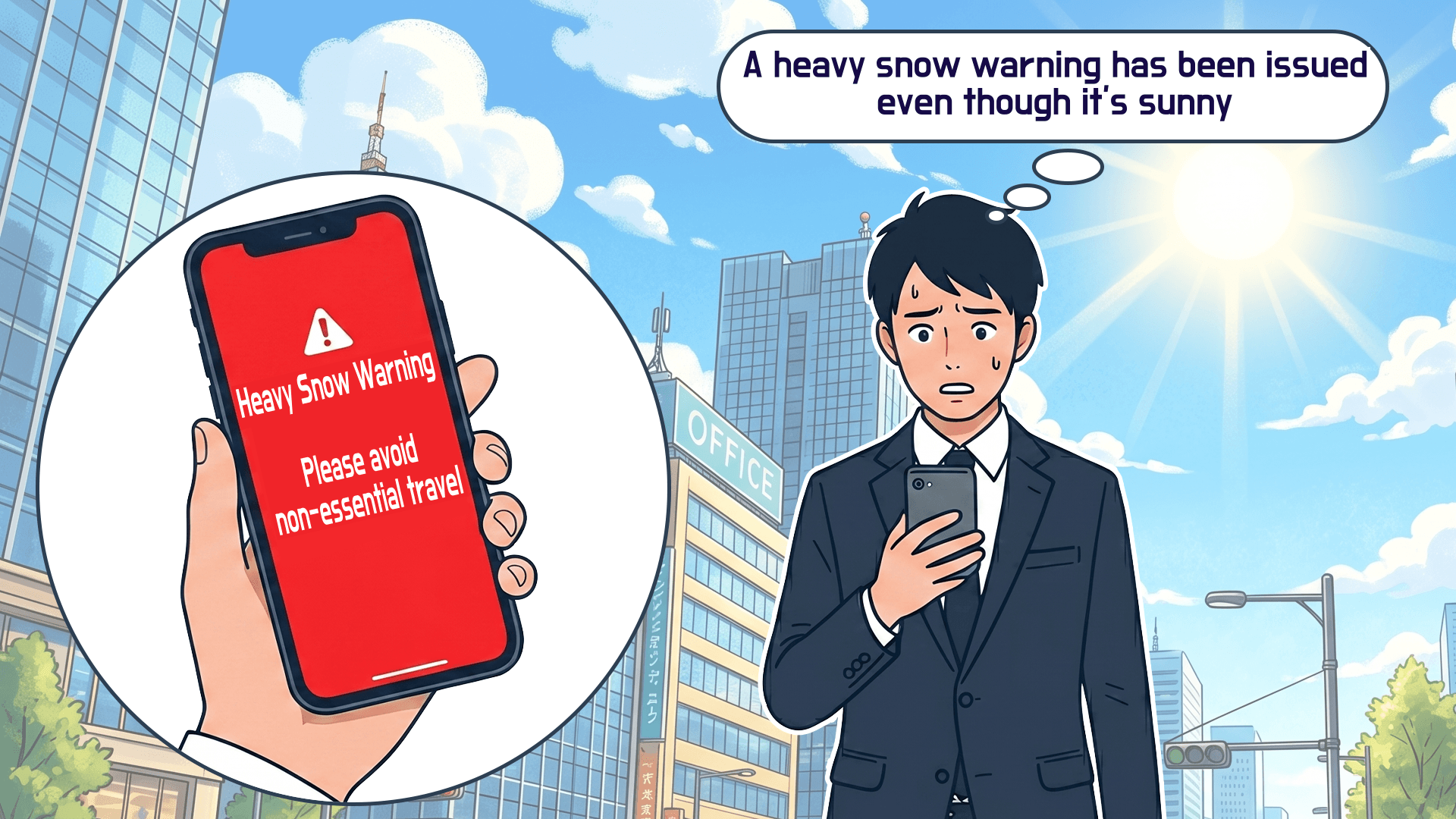
The internet has transformed access to weather information—anyone can now obtain and share meteorological data from anywhere in the world. While this has expanded options for users, it has also created new challenges. In recent years, Japan has experienced troubling incidents including the distribution of false emergency warnings and the viral spread of forecasts lacking scientific foundation. These events have highlighted serious concerns about the potential for social disruption when unreliable information circulates unchecked.
To address these risks and ensure the reliability of public weather information, the Japan Meteorological Agency (JMA) has advanced this legislative amendment.
Stricter Monitoring: Unlicensed Providers to Be Publicly Named
In Japan, providing weather forecasting services isn't simply a matter of having the technology—it requires a permit from the Director-General of the JMA under Article 17 of the Meteorological Service Act.
These strict requirements exist for good reason: inaccurate forecasts can trigger significant disruptions to daily life and economic activities. For this reason, weather forecasting is prohibited by default and only permitted for operators who demonstrate they meet rigorous standards for technical capabilities and equipment.
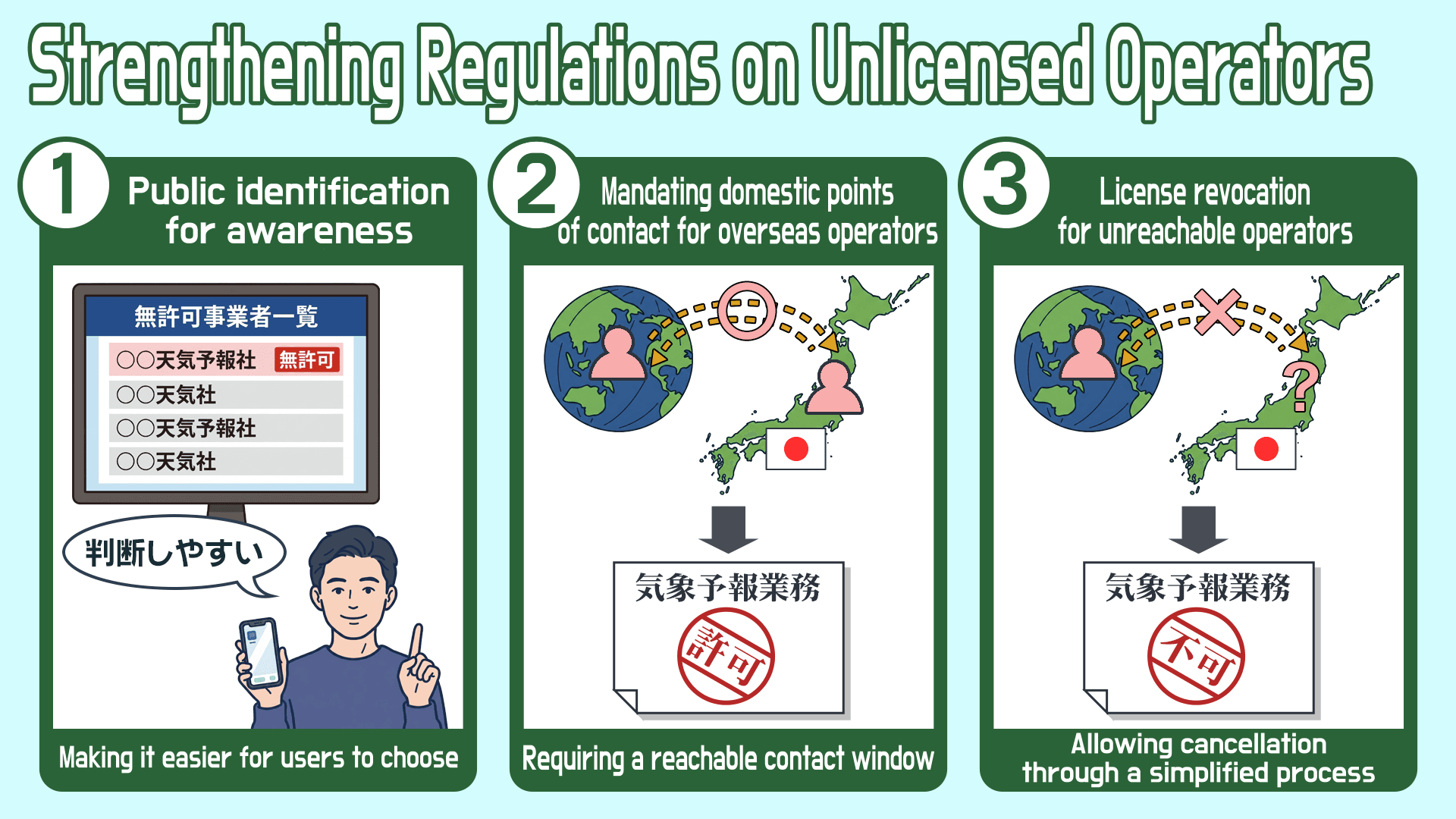
The amended law takes enforcement a step further by strengthening measures against unlicensed operators. Here are the three key provisions:
Public Identification for Awareness: The government now has the authority to publicly name operators providing forecasts without a permit. This transparency measure helps users more easily assess whether a provider is trustworthy and compliant.
Strengthened Regulations for Overseas Providers: Overseas operators must now establish a domestic point of contact—either a representative or agent—in Japan. This ensures the Japanese government can provide proper guidance and maintain effective communication with foreign entities under domestic law.
Immediate Revocation of Licenses for Unreachable Operators: Authorities can now revoke licenses through a simplified administrative process when operators become unreachable—for instance, when the designated contact person cannot be located or fails to respond.
Risks of Relying on Unlicensed Data Providers
Many businesses turn to overseas weather APIs for their ease of implementation and cost-effectiveness. However, most of these providers do not hold the required Japanese permit, and relying on them for business operations exposes your organization to several significant risks:
A. Compliance & Reputational Risk Using or distributing unlicensed forecast data commercially can make your company liable for regulatory violations. If the JMA flags your organization for non-compliance, the damage to your brand's credibility can be substantial and long-lasting.
B. Delayed Disaster Response* Unlicensed data providers typically do not synchronize with official JMA warnings and advisories. This creates a critical information gap that can prevent your business from implementing timely safety measures when they matter most. Compounding this concern, recent years have seen cases where these providers issued incorrect warning information, putting lives and operations at risk.
C. Reduced Forecast Accuracy Due to Geographic Mismatch Global weather models are rarely optimized for Japan's unique geography—particularly its complex, mountainous topography. This lack of localization creates significant accuracy gaps, where forecasts can differ substantially from actual weather conditions on the ground, undermining decision-making based on that data.
High-Resolution, High-Precision Data to Support Business Decision-Making
To mitigate the risks associated with unlicensed providers, partnering with a licensed provider is essential.
As of March 27, 2026, 87 corporations hold forecasting licenses in Japan. However, it's important to note that not all licensed providers can service the entire country. Licenses are location-specific, and covering all of Japan requires passing rigorous screening for technical expertise and operational infrastructure.
Weathernews holds a full license to provide forecasting services nationwide. Beyond licensing compliance, we take proactive measures to protect our clients: whenever the JMA updates its warning criteria, we conduct thorough pre-deployment testing using sample data to ensure seamless integration and uninterrupted operations for your systems.
Our ultra-high-resolution, high-precision weather data supports critical business decisions across diverse industries:
Demae-can1: Japan’s largest delivery service utilizes our weather data to predict delivery times accurately.
Tokyu Power Supply: An energy provider within the Tokyu Group uses our data for highly accurate power demand forecasting.
In today’s world, the evolution of internet technology and the widespread adoption of AI have created a society where information is more accessible than ever. However, this convenience brings a new risk: AI may reference data from unlicensed providers whose accuracy is unverified, leading users to unknowingly rely on incorrect weather forecasts or disaster prevention information. In this environment, enhancing user literacy—the ability to identify reliable sources—has become more critical than ever.
▶︎ Learn more about WxTech® Data here
▶︎ Is Your Service Fully Compliant with the Revised Meteorological Service Act? Click here for data migration support.
Footnotes
Share
October 16, 2026
Chiba Torrential Rain Disaster: How Weathernews Protected Employees and Maintained Business Continuity
September 15, 2026
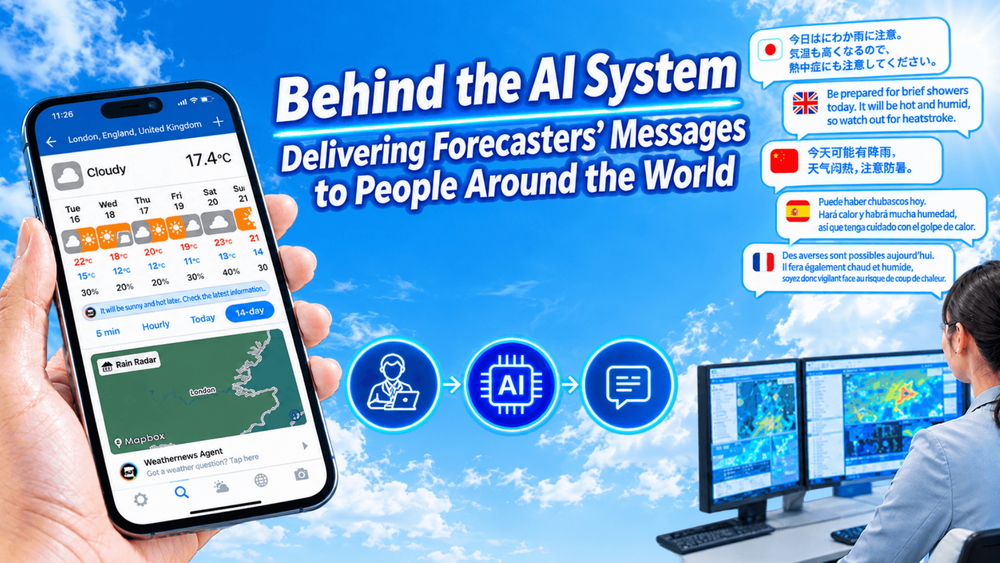
Behind the AI System Delivering Forecasters’ Messages to People Around the World in Just Three Lines
![[2026 Kumamoto Earthquake] How Weathernews LiVE Protects Lives Through User Reports and Expert Analysis](https://gvs.weathernews.jp/wni_blog_media/large_20260914_top_3958fce7fc.png)
September 14, 2026
[2026 Kumamoto Earthquake] How Weathernews LiVE Protects Lives Through User Reports and Expert Analysis