
May 20, 2026
Why Weathernews Casters Can Instantly Switch Into Earthquake Reporting Mode: Inside the Training Behind the Broadcast



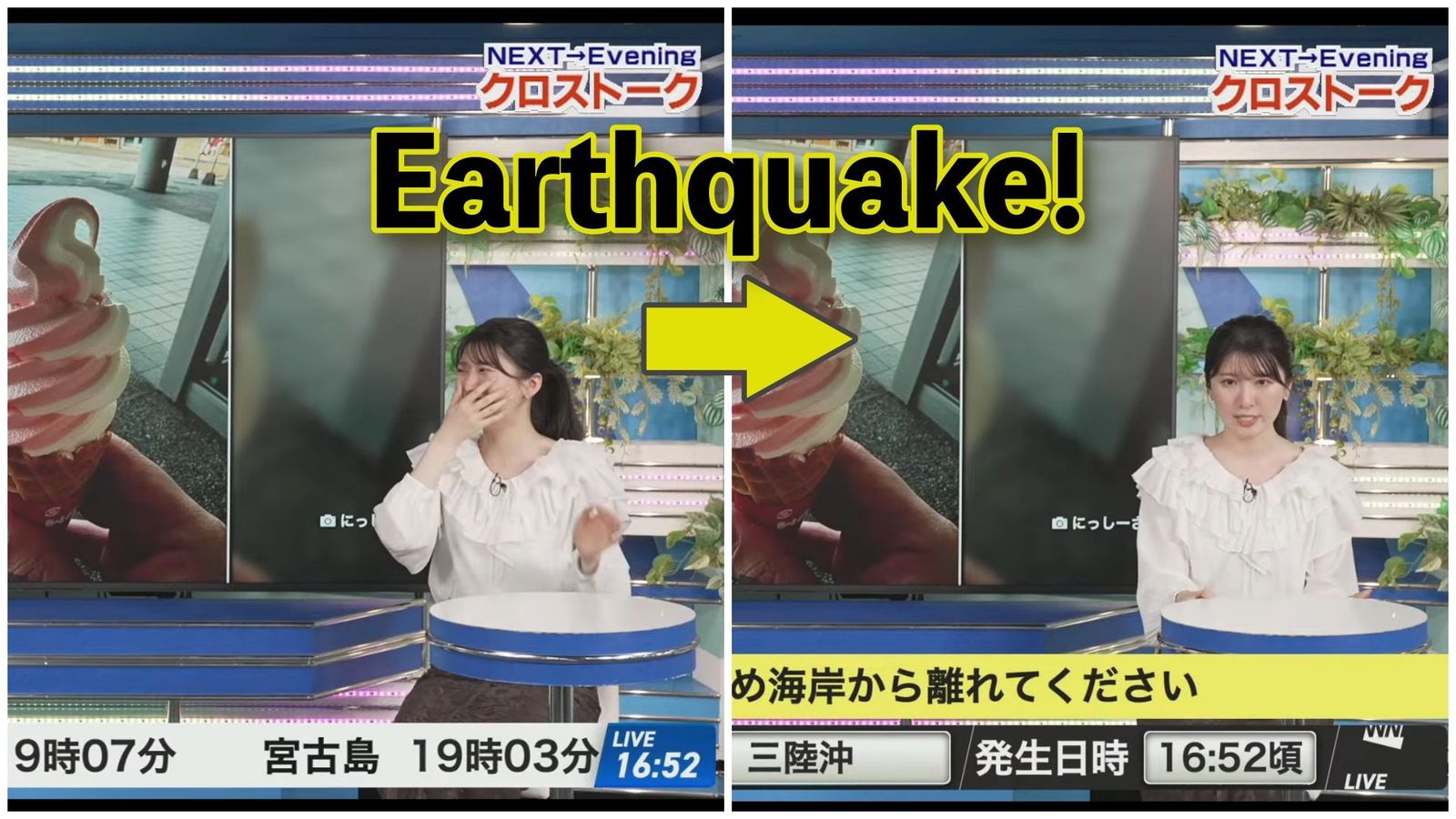
If you were watching "Weathernews LiVE" on April 21, you saw it happen in real time: one moment, the caster was chatting warmly with viewers — the next, the words "Emergency Earthquake Warning" flashed on screen, and her expression shifted instantly. Without missing a beat, she began delivering critical safety information in a calm, measured tone.
The clip quickly made the rounds on social media. Alongside messages of concern for those in northeastern Japan, viewers couldn't help but comment: "They went from laughing to life-saving mode in a single breath," and "This is what professionalism looks like at its absolute peak."
But this kind of seamless composure doesn't happen by accident. So what exactly goes on behind the scenes to prepare Weathernews casters for moments like these? Why are Weathernews casters able to respond so quickly and seamlessly during earthquakes? Here’s the reason behind it.
Voices of Amazement From Around the World: The Instant Shift From Smiles to Serious Earthquake Coverage
At approximately 4:53 PM on Monday, April 20, 2026, a magnitude 7.4 earthquake struck off the Sanriku coast. The Japan Meteorological Agency immediately issued an Emergency Earthquake Warning.
At that moment, Weathernews casters Airi Yamagishi and Yui Komaki were in the middle of the program's "cross talk" segment — a casual, unscripted exchange between casters during program transitions.
They'd been sharing a lighthearted conversation built around viewer submissions when the Emergency Earthquake Warning suddenly appeared on screen. Without hesitation, both casters pivoted — delivering earthquake details with clarity and composure, urging viewers to ensure their safety and move away from coastal areas.
A clip capturing just how seamlessly they transitioned from relaxed banter to focused disaster coverage quickly went viral. Viewers from around the world responded with admiration: "Amazing!” “This is professionalism on another level. Japan's disaster preparedness and training are truly world-class."
Inside the Earthquake Training for Weather Casters
So how are Weathernews casters able to respond so effectively in moments like these?
The answer lies in the highly realistic earthquake response drills conducted regularly behind the scenes. We visited one of these training sessions to see exactly what goes into it.
At Weathernews, casters participate in realistic disaster simulations on a regular basis — preparing them for emergencies that can strike at any time.
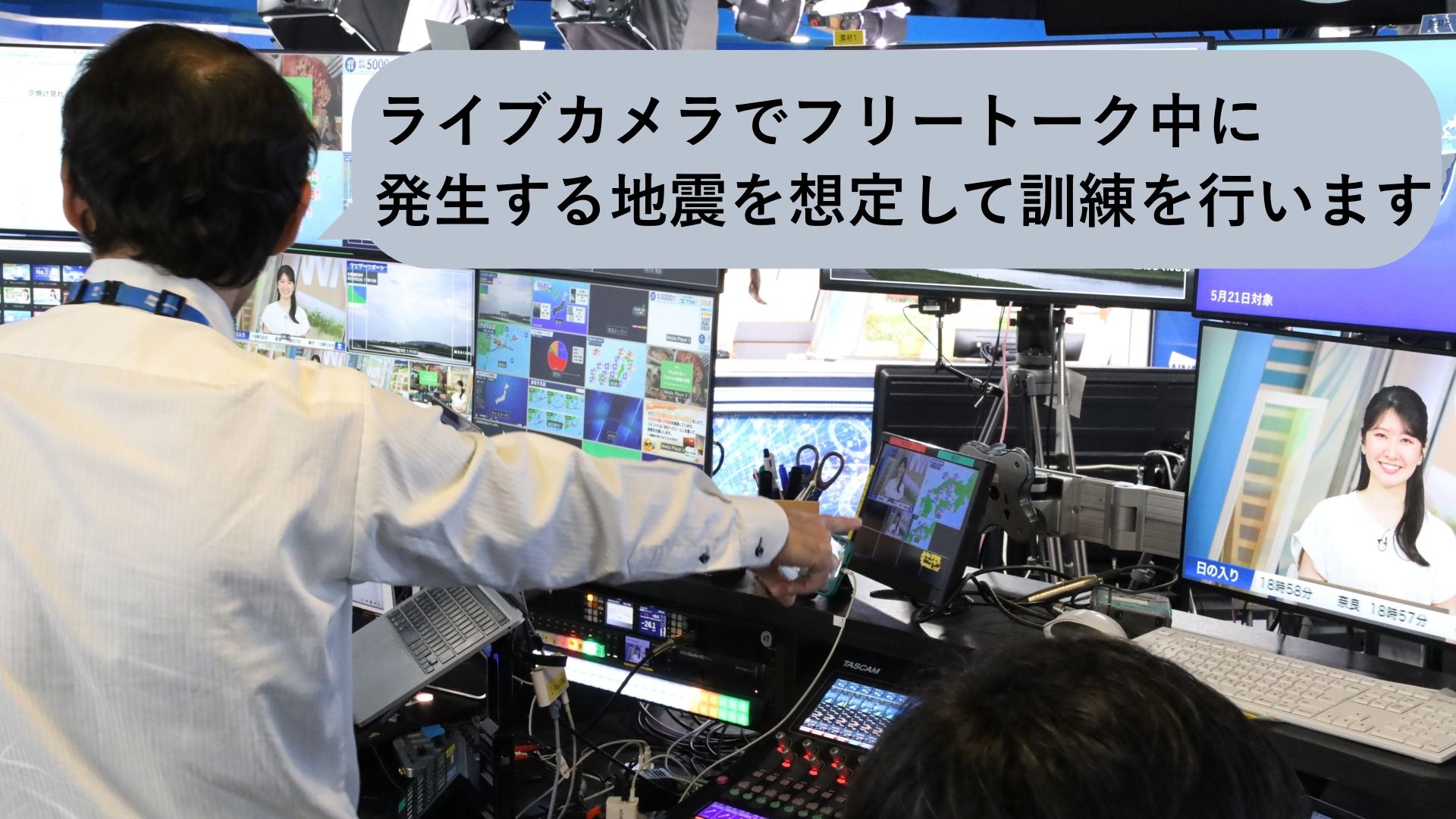
In this particular drill, the scenario placed a caster in the middle of presenting live sky conditions via a camera feed when an earthquake suddenly hits. While casually chatting with viewers during the free-talk segment, the caster receives a single word through their earpiece from staff: "Earthquake."
At that same moment, a test Emergency Earthquake Warning screen appears on the monitor. But here's the key: there's no script to fall back on. The caster must read the information displayed on screen (epicenter location, seismic intensity, tsunami warnings) and explain the situation to viewers entirely in their own words.
The drills also train casters to continuously deliver updated earthquake information and incorporate reports submitted by users in real time. Understanding how people across the country are actually experiencing the quake, and what kind of damage may be unfolding, requires more than just official observational data from the Japan Meteorological Agency. Reports submitted by viewers play a critical role as well.
Casters practice reviewing user-submitted videos and photos showing damage, maps that visualize shaking intensity based on firsthand reports, and messages shared through YouTube chat, then relaying that information back to viewers as it comes in.
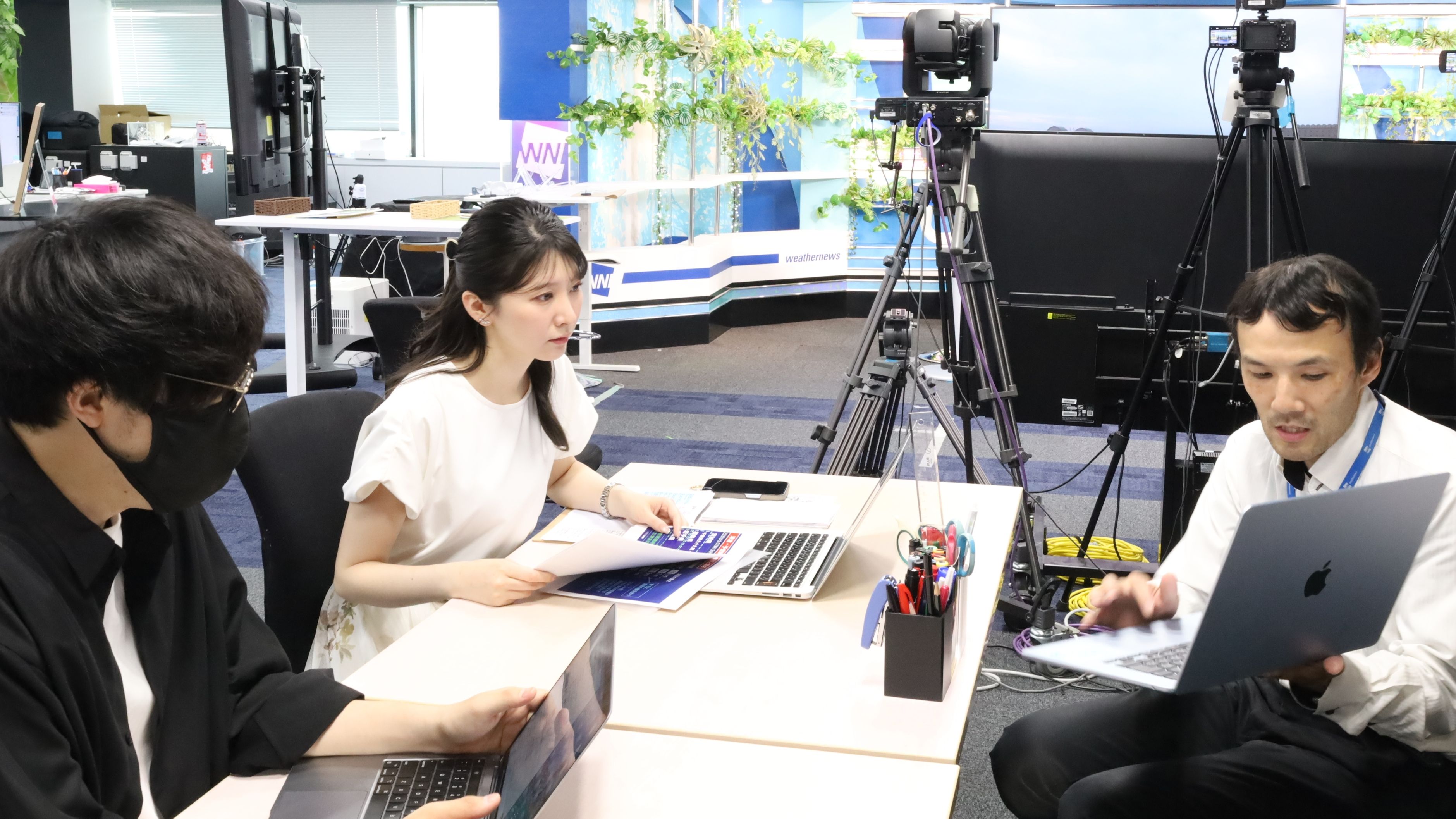
After each session, the production team and casters sit down together for a detailed review, evaluating everything from tone of voice and facial expressions to speaking speed.
Because when an Emergency Earthquake Warning is issued, delivering accurate information is only part of the job. Equally important is controlling the program's overall tone and manner, keeping viewers informed without pushing them toward panic.
The Strong Mission Behind the Program: Protecting Viewers’ Lives
When large-scale disasters strike, whether it's the Great East Japan Earthquake or the Noto Peninsula Earthquake, fast and accurate information can mean the difference between life and death.
That's why the program operates with a core belief: when a major earthquake hits, people should be able to count on "Weathernews LiVE."
The program broadcasts live, 24 hours a day, because delivering the latest weather information around the clock means there's no lag when emergencies happen. Earthquake updates can go out with overwhelming speed.
Beyond that, the friendly atmosphere built through everyday interaction with viewers via chat, along with segments featuring professional weather experts, fosters a level of trust that ensures viewers know exactly where to turn when it matters most. But the remarkable composure shown by the casters isn't simply the result of training and refined technical skill.
It's driven by a deeply held sense of mission: "We want to help people when emergencies happen. We want to protect viewers' lives."
That conviction, combined with a 24-hour operational system and continuous daily training, is what makes this kind of immediate, professional earthquake coverage possible.
Weathernews Casters on the Importance of Everyday Preparedness
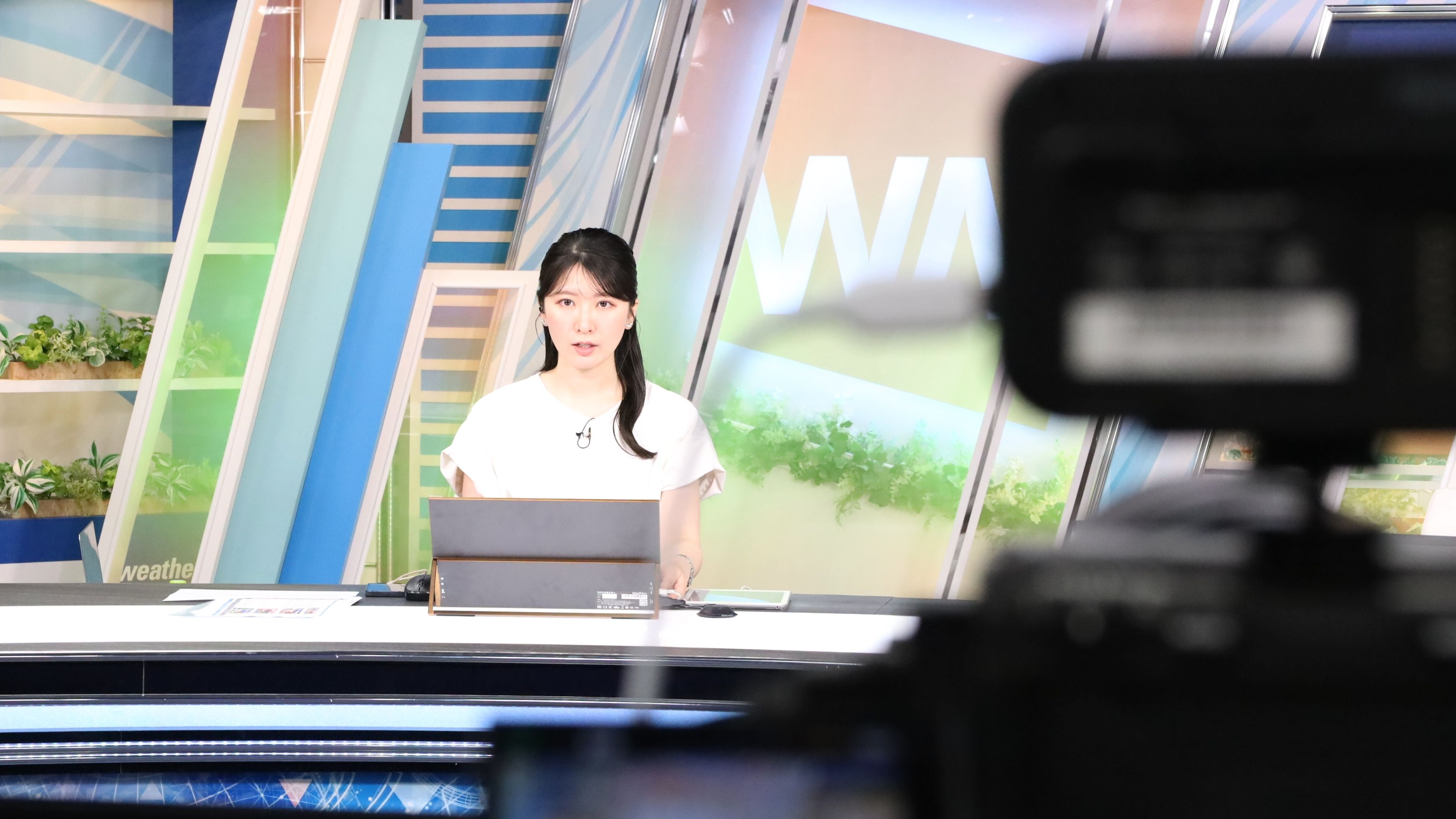
The professionalism demonstrated by the casters also serves as a powerful reminder of the importance of being prepared in our own daily lives.
We sat down with Yui Komaki to hear her thoughts on responding to Emergency Earthquake Warnings.
— What was going through your mind when the Emergency Earthquake Warning appeared?
My first priority was to provide viewers with calm, accurate information. As the estimated seismic intensity climbed from 4 to Lower 5 and then Upper 5 on Japan's scale, stronger shaking was expected. More than anything, I wanted to encourage people to take immediate action to protect themselves. Shortly afterward, a tsunami warning was also issued, so I became even more focused on delivering a clear, strong message: move to higher ground and stay away from coastal areas.
— People overseas were also amazed by your response. How did you feel about viewers’ reactions?
It reminded me once again of the high level of interest people have in disaster reporting in Japan. At the same time, I received comments saying that our calm communication helped people feel reassured. As someone responsible for delivering information, that made me realize all over again the weight of responsibility we carry every single day.
— What do you pay particular attention to during your regular training?
We train regularly while imagining real broadcast situations so that we can stay calm and communicate effectively no matter what happens. To help viewers take appropriate evacuation actions, we pay close attention to our tone of voice, speaking speed, and choice of words, always thinking about the most effective way to communicate for each situation.
— Finally, do you have a message for viewers?
Disasters can happen anytime, anywhere. That's why I believe it's so important to prepare in advance and familiarize yourself with evacuation procedures before an emergency occurs. Information can reach you not only through television but also through the internet and mobile apps, so I encourage everyone to make sure those tools are set up and ready to go in daily life. We'll continue striving to deliver information carefully and reliably, so that it can help provide reassurance and peace of mind for everyone.
Share
October 16, 2026
Chiba Torrential Rain Disaster: How Weathernews Protected Employees and Maintained Business Continuity
September 15, 2026
Behind the AI System Delivering Forecasters’ Messages to People Around the World in Just Three Lines
![[2026 Kumamoto Earthquake] How Weathernews LiVE Protects Lives Through User Reports and Expert Analysis](https://gvs.weathernews.jp/wni_blog_media/large_20260914_top_3958fce7fc.png)
September 14, 2026
[2026 Kumamoto Earthquake] How Weathernews LiVE Protects Lives Through User Reports and Expert Analysis