
September 1, 2026
Weathernews Goes Global: Bringing Japan’s High-Quality Weather Data to the World



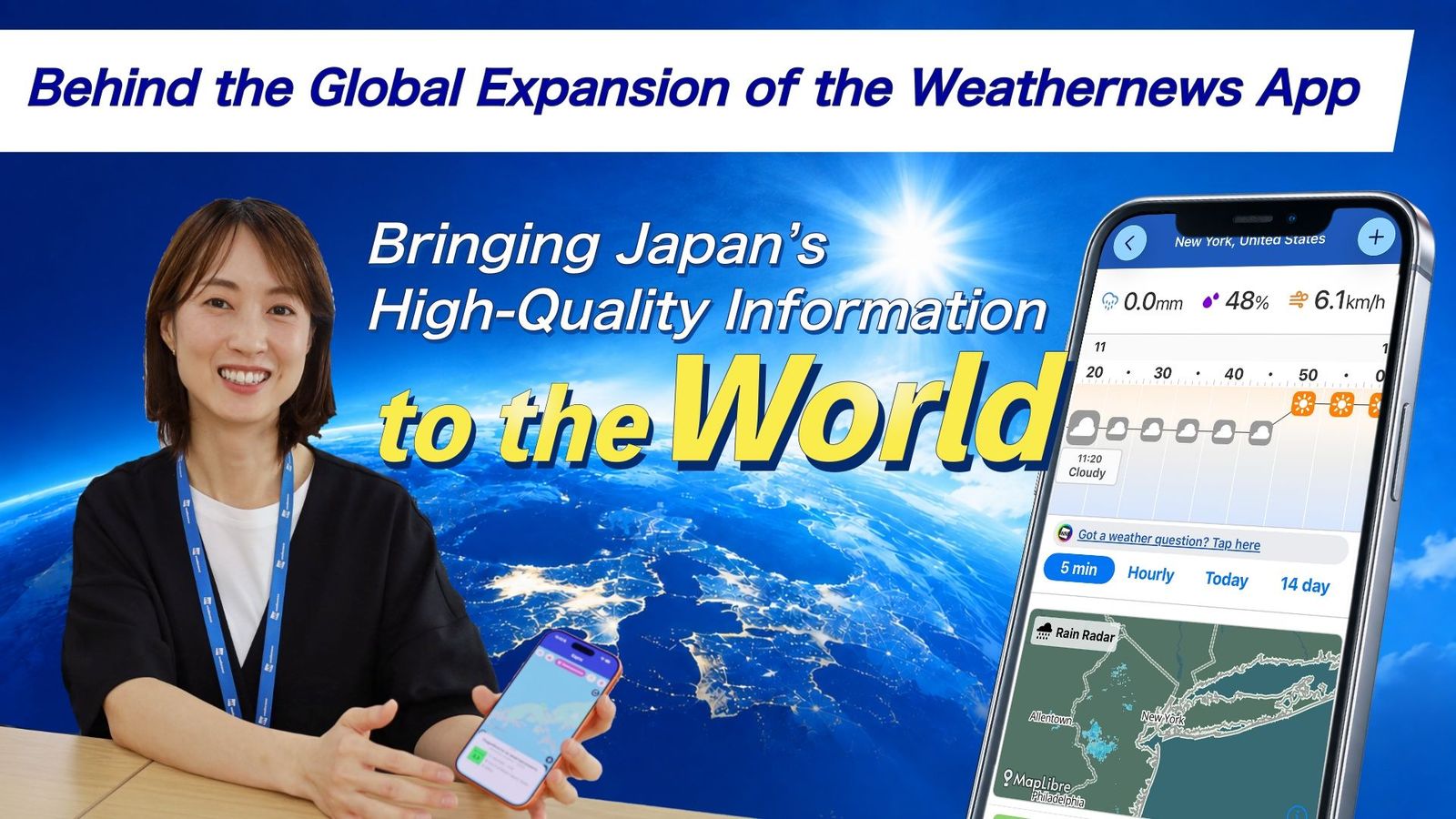
The Weathernews app, already the most-used weather app in Japan1, has just gone global, launching in 190 countries and territories.
The response was immediate: within two weeks of release, the global version hit No. 1 in the app stores of six countries and regions, and its user base is still climbing fast.
We sat down with Moeno Henmi, the app development leader who spearheaded the major project to bring Weathernews to the world. She told us all about the features she's especially proud of, and the behind-the-scenes story of how teams across the company came together to take on this challenge.
Bringing Japan's Weather Expertise to the World
— What can users now experience with this update?
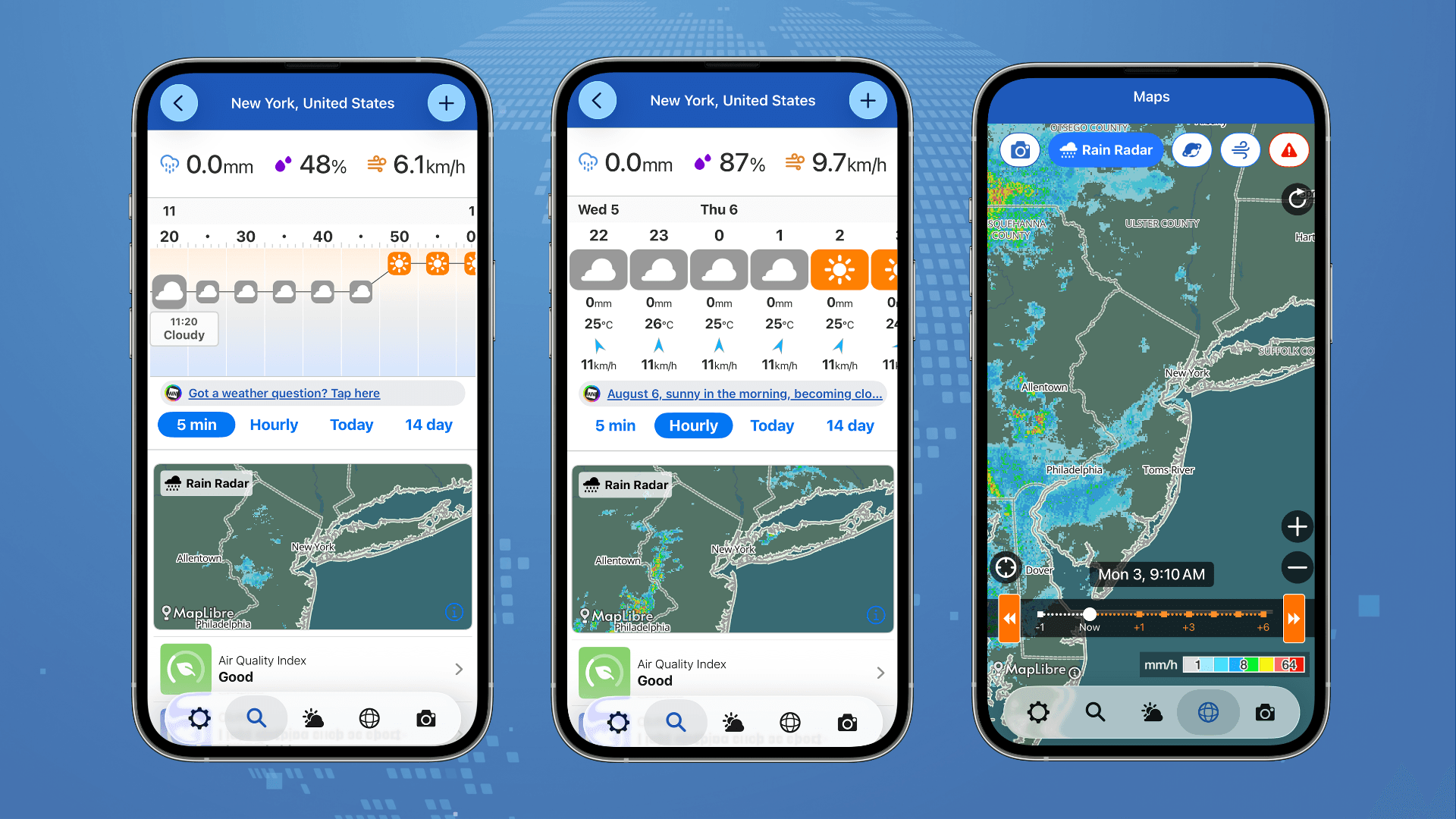
Development Leader: People overseas can now tap into the same high-precision forecasting Weathernews has built its reputation on in Japan: the Rain Cloud Radar our domestic users love, plus push notifications for approaching rain, severe weather warnings, and earthquakes.
Japan's geography, an island nation crossed by mountain ranges and hit regularly by typhoons and torrential rain, makes it one of the toughest places in the world to forecast weather. We've spent years sharpening our technology against that exact challenge.
So our goal was never just "an app that shows the weather anywhere." It was to take the forecasting and alerting capabilities we've proven under Japan's harshest conditions and put them in the hands of people everywhere, bringing that same "Japan-quality" standard of weather and disaster-prevention information to a global audience, and helping keep people safe wherever they are.
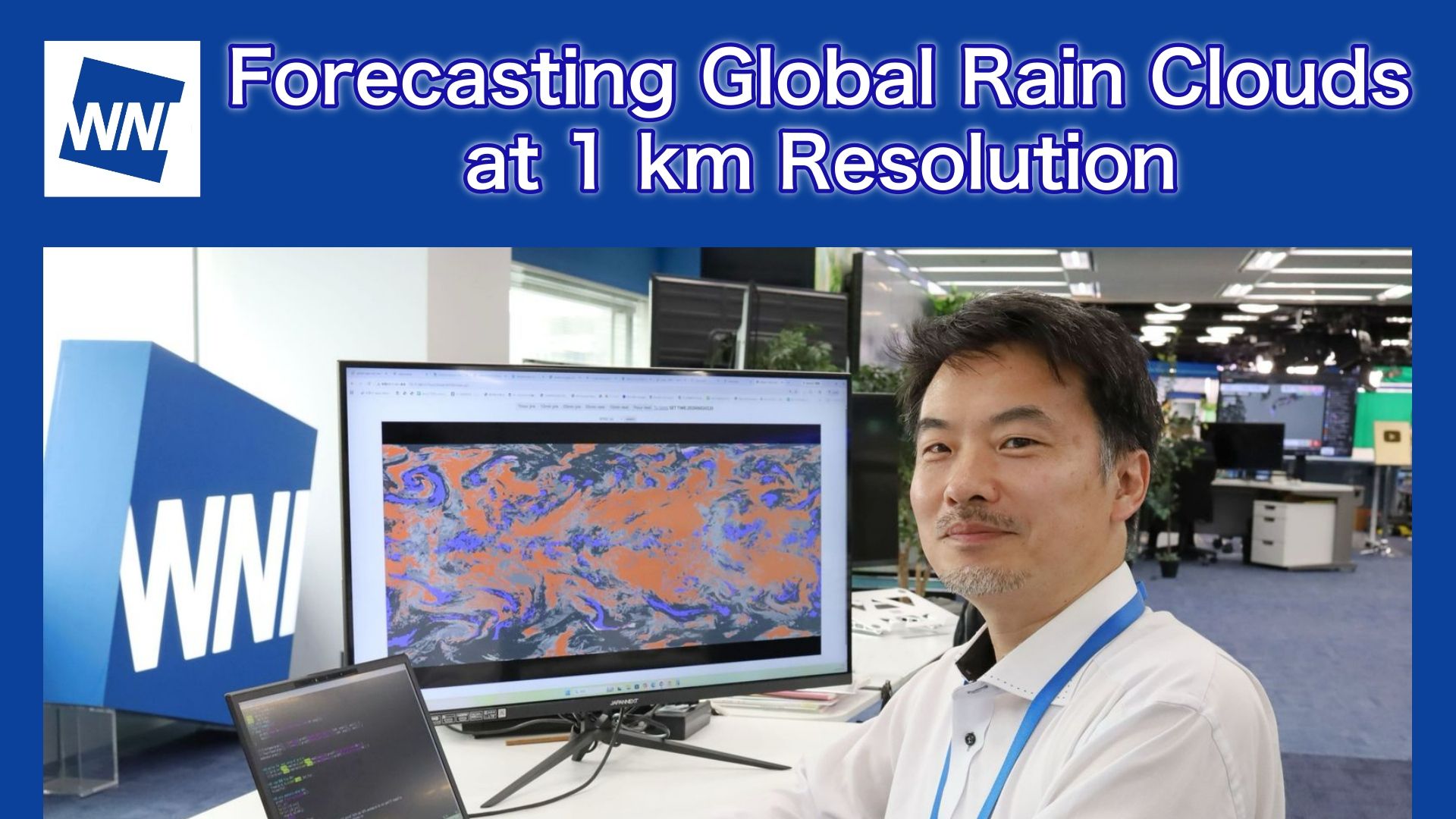
— This was a company-wide effort involving both the app team and the Forecast Center. What did that process look like?
Development Leader: This was never just a design question of how to display overseas weather on screen. It started from the forecasting system itself: how do we combine data from around the world to deliver overseas forecasts at the same level of precision we've built in Japan?
At first, we were feeling our way through even how to frame requests to the Forecast Center. But through round after round of discussion, working out "what's technically possible right now" and "what new ground do we need to break," three core pillars gradually took shape, the foundation the whole project would be built on: Deliver Japan-quality weather forecasts to users outside Japan Build an ultra-high-resolution Rain Cloud Radar with global coverage Provide access to weather warnings, earthquake information, and other disaster-prevention data from anywhere in the world
— Which features got the most attention during development?
Development Leader: Expanding the Rain Cloud Radar for global use was, without question, our top priority. Most weather apps outside Japan offer fairly broad precipitation forecasts on an hourly basis. Weathernews takes a different approach: proprietary analysis at 1km resolution, refreshed every 10 minutes, looking up to 30 hours ahead.

Getting caught in sudden rain is never fun, and I imagine users outside Japan feel that just as much as we do. We wanted to give people around the world the kind of real-time detail that lets them actually act on it: duck into a café before the rain hits, or simply change plans ahead of time. We also put a lot of thought into a two-layer radar system that lets users move between a global and a local view. There's a wide-area Global Radar for a bird's-eye look at conditions worldwide, and a more detailed Local Radar that draws on local weather radar and observation data.
We went through countless rounds of testing how these two layers should look and behave, and eventually landed on a UI that automatically switches between them as the user zooms in, with the data resolution displayed on screen so it's always clear what you're looking at.
(We'll dig into the technical story behind the Rain Cloud Radar in a dedicated blog post so stay tuned!2)
— Users can now see weather warnings and disaster information from around the world. In some countries, official warnings don't always reach the public, that's a real disaster-preparedness gap. How does the app address that?
Development Leader: That’s right. We collect weather warnings from around the world in real time and visualize them on the map. The app supports 57 languages, specifically so that critical, life-safety information isn't locked behind a language barrier. We also designed original icons for more than 40 types of weather warnings, so the level and type of danger is clear at a glance, even for someone traveling abroad, in an unfamiliar place, in the middle of an emergency.
On the detailed warning screen, everything displays in whatever language the user has set in the app, and with one tap, they can switch to the original-language text, such as English. And if push notifications are turned on, alerts follow the user's location wherever they go. Even in a country where they don't speak the language, we want people to feel like the information they need is always just a tap away.
Refusing to Compromise on Usability: Taking on a Massive Data Challenge

— What was the hardest part of development?
Development Leader: Without a doubt, it was the sheer increase in data.
We wanted to show weather data from around the world without sacrificing the smooth, intuitive experience Weathernews users have always had. Our first attempt, just dropping global data straight onto the map, caused real performance problems; the app became sluggish.
That wasn't an option. User experience has always been core to what makes this app work, and we weren't going to let it suffer just because we were scaling globally. So we made the call to rebuild the map rendering technology from the ground up. That rebuild cut the processing load dramatically, even with heavy layers of rain cloud imagery and plot data, and solved the performance problem for good.
— Weathernews has been leaning into AI lately. Did it play a role here too?
Development Leader: It did, and it taught us something important about staying flexible with new tools. We started out building with an AI model we already knew well. But partway through, we found another model that was a much better fit for the task, and made the switch mid-development. The payoff was immediate: both the accuracy and speed of code generation jumped, and development sped up significantly. The lesson was clear: don't get attached to what's familiar; keep evaluating what's actually best for the job.

— Do you have any memorable episodes from overcoming these challenges?
Development Leader: One that really stands out: near the end of development, once the data and features were close to final, we distributed a test build to Japanese staff heading overseas on business trips, and to our global team members living abroad.
Specific suggestions started pouring in from across the company, and it sparked some of our liveliest internal discussions yet. Members using the app in the field sent in comments like "the layout is hard to read," along with real, on-the-ground feedback about forecast accuracy.
The app team and the Forecast Center came together and worked through every one of those comments, translating them into fixes one by one. It was a tough process, but it left us with a real feeling: we're building an app that reaches the world. That feeling became a huge source of pride in the work.
◆ We Want to Grow This App Together With Our Users

— Any final messages for Weathernews app users?
Development Leader: We'd love for people around the world to experience this high-precision forecasting for themselves, and hopefully rely on it as information that could help protect their lives in an emergency.
The global version of Weathernews has only just launched. Japan has always been at the forefront of disaster prevention, and from here, we're combining everything we've learned there with international data partnerships, our own proprietary weather AI, and cutting-edge analysis technology.
But above all, what we can't do without is the real-time data submitted by users all over the world: your "Weather Reports." This isn't a case of releasing the app and simply calling it done. We want to keep incorporating your daily reports and feedback, and grow this into a better app together with you. We'll keep evolving as the world's most trusted weather platform for people everywhere, driving global disaster prevention and everyday safety, and in turn, growing further as a company.
Footnotes
Share
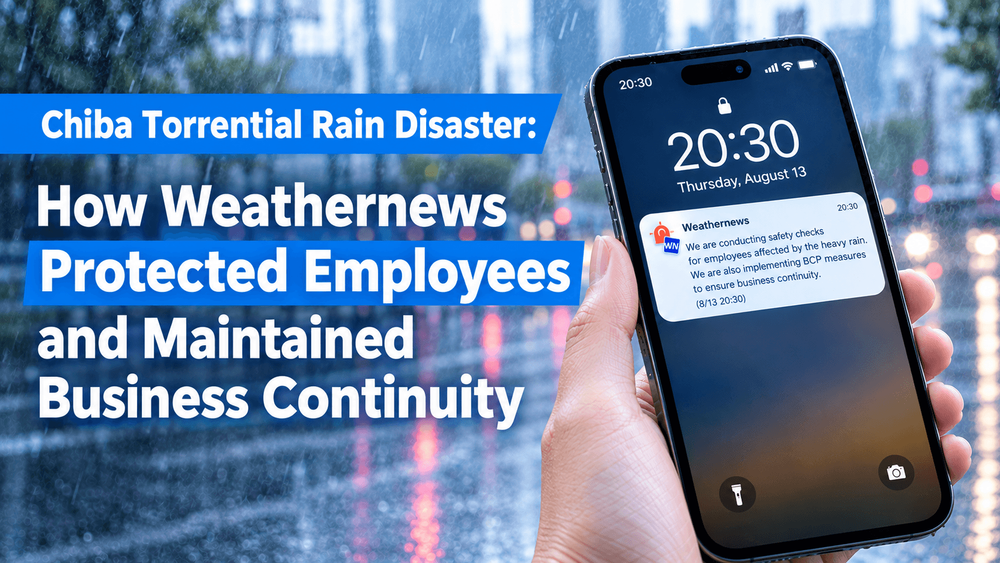
October 16, 2026
Chiba Torrential Rain Disaster: How Weathernews Protected Employees and Maintained Business Continuity
September 15, 2026
Behind the AI System Delivering Forecasters’ Messages to People Around the World in Just Three Lines
![[2026 Kumamoto Earthquake] How Weathernews LiVE Protects Lives Through User Reports and Expert Analysis](https://gvs.weathernews.jp/wni_blog_media/large_20260914_top_3958fce7fc.png)
September 14, 2026
[2026 Kumamoto Earthquake] How Weathernews LiVE Protects Lives Through User Reports and Expert Analysis