
October 16, 2026
Chiba Torrential Rain Disaster: How Weathernews Protected Employees and Maintained Business Continuity



In August 2026, Chiba Prefecture was hit by a record-breaking rainfall disaster known as 2026 Chiba Heavy Rains. Even we at Weathernews, a company specializing in weather forecasting, found ourselves directly affected by this extreme weather event.
As torrential rain struck during the evening commute, many employees encountered dangerous conditions on their way home. Reports gradually emerged of employees unable to return home due to flooding and power outages, while others were stranded at the office.
Many companies face a similar challenge: "We thought we were prepared, but our plans didn't work when we needed them most." How can businesses overcome the shortcomings of business continuity plans (BCPs) that exist on paper but fail in practice? Drawing on our own firsthand experience of the disaster, we explore practical lessons for corporate disaster preparedness and how to ensure that emergency measures genuinely work when it matters most.
Up to 100 mm of Rain per Hour Puts Commuting Employees at Risk
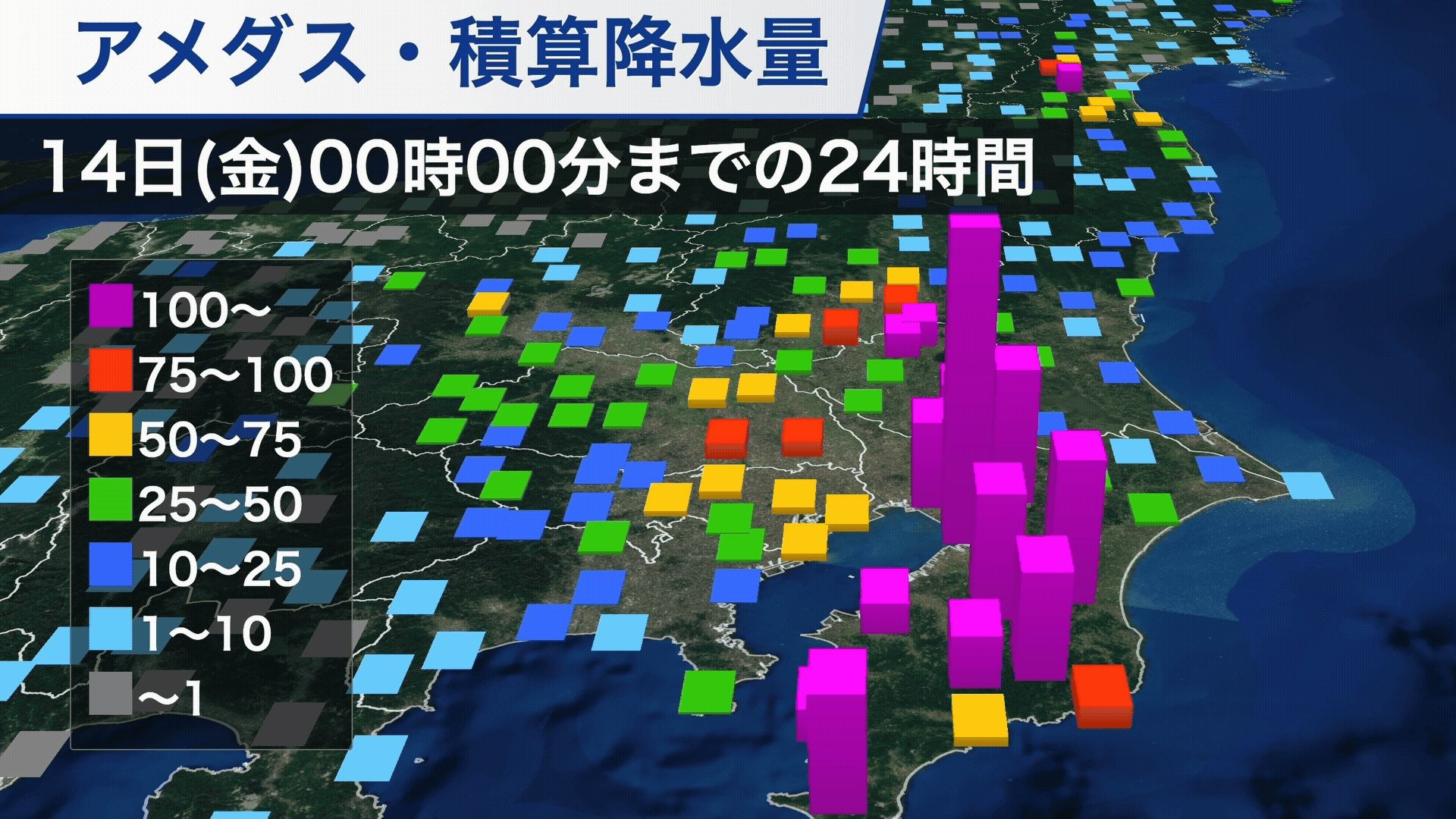
From the evening into the night of Thursday, August 13, 2026, torrential rain battered the Kanto region, particularly Chiba Prefecture. The Japan Meteorological Agency (JMA) issued a Level 5 heavy rain emergency warning, its highest warning level. Rainfall records were broken by wide margins in Chiba City, Sakura City, and other locations across the prefecture, making this an unprecedented event.
Looking back on the August 2026 Chiba Torrential Rain Disaster, one remark from our employees stood out: "We never expected the rain to get that bad."
Although rain was forecast, even we, as employees of a private weather forecasting company, had not anticipated that such intense rainfall would persist for so long or escalate into a disaster of this magnitude.
As a result, many employees who finished work and began their journeys home between 5:30 and 6:00 p.m. found themselves stranded or directly affected by the disaster.
Weather-Based Safety Alerts Triggered for the First Time for an Event Other Than an Earthquake or Tsunami
We use our own BCP service, Weathernews for business, as part of our ongoing disaster preparedness efforts. Built on the technology behind the Weathernews weather app, the system allows employees to check disaster information and submit safety status reports directly through a smartphone app. Unlike conventional employee safety confirmation systems, it also allows organizations to configure flexible alert triggers based on the type and severity of a disaster.
Our Internal Alert Trigger Settings
Earthquakes: Seismic intensity of 5-upper or higher on Japan’s seismic intensity scale
Severe Weather and Other Hazards: ・ Weather warnings associated with Alert Level 4 or higher, including heavy rain, flooding, landslides, and storm surges ・ Advance forecasts of linear rainbands and information on their occurrence ・ Suspensions of public transportation services ・ Expressway closures ・ Reports on local conditions submitted by users through Weathernews (Weather Reports) (As of October 2026)
During the Chiba disaster, we activated our employee safety alert system for the first time in response to a weather event, rather than an earthquake or tsunami. Targeted push notifications were sent directly to employees located within designated areas of Chiba Prefecture.
Real-Time Location Data, Photos, and Videos Help General Affairs Respond Quickly
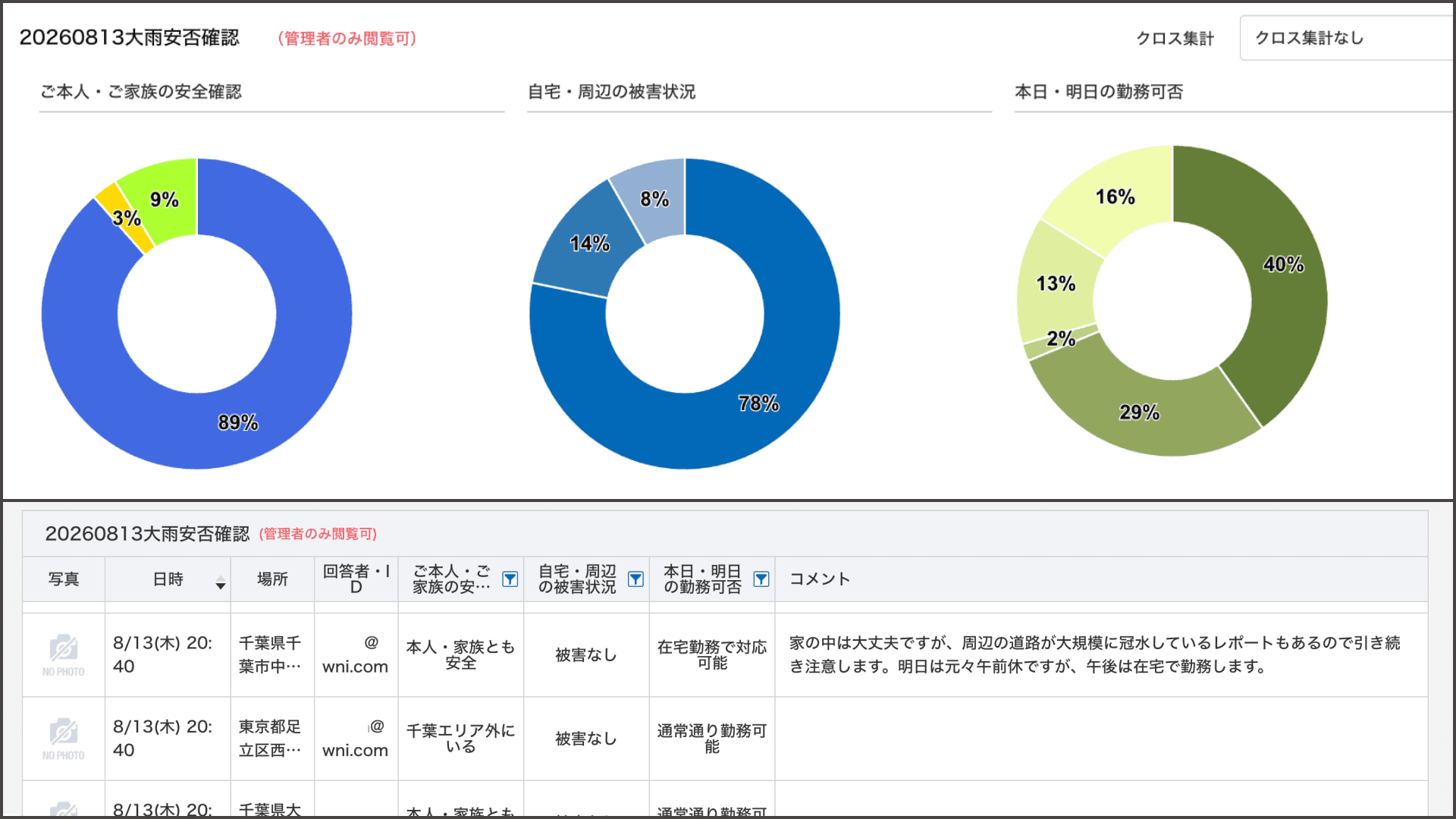
Employees responded promptly through the app after receiving the alerts.
・ Unaffected: 80% ・ Directly affected (flooding, power outages, etc.): 14% ・ Other circumstances, including being stranded and unable to get home: 6%
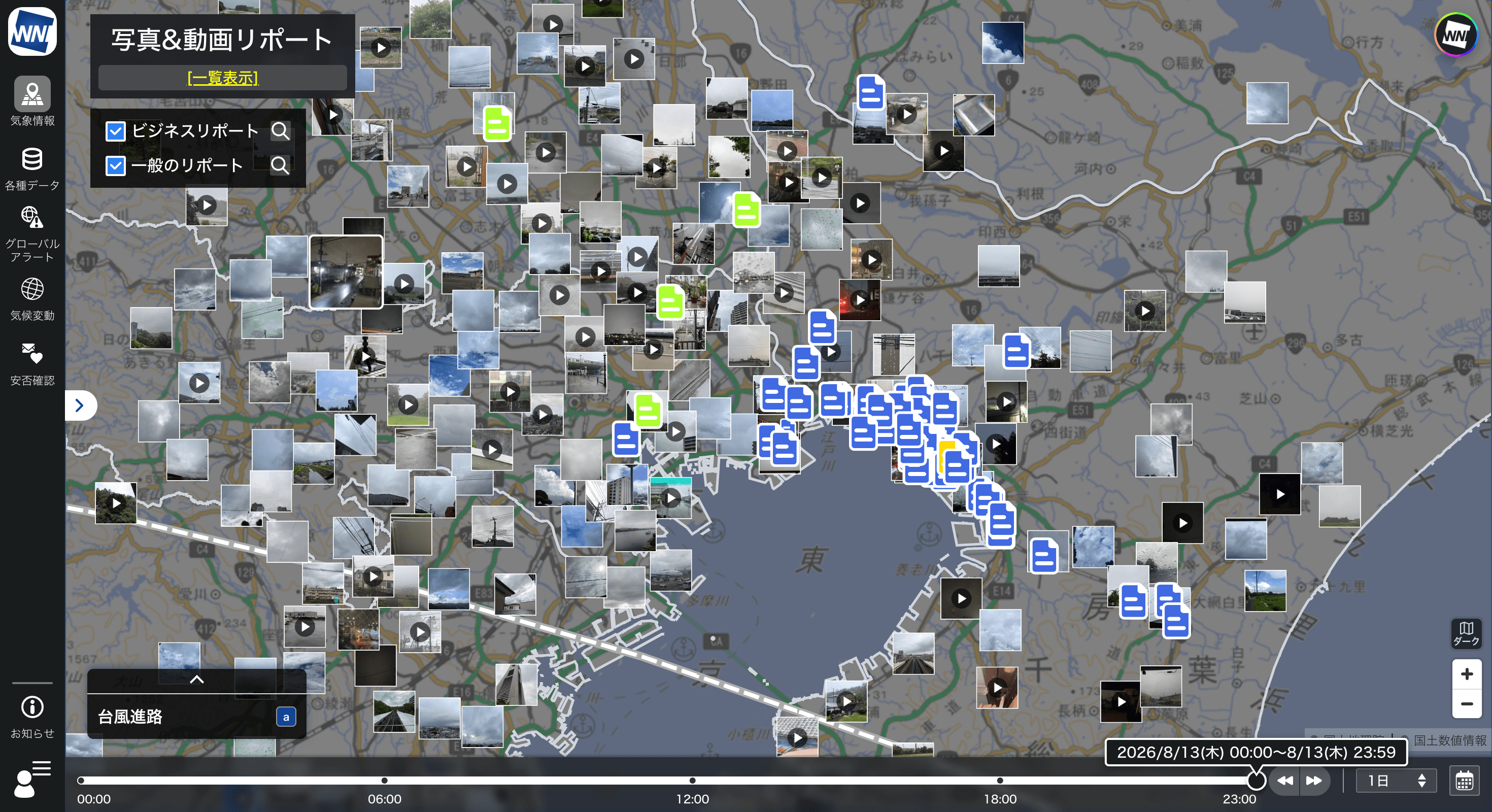
The system provided more than a simple confirmation of whether employees were safe. Photos, videos, and location data submitted through the app enabled us to assess flooding and power outage conditions on the ground in real time.
Having quickly assessed employees' safety and the extent of the damage, the General Affairs Department immediately implemented the following initial response measures.
・ Communicating safety precautions: Company-wide guidance urged employees to avoid unnecessary travel and prioritize their personal safety.
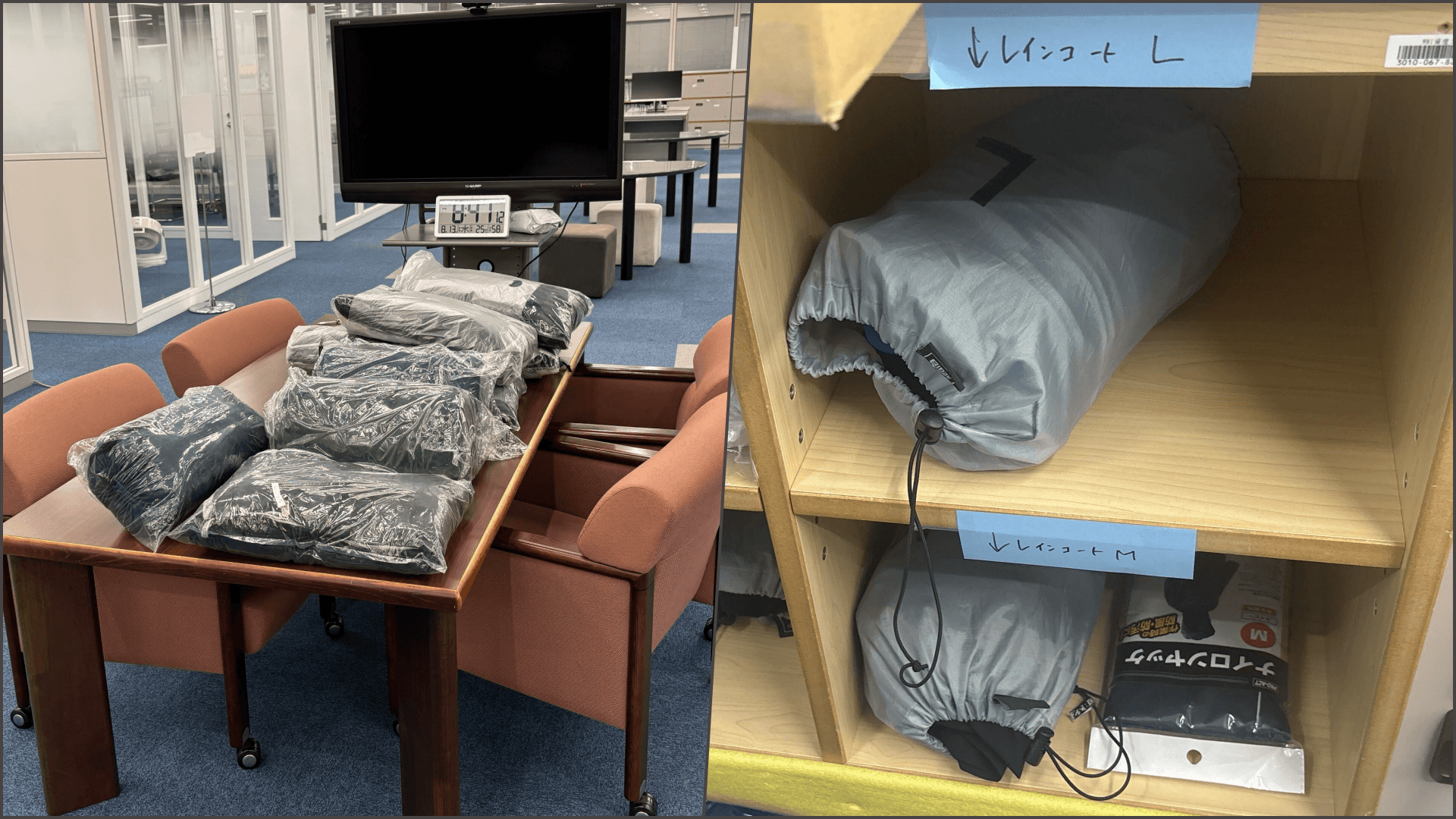
・ Providing emergency supplies: Raincoats were made available for disaster relief volunteers, and emergency food was distributed.
・ Creating a safe place to stay: Approval was obtained to keep air conditioning running overnight, meeting rooms were secured, and sleeping bags were provided to set up rest areas.
We also took steps to minimize disruption to operations in the days that followed. Team leaders of affected employees worked closely with the General Affairs Department to arrange remote work and assign replacement staff as needed. As a result, business operations continued with minimal interruption.
Making Disaster Preparedness Part of Everyday Work: A New Approach to Corporate Safety Checks Through a Weather App
Many companies experience challenges with conventional employee safety confirmation systems, including the following:
“Employees forget their IDs and can't log in.” → Employees can report their status immediately through an app they already use every day, without needing to log in separately. ** “Uniform alerts make safety checks a box-ticking exercise.”** → Company-specific weather triggers help reduce unnecessary alerts.
“Employees on the move are difficult to account for.” → Real-time location data helps identify employees in areas at risk.
At Weathernews, we believe that a major underlying cause of these challenges is that disaster preparedness systems are often disconnected from employees' everyday routines.
We believe this is one of the most effective ways to protect both employees' safety and business operations when an emergency strikes.
Experiencing the Chiba disaster firsthand gave us an important opportunity to reconsider what a BCP must do to function effectively in a real emergency.
We will continue to apply the lessons learned from this experience to the development and improvement of our services. We will also continue supporting companies in strengthening their BCPs and implementing practical disaster preparedness measures that go beyond formal plans to protect employees and sustain business operations when it matters most.
👉 Learn more about Weathernews for business and contact us about our BCP services.
Weathernews Launches Comprehensive BCP Service: Emergency Confirmation Powered by Weather Expertise
Share
September 15, 2026
Behind the AI System Delivering Forecasters’ Messages to People Around the World in Just Three Lines
![[2026 Kumamoto Earthquake] How Weathernews LiVE Protects Lives Through User Reports and Expert Analysis](https://gvs.weathernews.jp/wni_blog_media/large_20260914_top_3958fce7fc.png)
September 14, 2026
[2026 Kumamoto Earthquake] How Weathernews LiVE Protects Lives Through User Reports and Expert Analysis
September 7, 2026
Unprecedented Trajectory: Typhoon No. 15 Makes Historic Ibaraki Landfall and Crosses Japan Westward