
November 2, 2026
How Marine Weather Data Helps Coastal Shipping Operators Make Faster, More Accurate Decisions



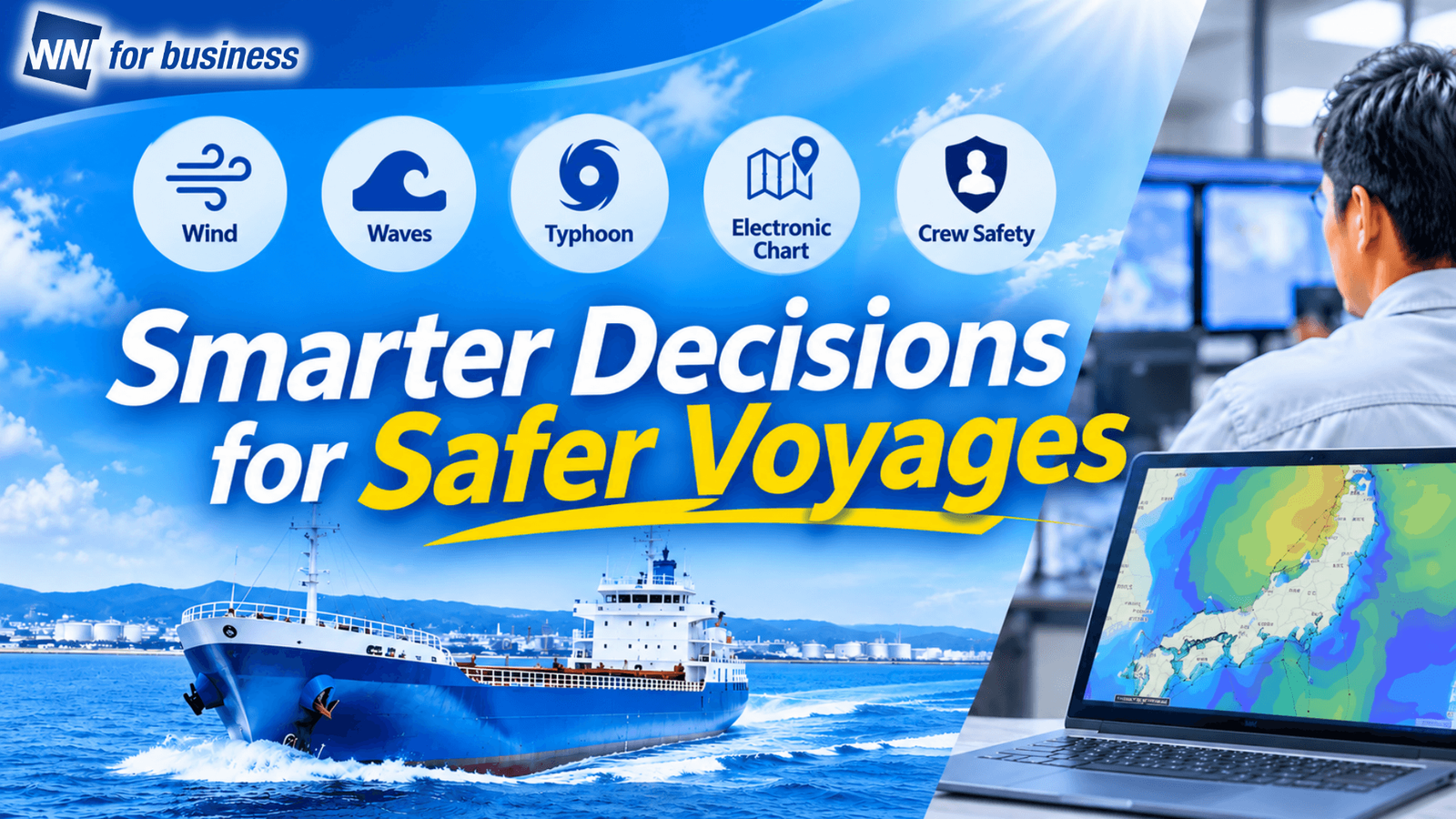
“Can we depart as scheduled, or should we hold off on weighing anchor?”
“Can we safely berth under these weather conditions, or should we wait offshore instead?”
In coastal shipping, operators face these critical decisions every day. Localized shifts in wind direction, rapidly rising wave heights, and sudden reductions in visibility can all affect vessel operations.
As demand for domestic shipping grows, the declining number of experienced seafarers makes it harder to pass on their expertise. Inconsistent information sharing between vessels and shore-based teams is another challenge. These issues can slow down operational decision-making.
To ensure safety while maximizing operational efficiency, companies need consistent decision-making criteria based on objective, high-resolution marine weather data.
In this article, we introduce Weathernews for business, a professional weather information service that supports safe coastal vessel operations and greater operational efficiency. We cover its key features, practical applications, pricing, and implementation process.
Why Coastal Shipping Operators Need a Common Source of Weather Information
As coastal shipping plays an increasingly important role in society, operators face several recurring challenges:
・ Different information on board and ashore: Vessel crews and shore-based teams rely on different information sources, making it difficult to align operational decisions across the company.
・ Heavy reliance on individual experience: Decisions often depend on the judgment of highly experienced crew members, making it difficult to transfer their expertise to younger seafarers.
・ Insufficient data to explain disruptions: When severe weather causes cancellations or delays, operators need reliable marine weather data to explain their decisions to cargo owners and internal stakeholders, but the available information may not be sufficient.
Weathernews for business is designed to address these challenges.
This professional weather information service brings together the weather data needed to manage coastal vessel operations, including those of cargo ships, ferries, tankers, and roll-on/roll-off (RORO) vessels. Users can access the information through the Weathernews app on their smartphone or a web browser on their computer.
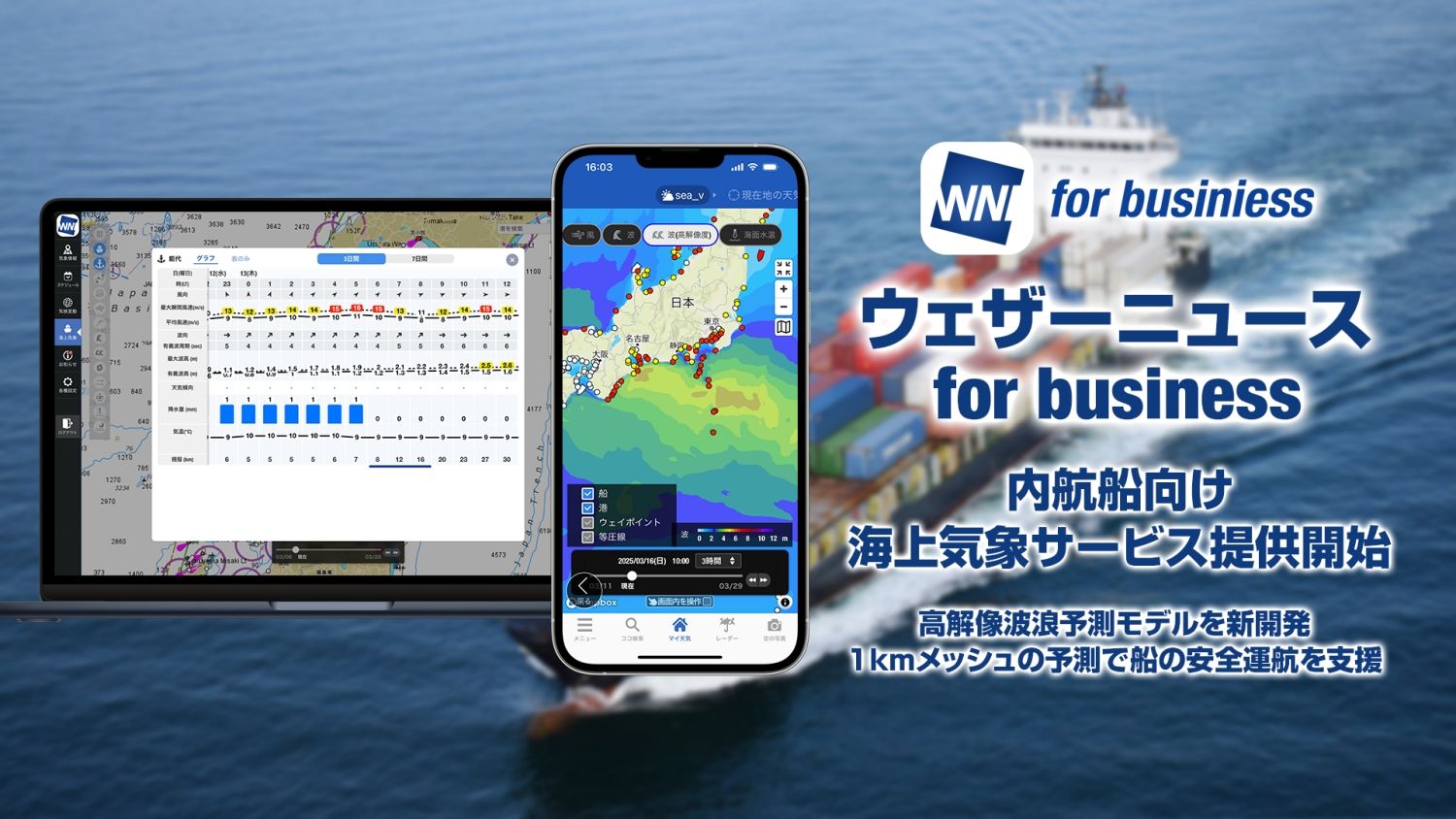
Access the Weather and Marine Conditions Needed for Operational Decisions on a Single Screen
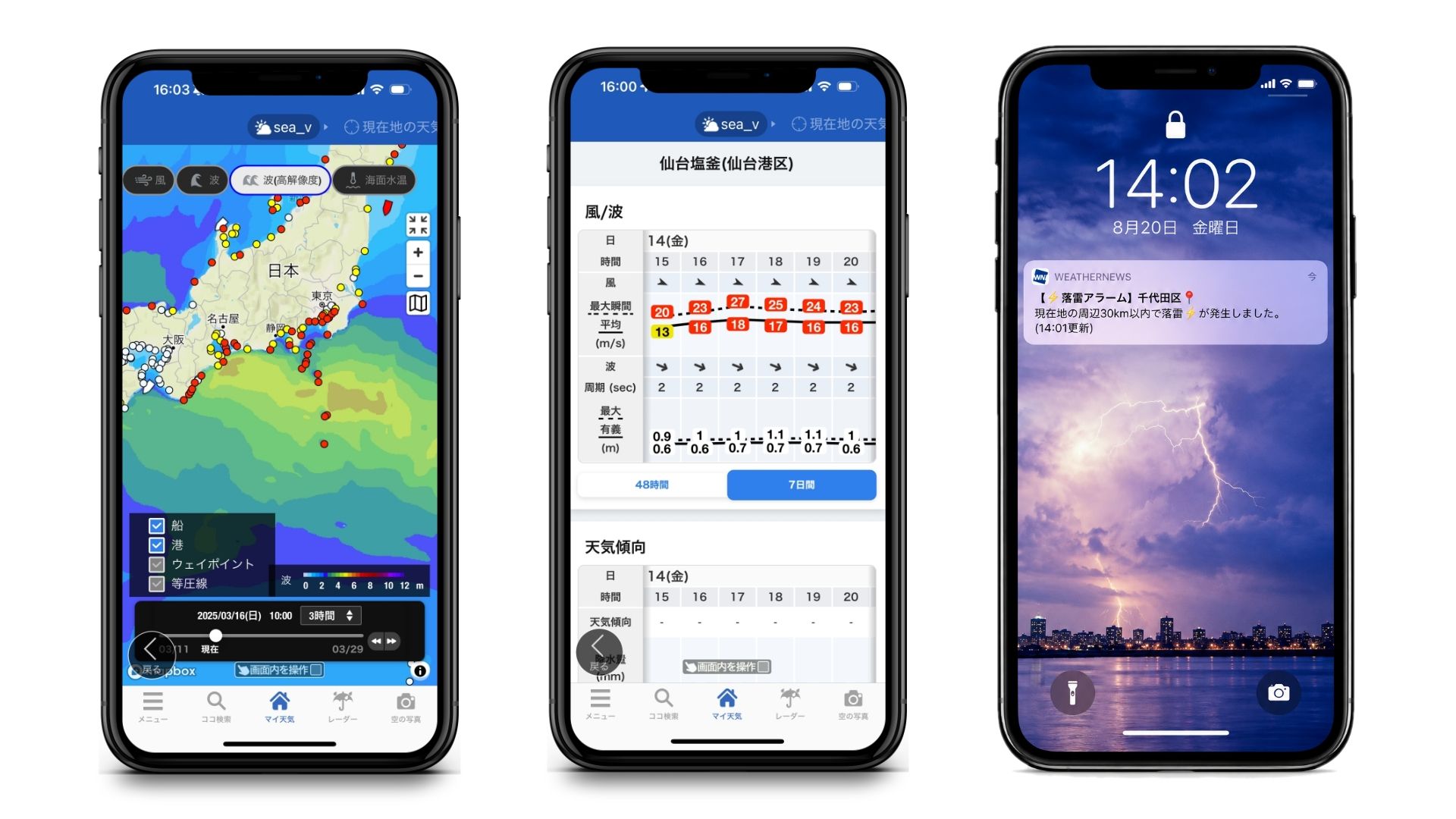
Weathernews for business brings together the weather and marine information needed for coastal vessel operations on a single screen, including on a smartphone.
Because both captains and shore-based operations managers can refer to the same information, they can make decisions using a common set of criteria and reduce discrepancies in their judgments.
Here are some of the service’s key features and how they can be used in practice.
1.High-Resolution Wave Forecasts for Japanese Coastal Waters Point-specific forecasts for ports and berths reflect the effects of local terrain and coastal geography, providing detailed information for operational planning.
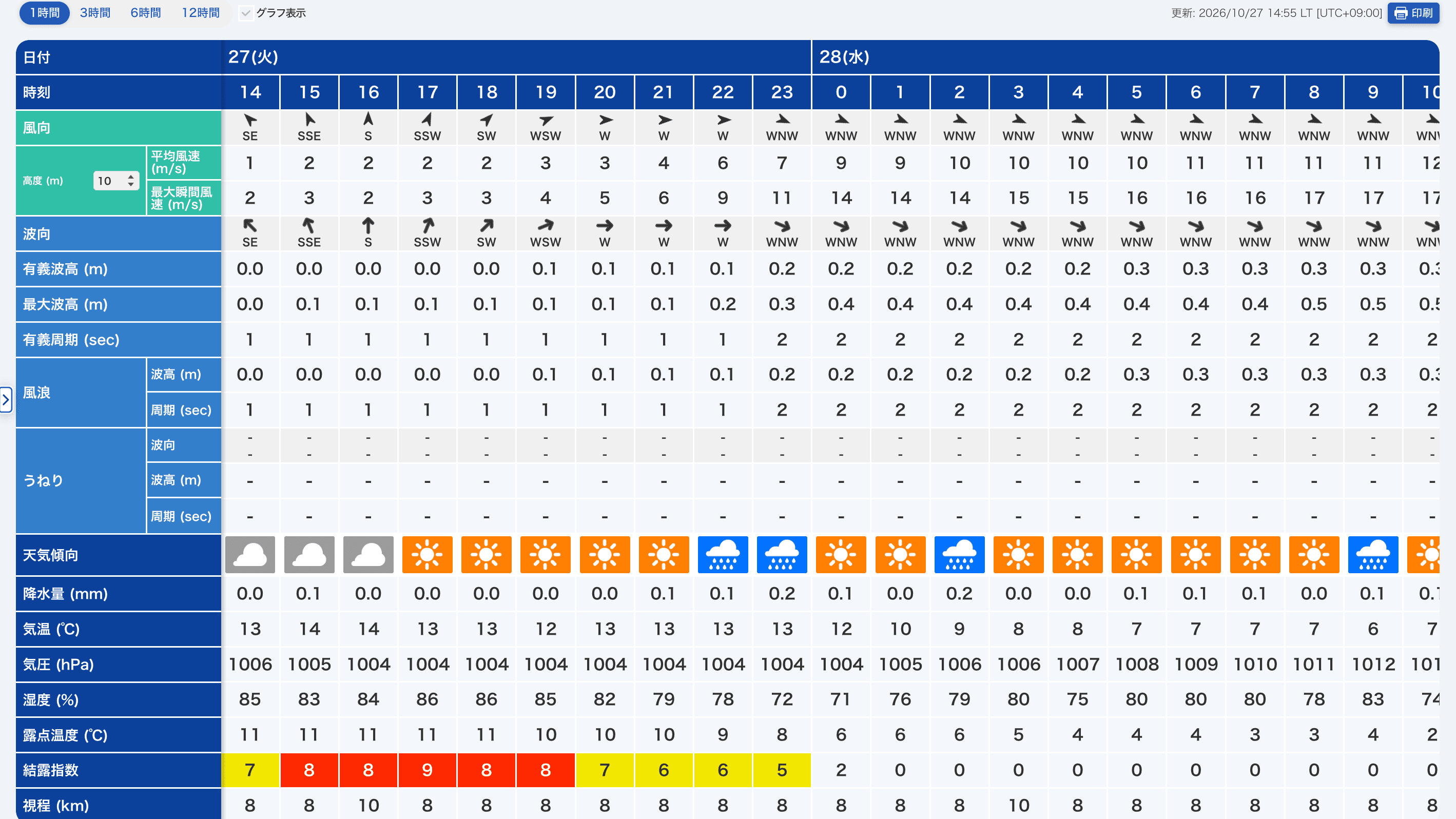
In addition, Weathernews developed its own wave forecast model last year. The model provides significant wave height forecasts for Japanese coastal waters at hourly intervals, up to 72 hours ahead.
Displayed as a color-coded map, the forecasts make it easy to visualize wave conditions and assess risks associated with low-pressure systems and typhoons. The proprietary wave forecast model has also demonstrated approximately 30% higher accuracy than forecasts from the Japan Meteorological Agency (JMA).1
Weather information for waypoints along predefined routes can also be displayed in a table, making it easier to check conditions along the planned voyage.
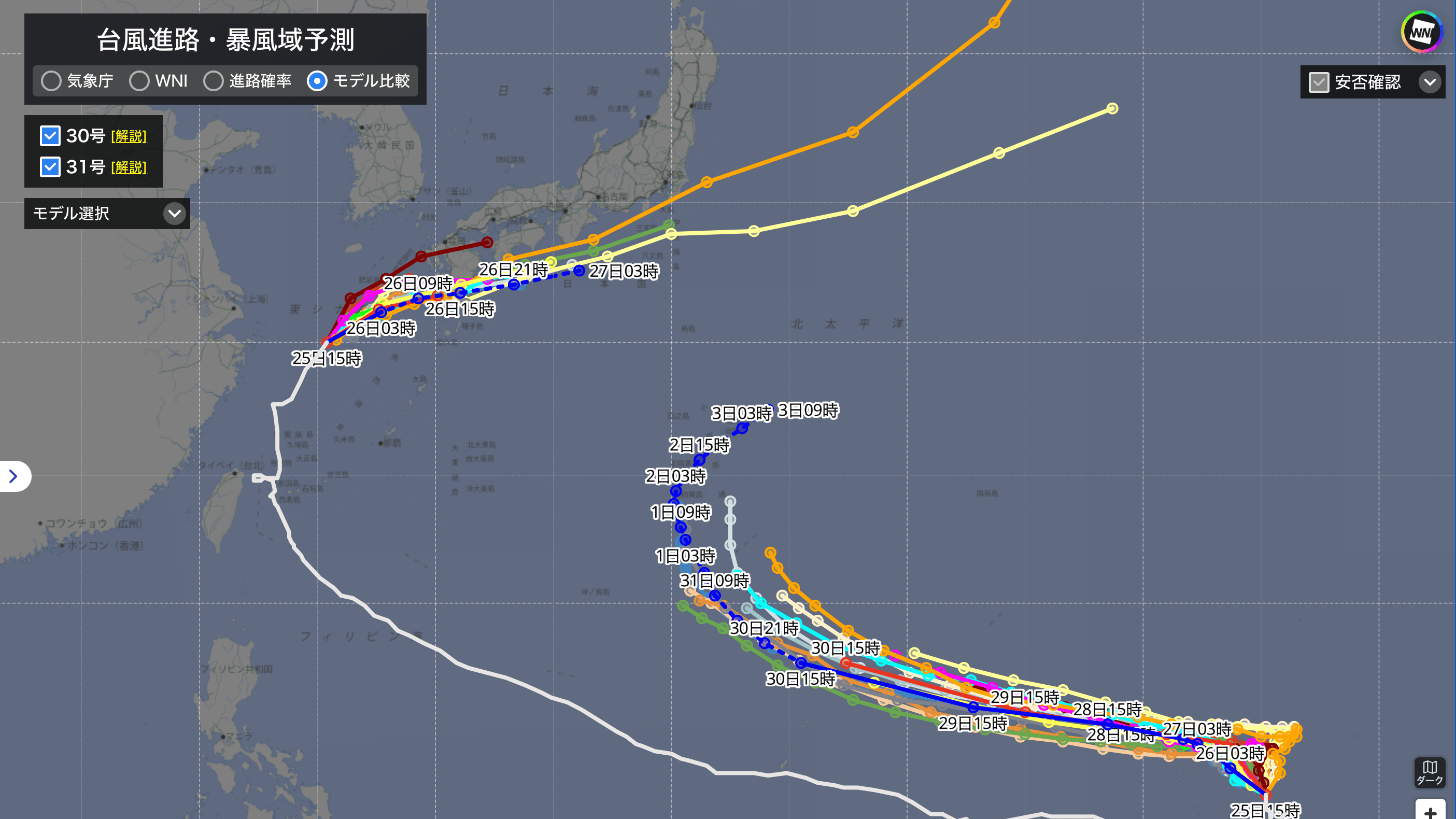
2.Compare Multiple Typhoon Track Forecasts
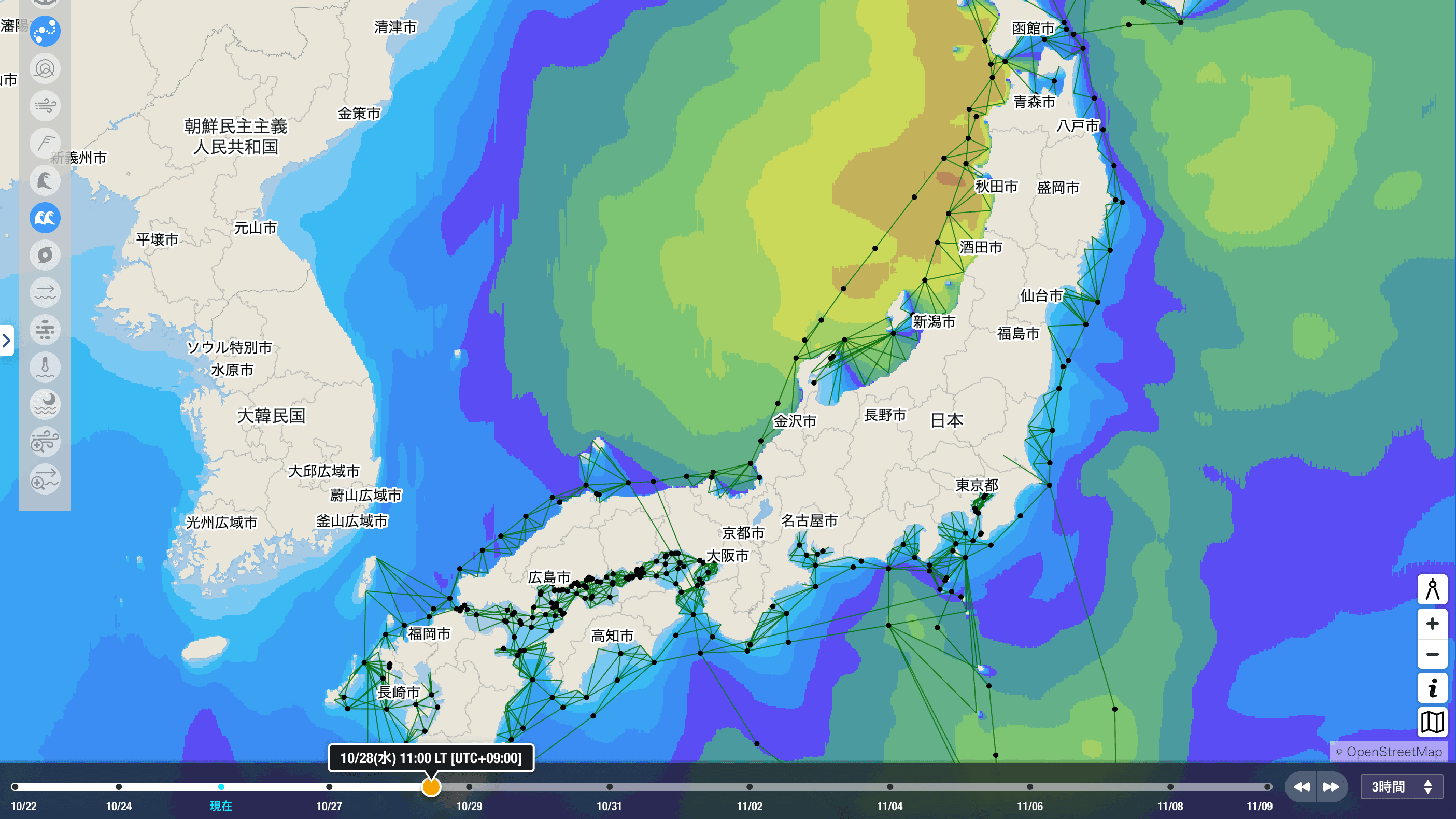
Weathernews for business allows users to overlay and compare forecasts from 22 models, including those from the JMA and the European Centre for Medium-Range Weather Forecasts (ECMWF).
Users can quickly compare differences in predicted typhoon tracks and check projected paths and strong-wind areas in relation to vessel routes and ports of call. When the models show similar tracks, operators can plan their routes with greater confidence. When the forecasts differ significantly, they can prepare for worst-case scenarios and take precautionary action early.
This feature supports advance risk assessment, voyage planning, and decisions such as whether to berth or wait offshore.
3.Receive Location-Based Weather Risk Alerts on a Smartphone
Users of the Weathernews app can receive push notifications when the risk of severe weather or a natural disaster increases.
This helps crews and operations managers stay informed about changing weather risks, even when they are away from their desks or working on board a vessel.
Available alerts cover lightning, rain clouds, weather warnings, earthquakes, tsunamis, typhoons, tornadoes, localized torrential rain, and heatstroke risks.
Early awareness of changing conditions helps operators manage risks during cargo-handling activities, including cargo loading and unloading and oil discharge.
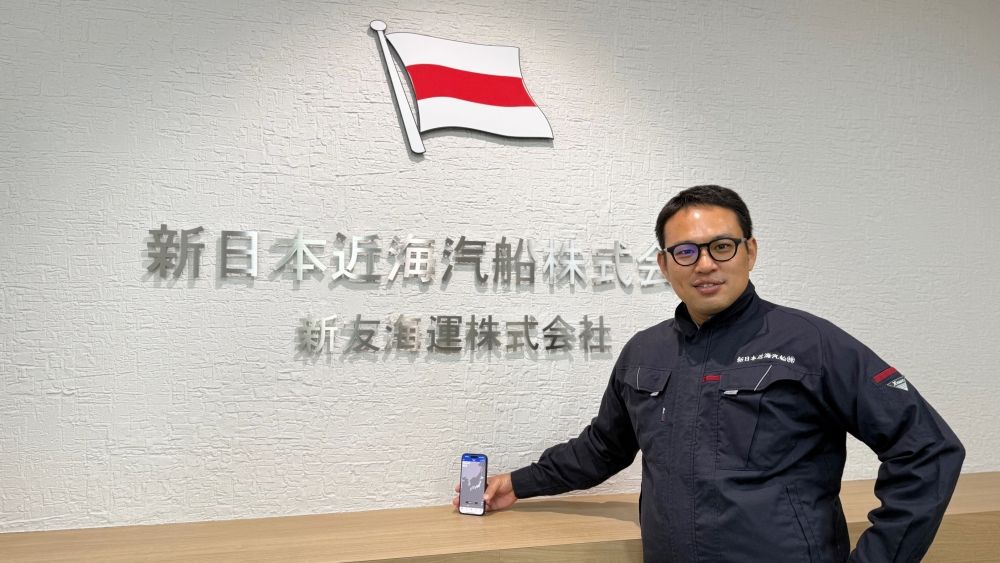
Customer Case Study: Shin Nihon Kinkai Kisen Co., Ltd. | Faster, More Consistent Decisions and Safer Vessel Operations
How do companies use the service in their day-to-day operations? Here, we introduce the experience of Shin Nihon Kinkai Kisen Co., Ltd., which transports cargo essential to Japan’s infrastructure and industries, including coal for power plants, steel products, and automotive body panels.
Operating tramp vessels involves complex scheduling. Wind direction can change, wave heights can rise, and visibility can deteriorate within a short period. Operational decisions therefore require constant attention to changing weather conditions.
Previously, the company used multiple weather tools. Vessel crews and shore-based operators relied on different platforms, which sometimes resulted in discrepancies between forecast values for the same sea area.
The company discovered Weathernews for business. Its ability to overlay essential marine information from departure to arrival, including vessel position, typhoon track forecasts, ocean currents, and sea surface temperatures, onto electronic nautical charts and weather satellite maps was a key factor in the company’s decision to adopt the service.
Today, the company uses nautical charts, wave forecasts, rain cloud information, typhoon track forecasts, and other data in its operations. Naohiro Ito, Deputy General Manager of the Sales Department, describes one of the key changes since implementation:
“By consolidating our information sources, we have made it easier to align decision-making criteria between our teams at sea and ashore.” The company reports improvements in both the speed and accuracy of operational decisions, contributing to enhanced safety.
https://wxtech.weathernews.com/en/case/shinnihon-kinkai/#point-1
How Does Weathernews for business Differ from Free Apps and Other Paid Services?
There are several ways to obtain weather information, including fax-based forecasts, free weather apps and websites, and professional services for businesses.
Each option has its strengths. Rather than deciding which is universally better, the key is to choose a service based on the operational decisions your company needs to make.
The following table compares the types of information available for coastal vessel operations.
| Comparison Item | Company A: Free Weather Information | Company B: Paid Service | Weathernews for Business |
|---|---|---|---|
| Geographic coverage | Weather forecasts for locations nationwide | General weather conditions nationwide | Point-specific forecasts for routes and ports of call |
| Typhoon and low-pressure system forecasts | Three models | JMA forecasts | Comparison of 22 models, including Weathernews' proprietary models |
| Electronic nautical charts | Not available | Integration possible | Built in; marine weather data can be overlaid on charts |
| Support for safety management regulations | Not available; weather information can be viewed for selected locations | Weather-based operational decisions are possible | Operational decision-making data can be recorded |
| AIS integration | Not available | Possible through integration with other services | Available as an option within the Weathernews service |
| Safety confirmation | Not available | Not available | Location-based safety confirmation, with reports that can be submitted by smartphone even at sea |
*Based on Weathernews' own research of publicly available information as of October 2026.
Free weather information may be sufficient if you simply need a general overview of conditions across the country. However, if your company needs to ensure that vessel crews and shore-based teams make decisions based on the same information, or explain operational decisions to cargo owners and internal stakeholders using high-resolution data, a professional service that provides forecasts for specific routes and ports of call, as well as access to past data, may be more suitable.
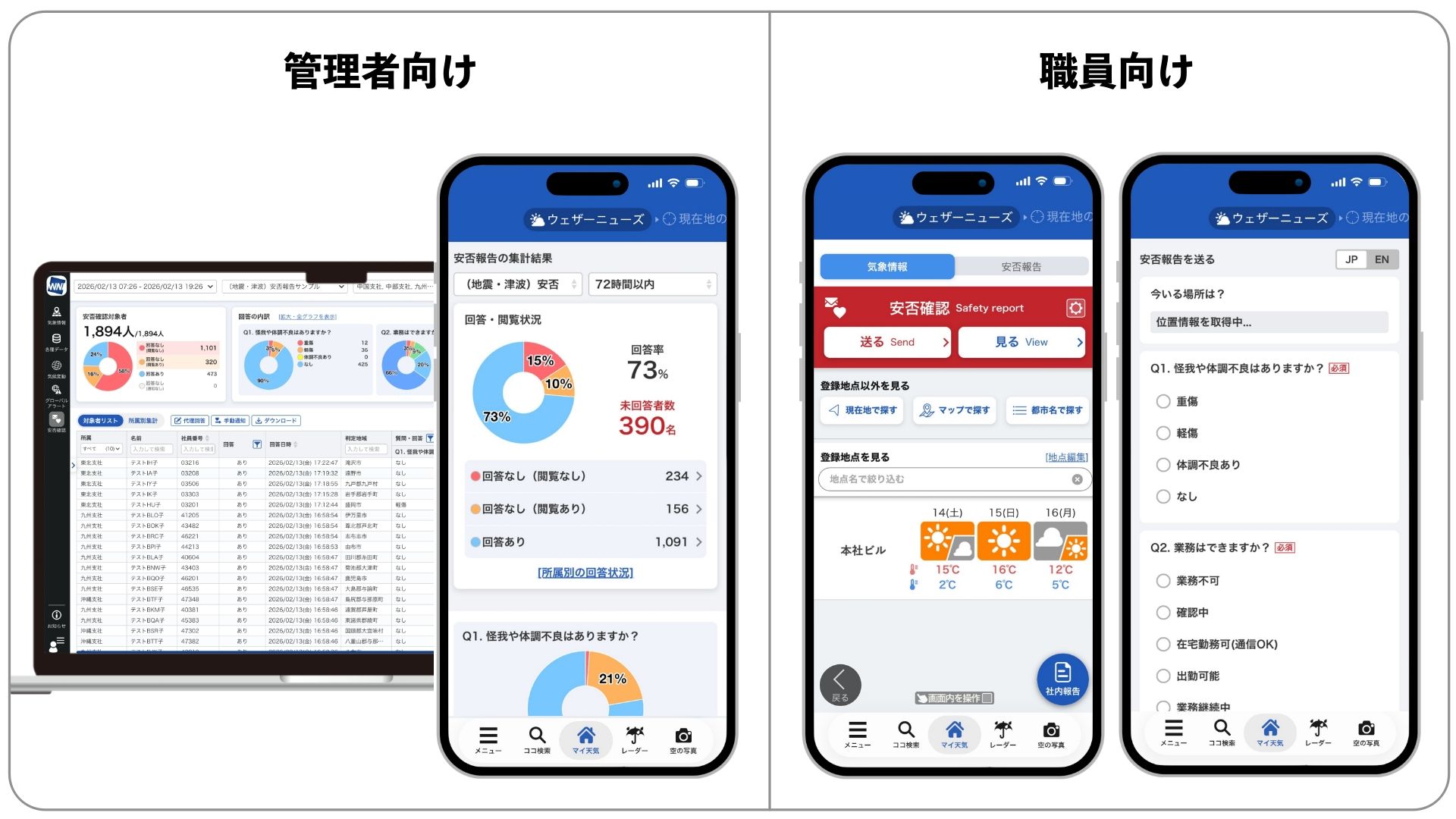
Safety Confirmation for Seafarers: An Increasingly Important Need Recently, we have received more inquiries about employee safety-check systems, particularly from companies facing a common challenge: “We have a safety confirmation tool for shore-based employees, but it doesn't cover seafarers who are on board vessels.” Conventional employee safety-check systems generally assess disaster exposure based on an employee’s home or workplace address. As a result, when seafarers are affected by a disaster while working at sea or in a port, it can take time to confirm whether they are safe.
In some cases, whenever an earthquake occurs, company administrators must identify potentially affected crew members by checking vessel routes and then contact each person individually by phone or LINE.
The employee safety-check feature in Weathernews for business combines smartphone location data with disaster information to send requests specifically to people who may be affected.
Because the Weathernews app supports Starlink connectivity, crew members can also respond while at sea, depending on the available connectivity. The system can aggregate employee safety status by company and vessel, including for group companies and partner companies.
Summary: Weathernews for business for Coastal Shipping
Weathernews for business helps coastal shipping operators make safer, faster, and more consistent operational decisions.
Key benefits ・ High-resolution, high-accuracy weather and marine forecasts. ・ Access through a web browser on a computer or the Weathernews smartphone app, which supports Starlink connectivity. ・ Proprietary forecasts adjusted using real-time observations from connected instruments are also available.
Pricing From ¥50,000 per month Pricing is tailored to each company's requirements, including the number of vessels covered, the number of user IDs, and any optional services.
How to Get Started
The implementation process generally follows these steps: 1.Initial consultation: Contact us for an online introduction, including a demonstration of the service.
2.Needs assessment: We discuss the challenges and requirements associated with your vessels, ports, and users.
3.Quotation: We provide a quotation tailored to your needs.
4.Contract and launch: Following the agreement, you can begin using the service. No major equipment installation or software installation is required. We provide login credentials for accessing the information through the website or the Weathernews app, and the service can be ready for use in as little as two weeks after the contract is signed.
For more information, please visit the following pages.
・ Weathernews' services for coastal shipping:https://wxtech.weathernews.com/industries/coast/
・ Request a consultation: We can walk you through the actual service screens and explain how the system works. (Approximately 30 minutes.) https://wxtech.weathernews.com/download-form/coast-wfb/
Footnotes
- 1:対象期間:2024/10/01 - 31、評価内容:有義波高、沿岸部の26373地点) ↩︎
Share
October 23, 2026
Behind the Scenes at Aichi-Nagoya 2026: How Weather Information Helps Protect Athletes and Staff from 45 Countries and Regions
October 16, 2026
Chiba Torrential Rain Disaster: How Weathernews Protected Employees and Maintained Business Continuity
September 15, 2026
Behind the AI System Delivering Forecasters’ Messages to People Around the World in Just Three Lines