
November 5, 2026
Weathernews Launches AI Nowcast to Improve Heavy Rainfall Forecasts




Heavy rain that develops in a short time can be difficult to forecast, and it can lead to disasters. To forecast these events more accurately and help keep users safe, Weathernews launched AI Nowcast in October 2026. The technology provides highly accurate forecasts of rainfall amounts for the next few hours, including rain from sudden localized thunderstorms and quasi-stationary linear precipitation bands, where bands of heavy rain clouds stall over the same area.
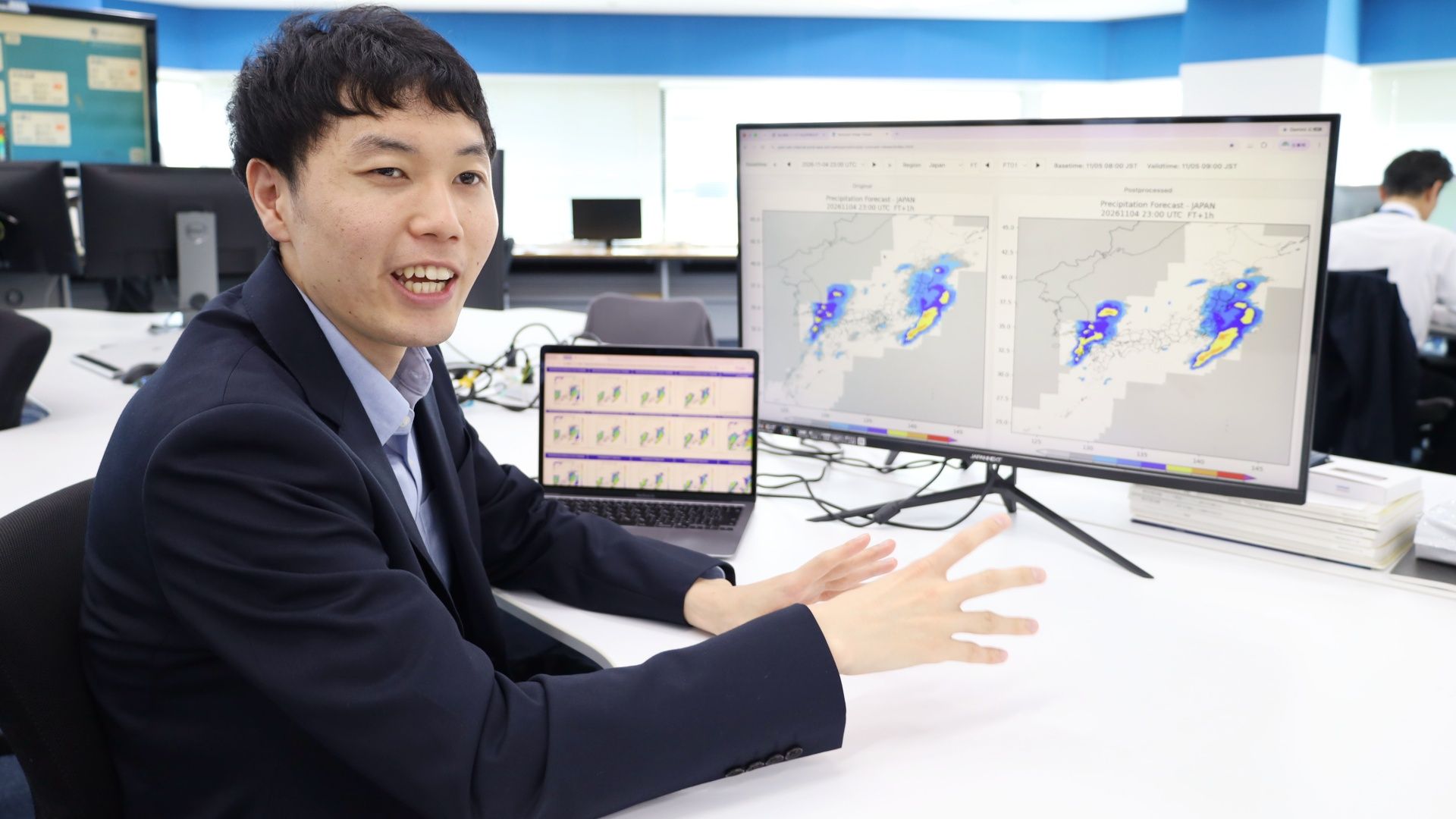
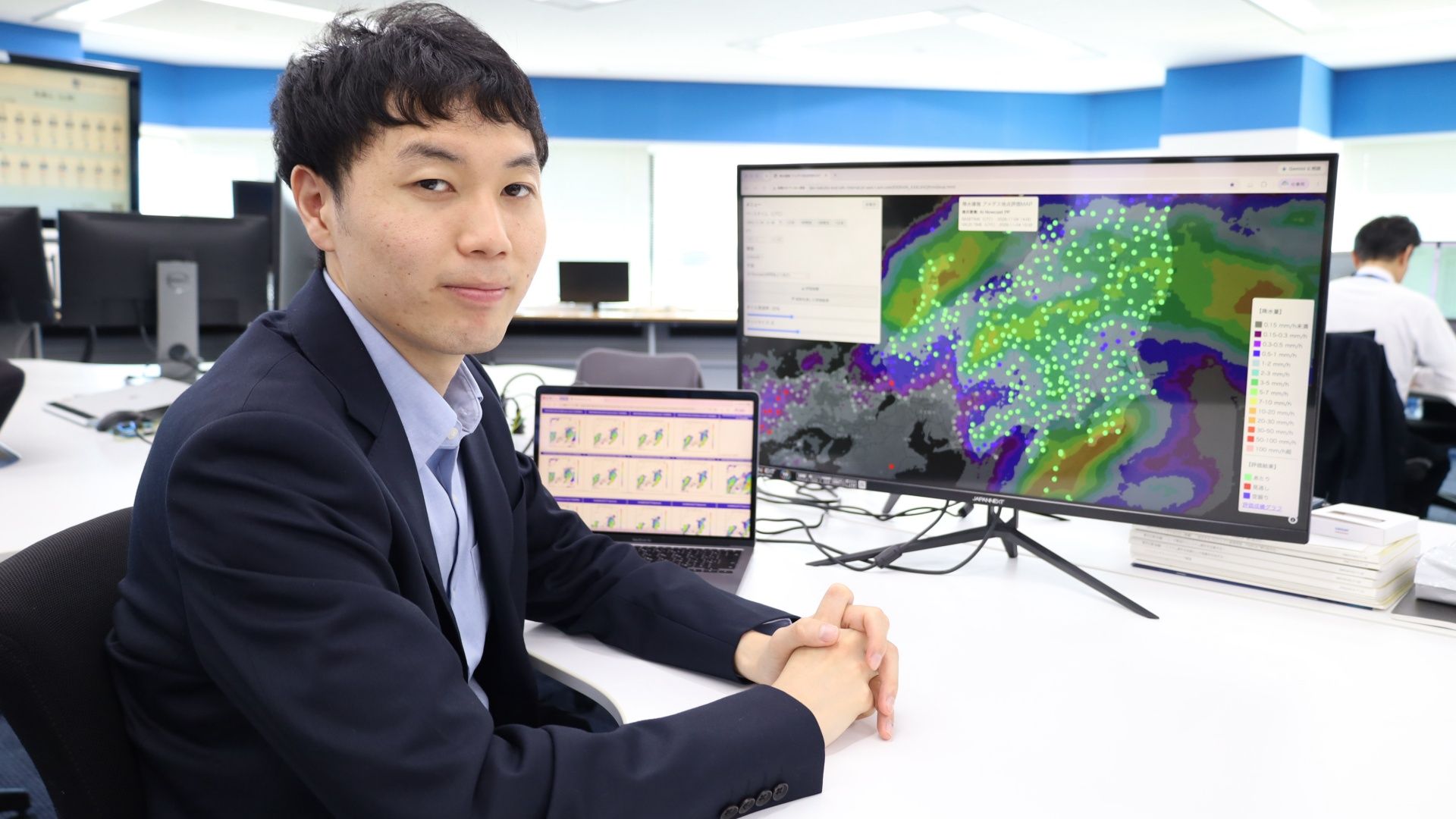
Jumpei Fujino of the Weathernews Forecast Center helped develop AI Nowcast. We asked him to explain why we used AI to produce high-resolution forecasts on a 1 km grid, how the system differs from conventional methods, and what happened behind the scenes during development.
Combining Our Data with AI to Forecast Heavy Rainfall
Our forecasters work every day to improve accuracy, but conventional nowcasting*1 cannot always capture heavy rain that develops rapidly. That gap led us to take on a new challenge: using AI to predict short-duration heavy rainfall more accurately.
*1 Nowcasting: Highly localized forecasts covering the immediate future, from conditions occurring right now to the next few hours.
Around the world, meteorological agencies and companies such as Google and NVIDIA are developing AI weather forecasting models, but most of this work focuses on global models that forecast weather across the entire Earth one to two weeks ahead. What we want to capture is different: heavy rainfall just a few hours ahead, especially rapidly developing events that can lead to disasters, such as sudden localized thunderstorms and linear precipitation bands.
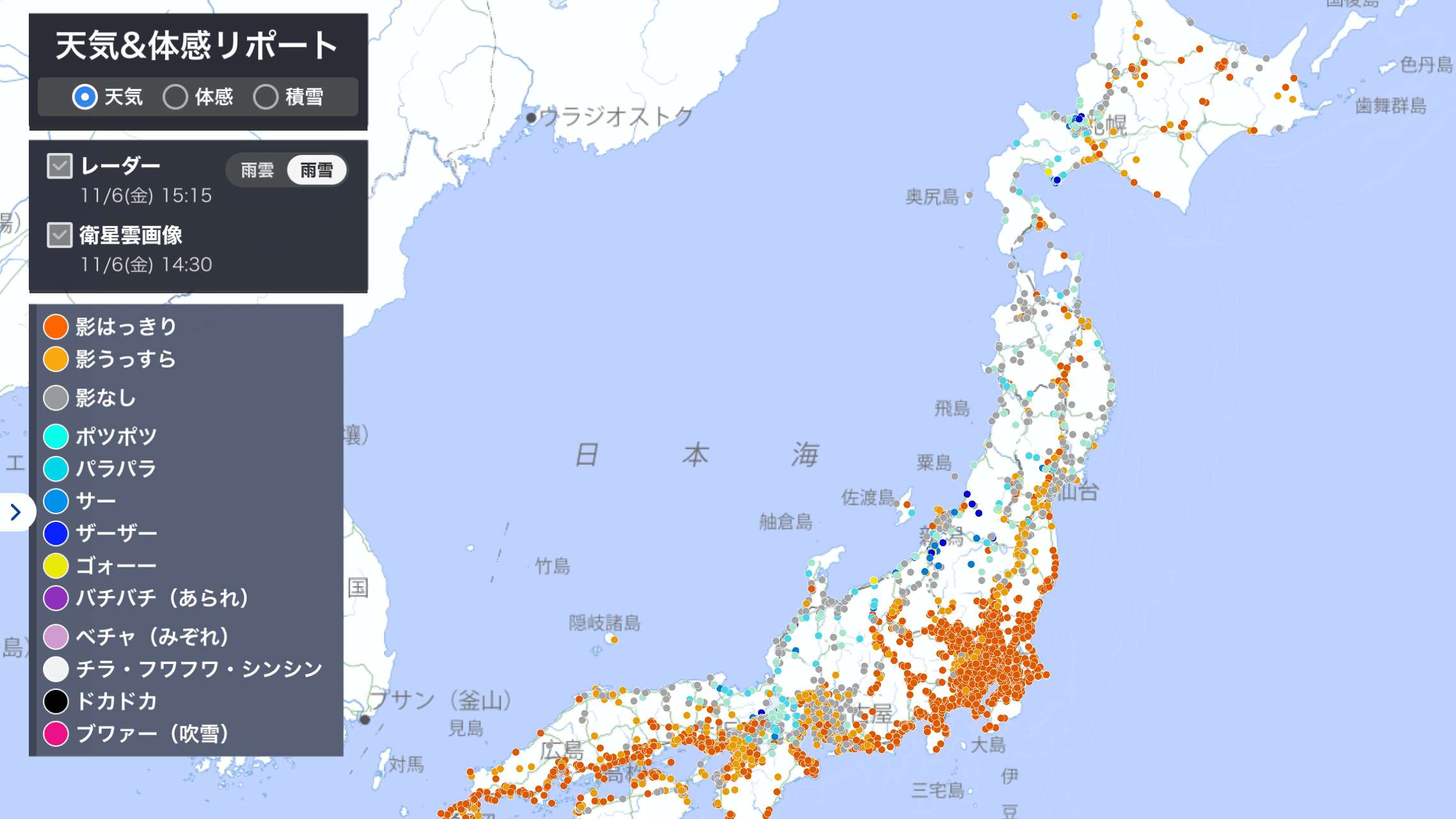
We have our own observation network, and we receive weather reports from app users through our Weather Reports service. These sources produce highly accurate real-time weather analysis data.[1] By combining that data with the computing power of AI, we can rerun the model every 10 minutes and capture localized heavy rainfall.
AI Nowcast came from bringing those two strengths together: our own data and the computing power of AI. We believe it allows us to offer society unique value that others cannot replicate.
How AI Nowcast Predicted Heavy Rainfall in Chiba
Conventional nowcasting relies on extrapolation. It looks at how rain clouds have been moving and assumes that if a cloud is traveling in a certain direction at a certain speed, it will still be moving the same way an hour later. AI Nowcast goes further. Trained on vast amounts of historical data, it combines factors such as temperature, wind, and atmospheric pressure to predict not only how existing rain clouds will move, but also where new ones will form.
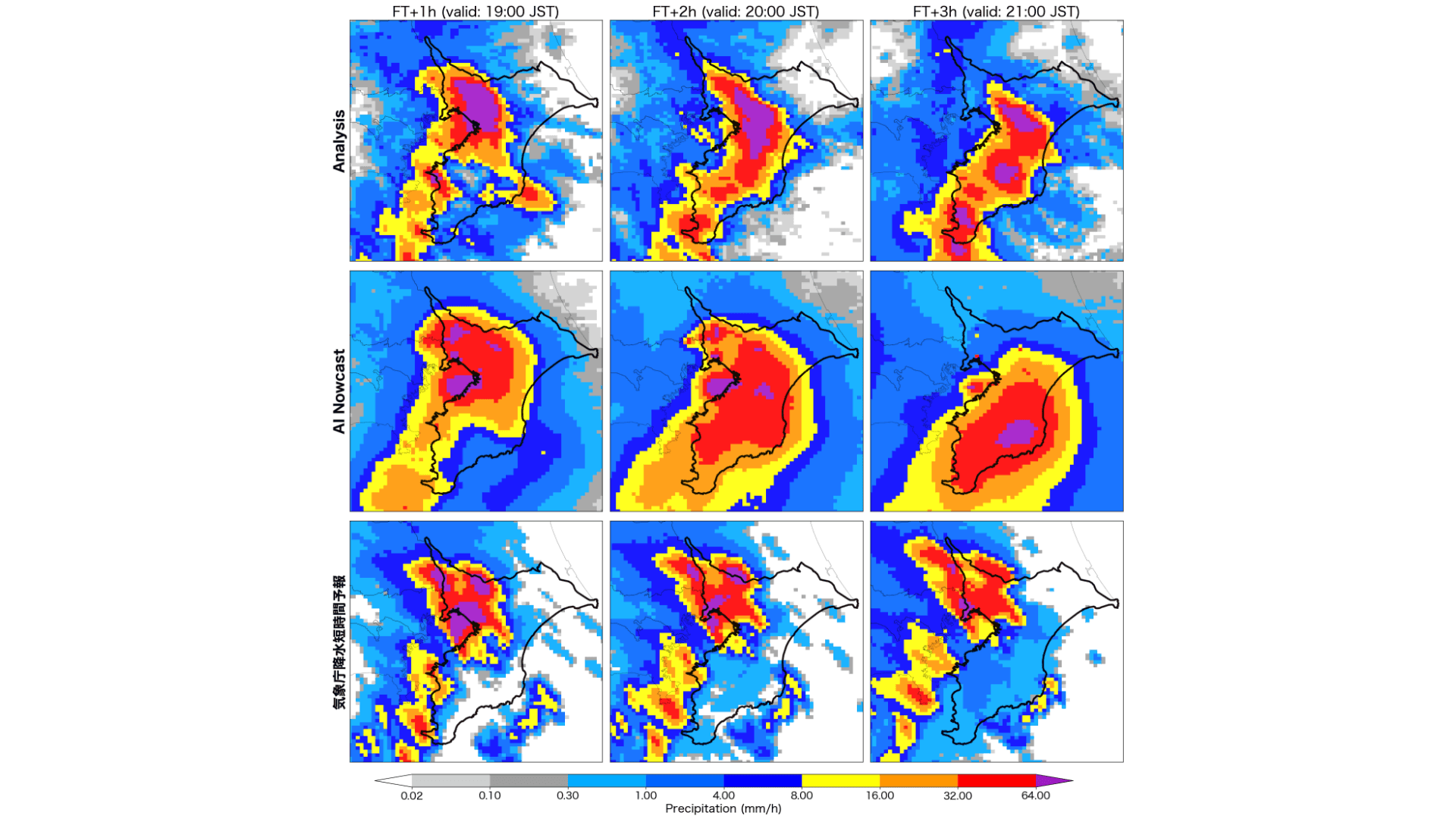
This strength became clear during the heavy rainfall in Chiba in August 2026.
The Japan Meteorological Agency’s Short-Range Precipitation Forecast showed the existing rain clouds continuing to move northwest. AI Nowcast, however, predicted that those clouds would gradually weaken, while new, intense rain clouds would form to the southeast and keep the rain falling there. As a result, it more accurately showed where heavy rain would actually fall.
Making AI Forecasts Accurate Enough for Practical Use
From a technical standpoint, using AI to create frequently updated, high-resolution forecasts was not especially difficult. But a forecast that misses is of little use and can even cost users’ trust. The hardest part of development was making the forecasts accurate.
Early versions of the model tended to spread light rain over a broad area to reduce forecast errors. With advice from experienced staff, we applied our own adjustments based on Weathernews’ forecasting expertise so the model could clearly show local differences between heavier and lighter rain.
Rather than relying on AI alone, we bring in human meteorological expertise and fine-tuning in the final stages. This is where we can show our skills as weather professionals, and we see it as an essential step in putting AI technology to work in society.
The Culture Behind AI Nowcast
We believe two aspects of Weathernews’ corporate culture made it possible to put AI Nowcast into real-world use.
The first is the flexibility and speed to spot promising technologies around the world and combine them with our own weather data. The second is a culture where the company backs worthwhile initiatives that start with engineers on the front lines, driven by their sense of urgency and commitment.
Mastering advanced technologies and turning them into solutions with exceptional practical value is what Weathernews does best.
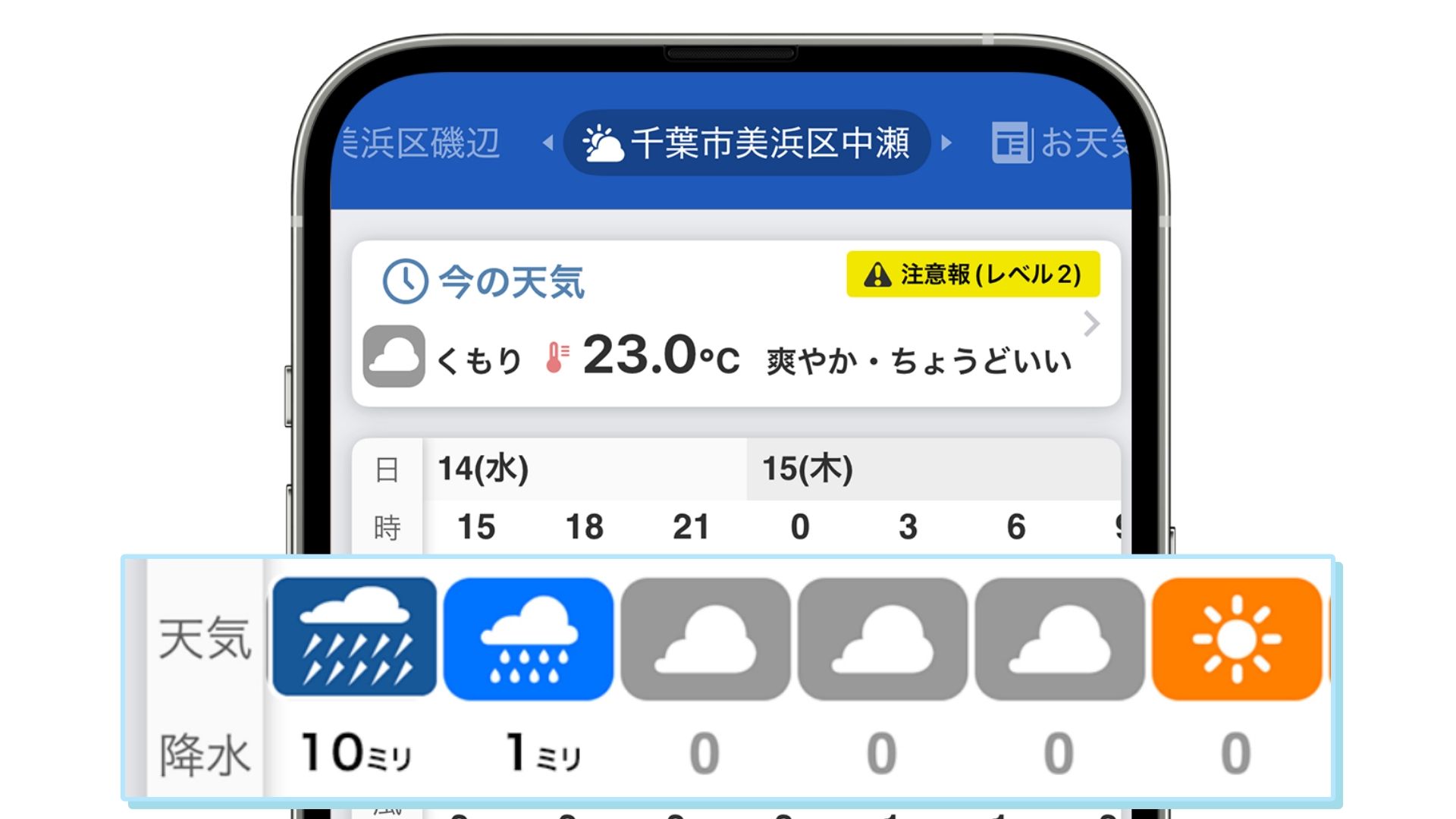
AI Nowcast is now built into the rainfall forecasts in the Weathernews app, which ranks No. 1 among weather apps by number of users.[2]
We want these forecasts to work as disaster prevention information, helping users spot the dangers of sudden localized thunderstorms and linear precipitation bands early enough to protect their lives. We also want users to be able to rely on them for everyday decisions, such as whether to take an umbrella.
We see the current model as a starting point and plan to keep improving it as technology advances and society's needs change. Our next goal is to add inputs such as weather satellite observations so the model can forecast up to 12 hours ahead while maintaining high accuracy. That longer lead time would give users more time to prepare and evacuate when necessary.
We will keep putting the latest technologies to work and developing new forecasting capabilities that help protect users’ lives.
Footnotes
Share

November 10, 2026
Why Users Are So Satisfied with Soratena Pro

November 2, 2026
How Marine Weather Data Helps Coastal Shipping Operators Make Faster, More Accurate Decisions
October 23, 2026
Behind the Scenes at Aichi-Nagoya 2026: How Weather Information Helps Protect Athletes and Staff from 45 Countries and Regions