
April 19, 2026
Widespread Damage Across Asia in 2025: Intense Storms, Erratic Tracks, and Tornadoes



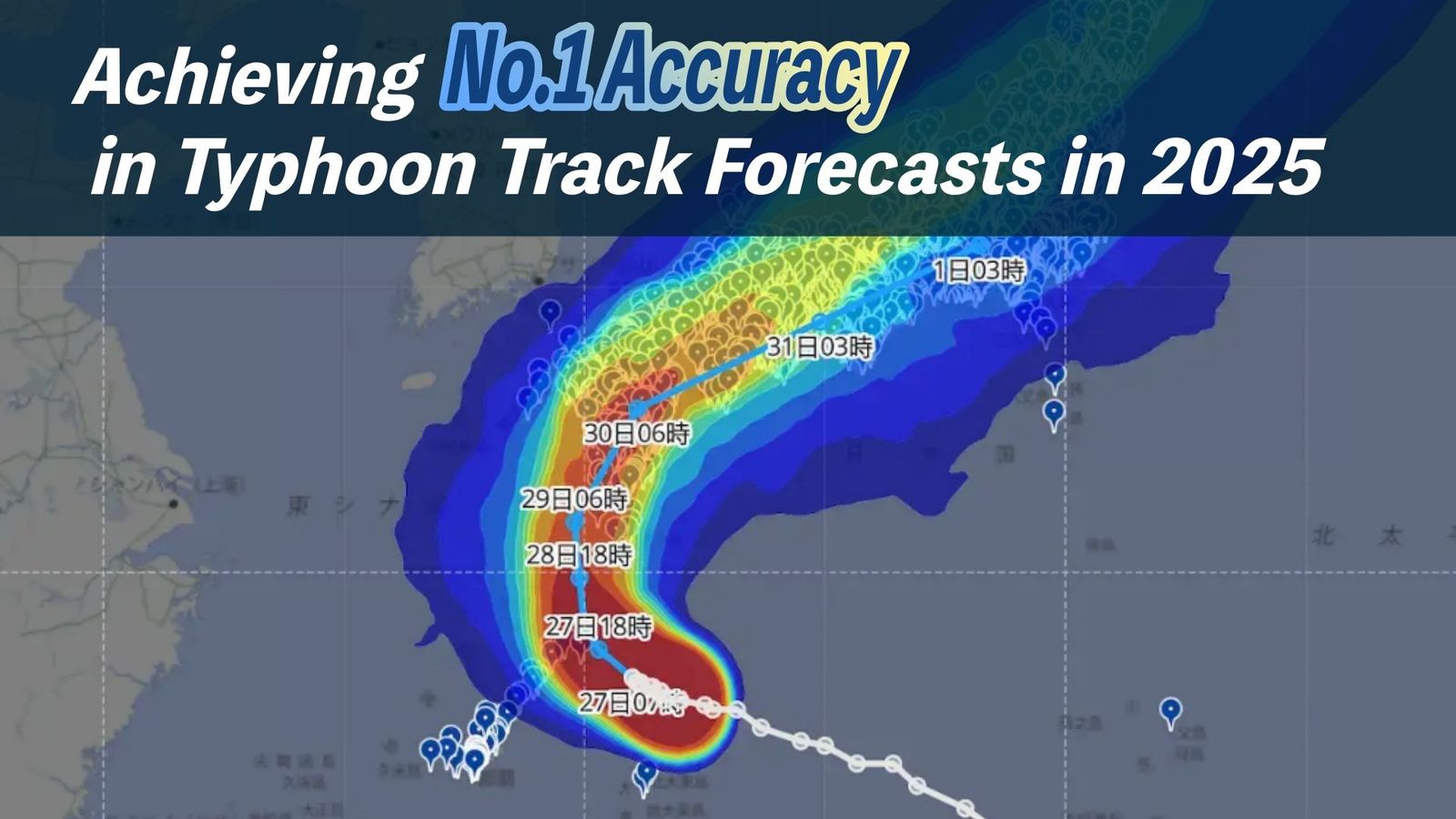
According to the Japan Meteorological Agency, 27 typhoons formed in 2025—the highest number in the past six years. Beyond the high frequency, many storms were characterized by erratic movement and rapid intensification, making them difficult to predict and causing severe damage across Asia. In particular, typhoons in September and October brought unprecedented wind and rainfall that defied conventional expectations. We have detailed these threats in our previous review articles.
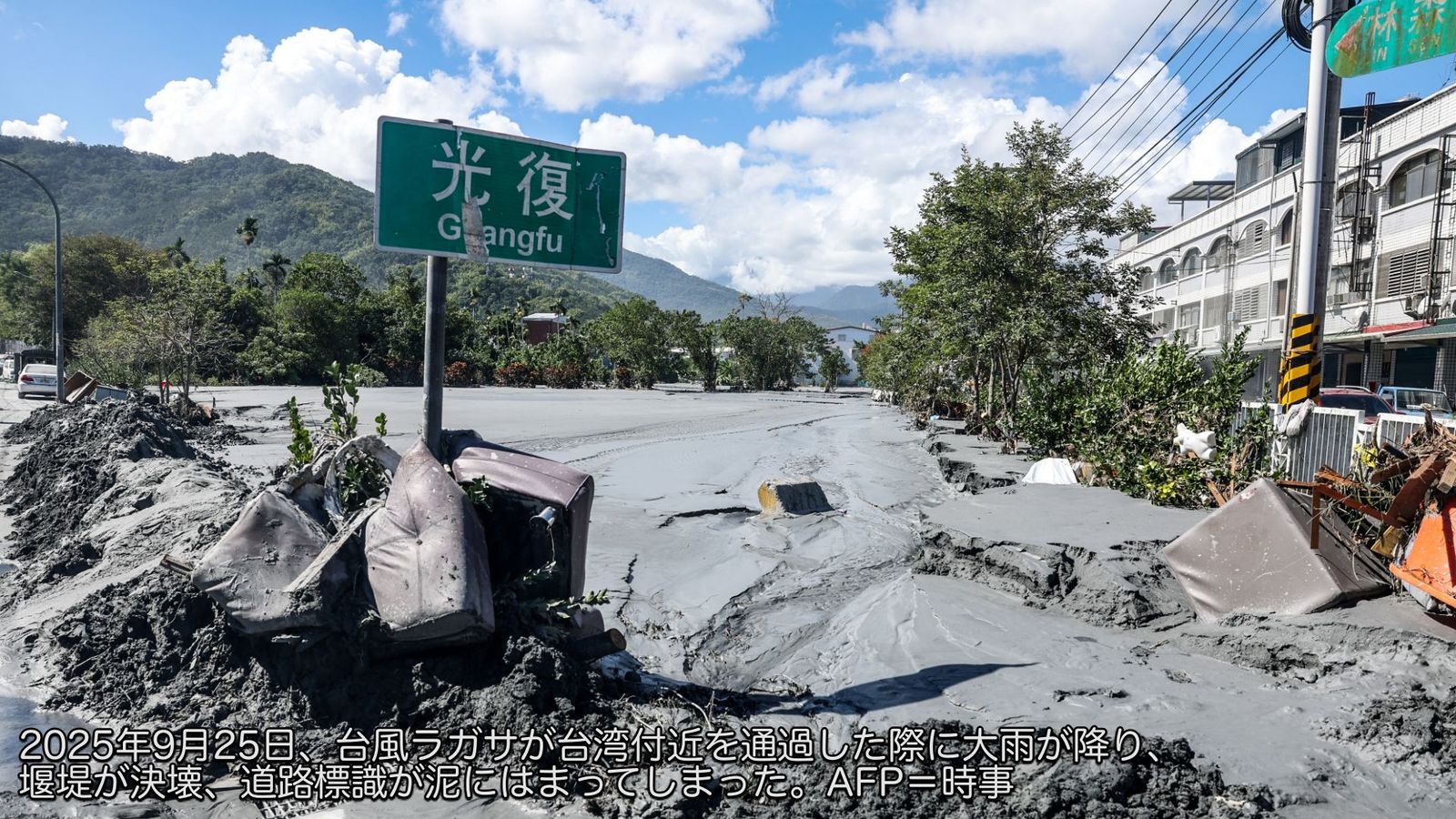
Typhoon No. 18 (Ragasa) formed east of the Philippines on September 18, 2025. Shortly after formation, it rapidly intensified into a "violent" storm (super typhoon class). It maintained its strength as it passed between the Philippines and Taiwan before moving westward into the South China Sea. In Hualien County, Taiwan, flooding caused significant damage, resulting in 14 fatalities and 152 people missing (as of September 24, 2025).
Typhoon No. 15, meanwhile, moved across eastern Japan at a high speed of approximately 60 km/h after landfall. While its track was relatively stable, it triggered highly localized extreme weather—including linear precipitation bands and a JEF3-class tornado in Makinohara City. These phenomena are notoriously difficult to predict. The tornado caused 74 injuries and damaged more than 1,000 homes.
Widespread Damage Across Asia in 2025: Intense Storms, Erratic Tracks, and Tornadoes
According to the Japan Meteorological Agency, 27 typhoons formed in 2025—the highest number in the past six years. Beyond the high frequency, many storms were characterized by erratic movement and rapid intensification, making them difficult to predict and causing severe damage across Asia.
In particular, typhoons in September and October brought unprecedented wind and rainfall that defied conventional expectations. We have detailed these threats in our previous review articles.
Typhoon No. 18 (Ragasa) formed east of the Philippines on September 18, 2025. Shortly after formation, it rapidly intensified into a "violent" storm (super typhoon class). It maintained its strength as it passed between the Philippines and Taiwan before moving westward into the South China Sea. In Hualien County, Taiwan, flooding caused significant damage, resulting in 14 fatalities and 152 people missing (as of September 24, 2025).
Typhoon No. 15, meanwhile, moved across eastern Japan at a high speed of approximately 60 km/h after landfall. While its track was relatively stable, it triggered highly localized extreme weather—including linear precipitation bands and a JEF3-class tornado in Makinohara City. These phenomena are notoriously difficult to predict. The tornado caused 74 injuries and damaged more than 1,000 homes.

Weathernews Achieves the Highest Accuracy in Three-Way Comparison
One of the primary indicators of a forecast's value to society is its accuracy. In a comparison of 2025 typhoon track forecasts among Weathernews, the Japan Meteorological Agency, and the U.S. military (JTWC), Weathernews achieved the highest overall accuracy. In the graph below, the horizontal axis represents the forecast lead time (how many hours ahead the forecast was made), while the vertical axis shows the error (distance between the predicted and actual center of the typhoon). Simply put, a lower line indicates a more accurate forecast.
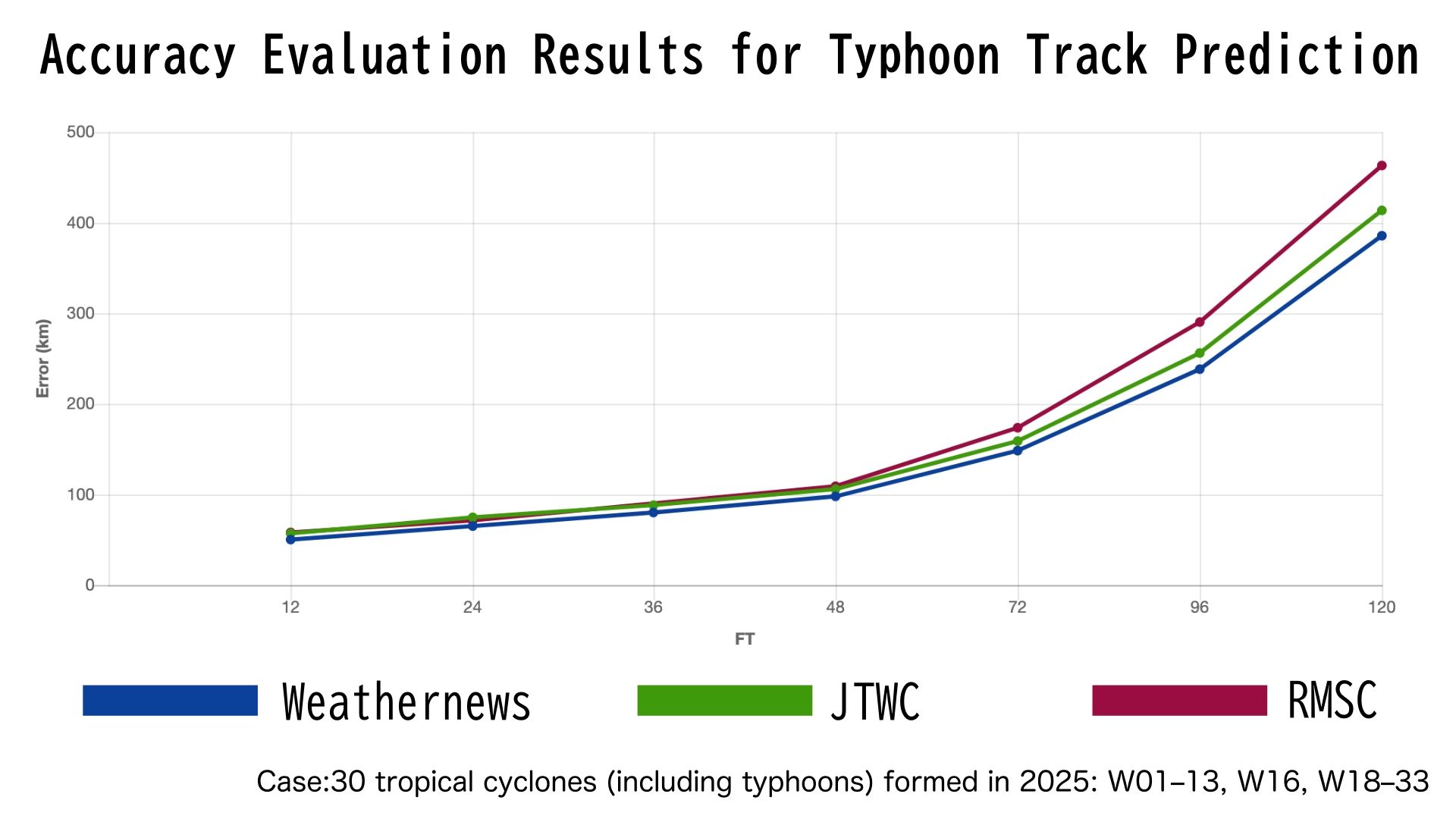
Our forecasts consistently maintained lower error values compared to other agencies, meaning our predictions stayed closer to the actual typhoon positions.
In-house analysis: Based on all typhoons that occurred in 2025, we independently compared track forecast errors among the Japan Meteorological Agency, JTWC, and Weathernews.
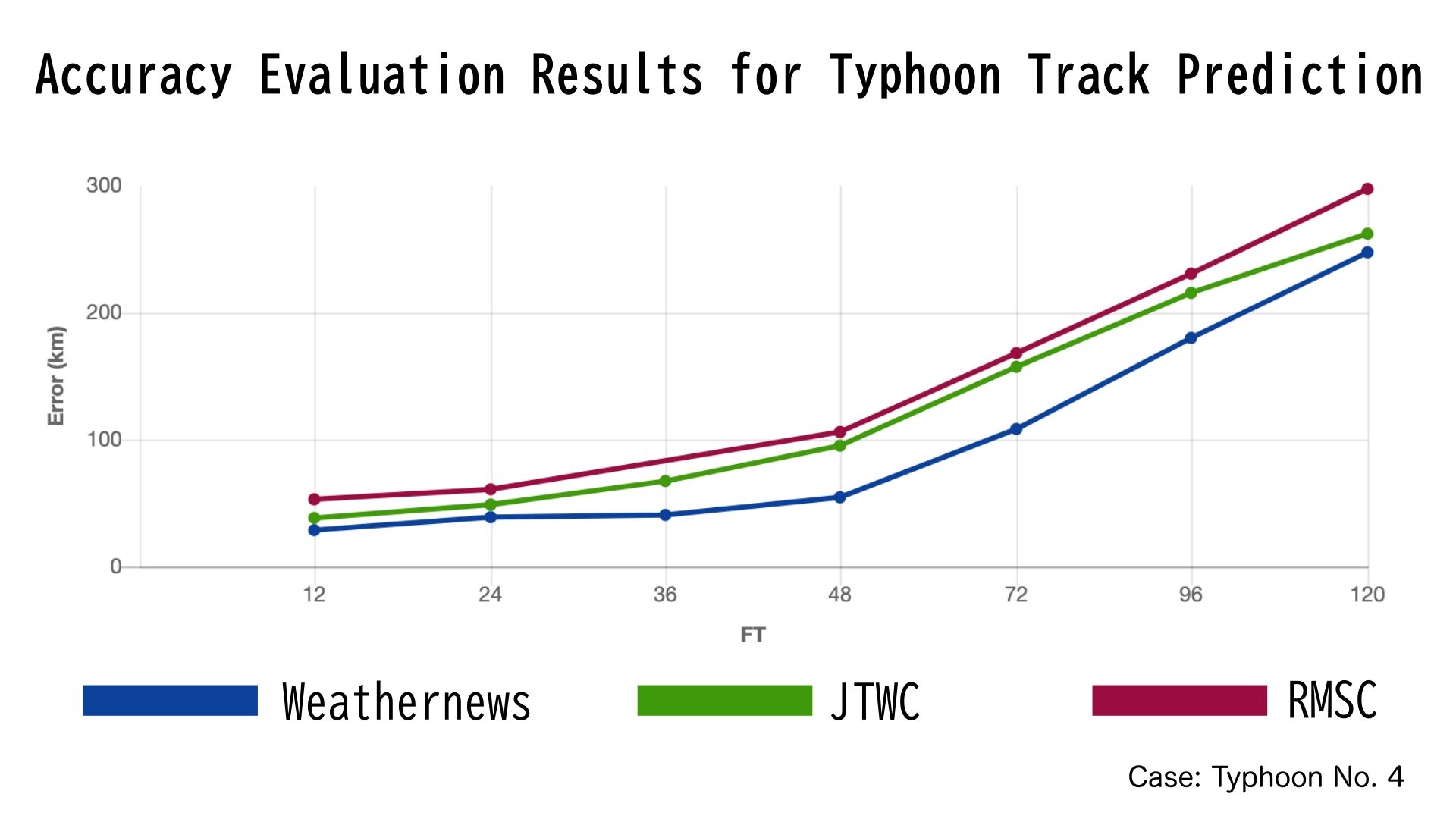
An evaluation of Typhoon No. 4 (Sinlaku), which formed on April 10, also showed higher accuracy compared to other agencies.
Combining AI with Forecaster Expertise for High-Precision Forecasts
The primary reason Weathernews can produce such high-precision forecasts is our dedicated Typhoon Specialist Team. This team monitors typhoon formation around the clock, issues forecasts, and conducts post-event analyses, refining their techniques through a continuous PDCA cycle.
Since 2025, Weathernews has deployed an "AI forecasting model" for typhoon track prediction, and its advantages are becoming clear. Specifically for track forecasts, AI trained on vast amounts of historical data can instantly identify complex movement patterns, significantly raising the baseline of forecast accuracy.
On the other hand, our analysis shows that for predicting typhoon-related precipitation, physical (numerical) models currently outperform AI models.
Moving forward, Weathernews will continue to improve the accuracy of rainfall predictions by combining cutting-edge AI models with established meteorological science and the deep expertise of our experienced forecasters.
Share

October 23, 2026
【Behind the Scenes of the 2026 Aichi-Nagoya Games】What Kind of Weather Information Is Being Used to Ensure the Safety of Staff and Athletes from 45 Countries and Regions?

October 16, 2026
Chiba Torrential Rain Disaster: How Weathernews Protected Employees and Maintained Business Continuity

September 15, 2026
Behind the AI System Delivering Forecasters’ Messages to People Around the World in Just Three Lines