
September 14, 2026
[2026 Kumamoto Earthquake] How Weathernews LiVE Protects Lives Through User Reports and Expert Analysis



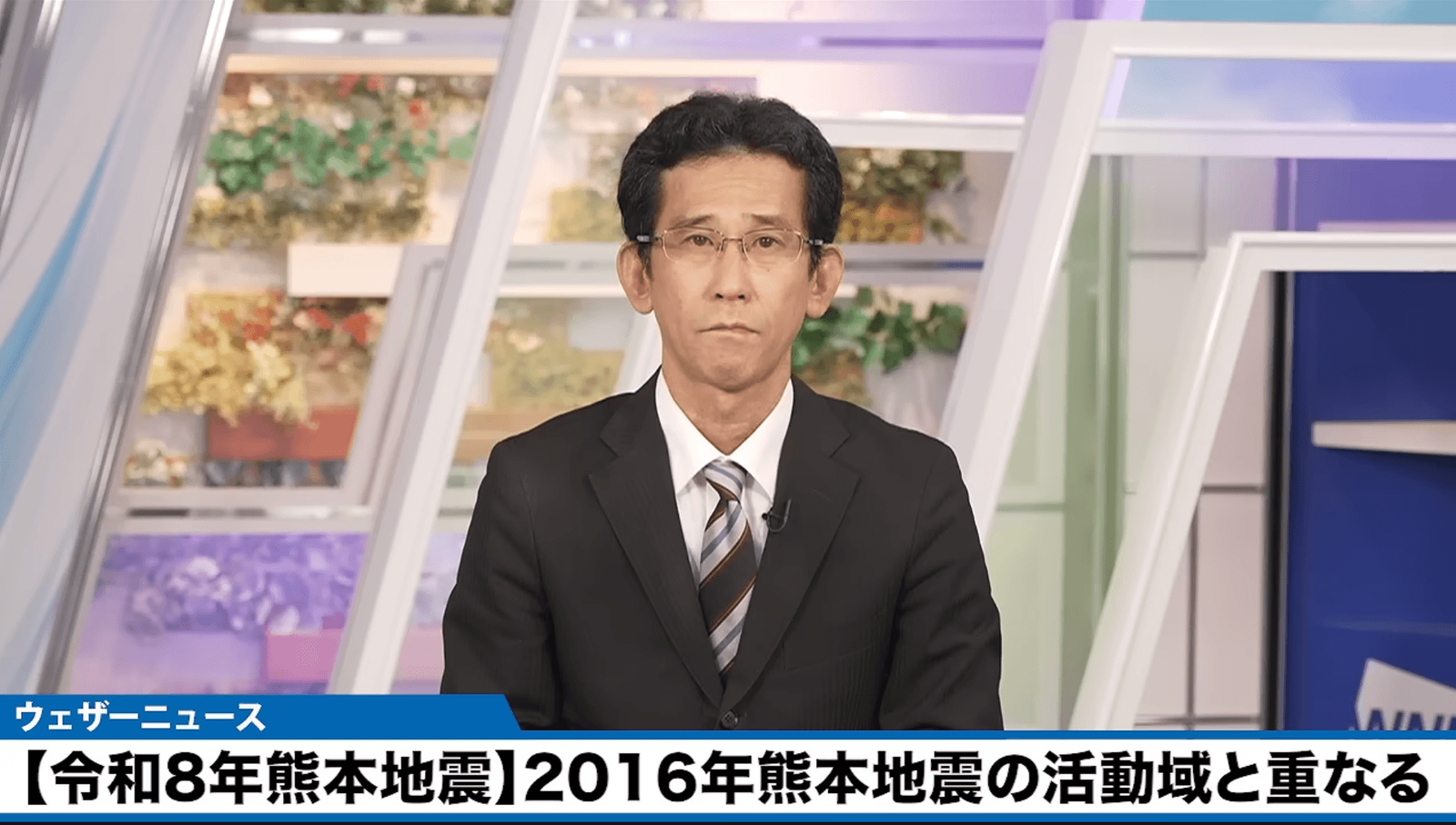
We extend our deepest sympathies to everyone affected by the 2026 Kumamoto Earthquake, as well as their families and all those impacted. We sincerely hope for the safety of everyone in the region and for a swift, smooth recovery. In the immediate aftermath of a major earthquake, while rescue and recovery efforts begin on the ground, communities face the hidden threat of secondary disasters from shifting weather. Heavy rainfall on weakened ground and the risk of severe heatstroke during outdoor recovery work pose serious dangers. Accurate weather information is essential to protecting both residents and frontline workers during these vulnerable moments.
Here is a closer look at our response to the 2026 Kumamoto Earthquake, including the launch of our real-time disaster site and our frontline coverage on Weathernews LiVE.
The 2026 Kumamoto Earthquake: Magnitude 7.1 and Maximum Seismic Intensity of 7
At approximately 4:27 p.m. on July 28, 2026, an earthquake with a magnitude of 7.1 and a focal depth of roughly 16 km struck the Kumamoto region. The event registered a maximum seismic intensity of 7, with an intensity of 4 or higher felt across a wide area. Its moment magnitude was Mw6.81, carrying an energy level roughly comparable to the devastating 1995 Hyogoken-Nanbu Earthquake (Mw6.9). The quake was confirmed to be the result of a strike-slip fault.
The ruptured rock was part of the Hinagu Fault Zone, stretching over 30 km from northeast to southwest. While the 2016 Kumamoto Earthquake primarily activated the Futagawa Fault Zone, this recent event ruptured a segment of the Hinagu Fault Zone believed to have remained dormant during the 2016 disaster. Sadly, this means both major active fault zones in Kumamoto Prefecture have experienced major activity within just a 10-year span.
Over 500 felt earthquakes were recorded in the first week following the mainshock, though the frequency has thankfully declined since. The Yatsushiro Sea segment at the southern end of the Hinagu Fault Zone did not move during this event. However, it retains a relatively high probability of generating an earthquake within the next 30 years, and our experts continue to monitor its activity closely. Our ability to provide continuous, 24-hour coverage on Weathernews LiVE is what allows our experts to break down this highly specialized geological data for the public in real time.
Unique Disaster Coverage Combining Firsthand Reports with Weather Information
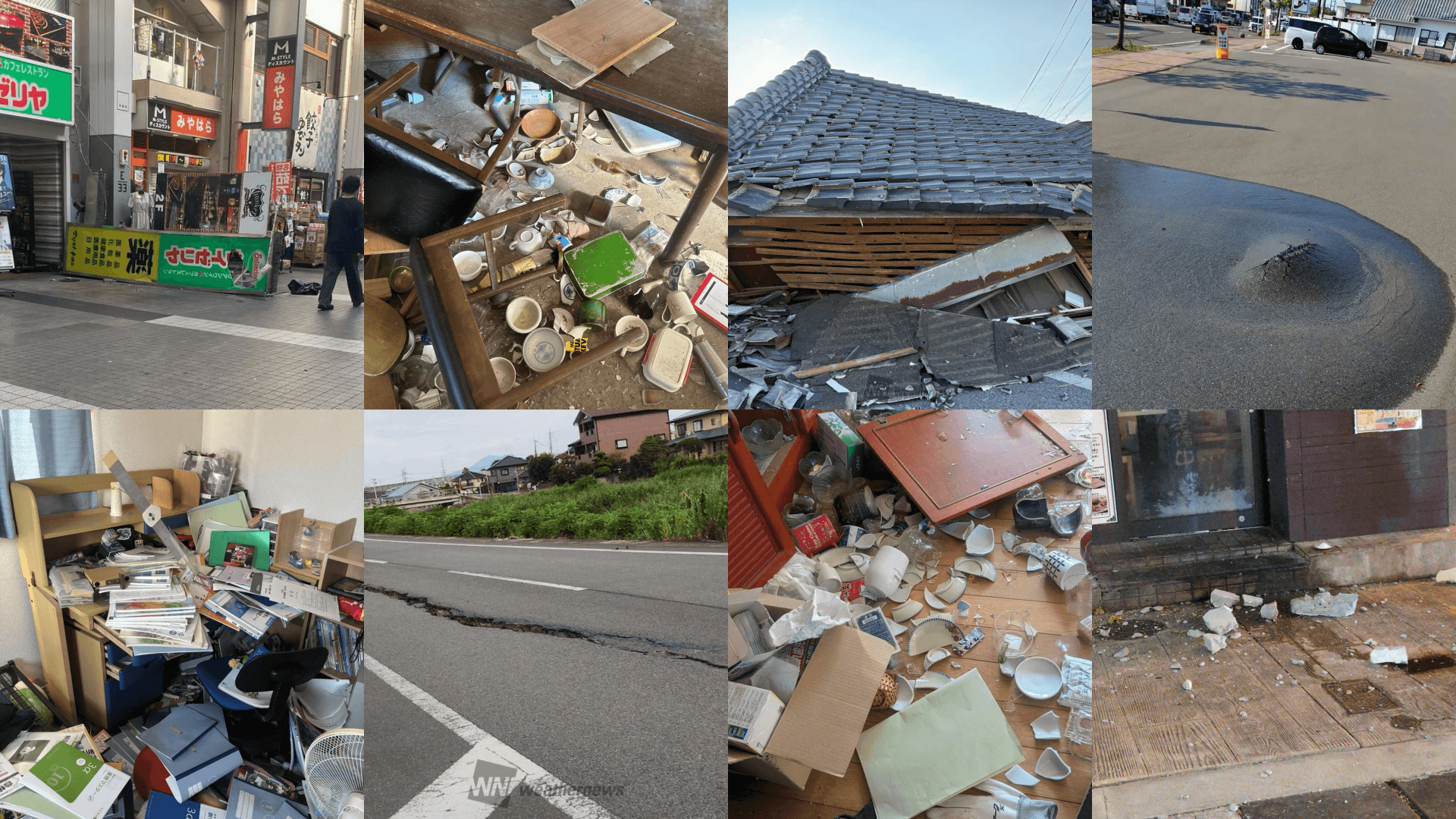
Immediately following the earthquake, our app users in Kumamoto bravely shared numerous photos and videos documenting the situation on the ground. We shared these firsthand reports in real time on our app to help neighbors alert one another, and integrated them directly into Weathernews LiVE, our 24-hour live weather program. We immediately switched from regular programming to continuous disaster coverage to support the affected region.
Following the disaster, sunny and intensely hot conditions persisted almost every day. On August 3, the Yatsushiro AMeDAS station recorded a blistering maximum temperature of 39.0°C (102.2°F). Paired with sustained humidity levels between 50% and 70%, this created a harsh environment with a severe heatstroke risk for volunteers, rescue workers, and evacuees.
Day after day, we broadcast the latest reports from the affected areas—including user-submitted media and live comments—while issuing real-time, nationwide heatstroke alerts using pinpoint temperature and humidity data. We also leveraged our meteorological expertise to provide crucial context. Alongside analyzing the earthquake's mechanism, our experts evaluated secondary disaster risks, such as how much rainfall the weakened ground could safely withstand, explaining these insights gently and clearly for our viewers.
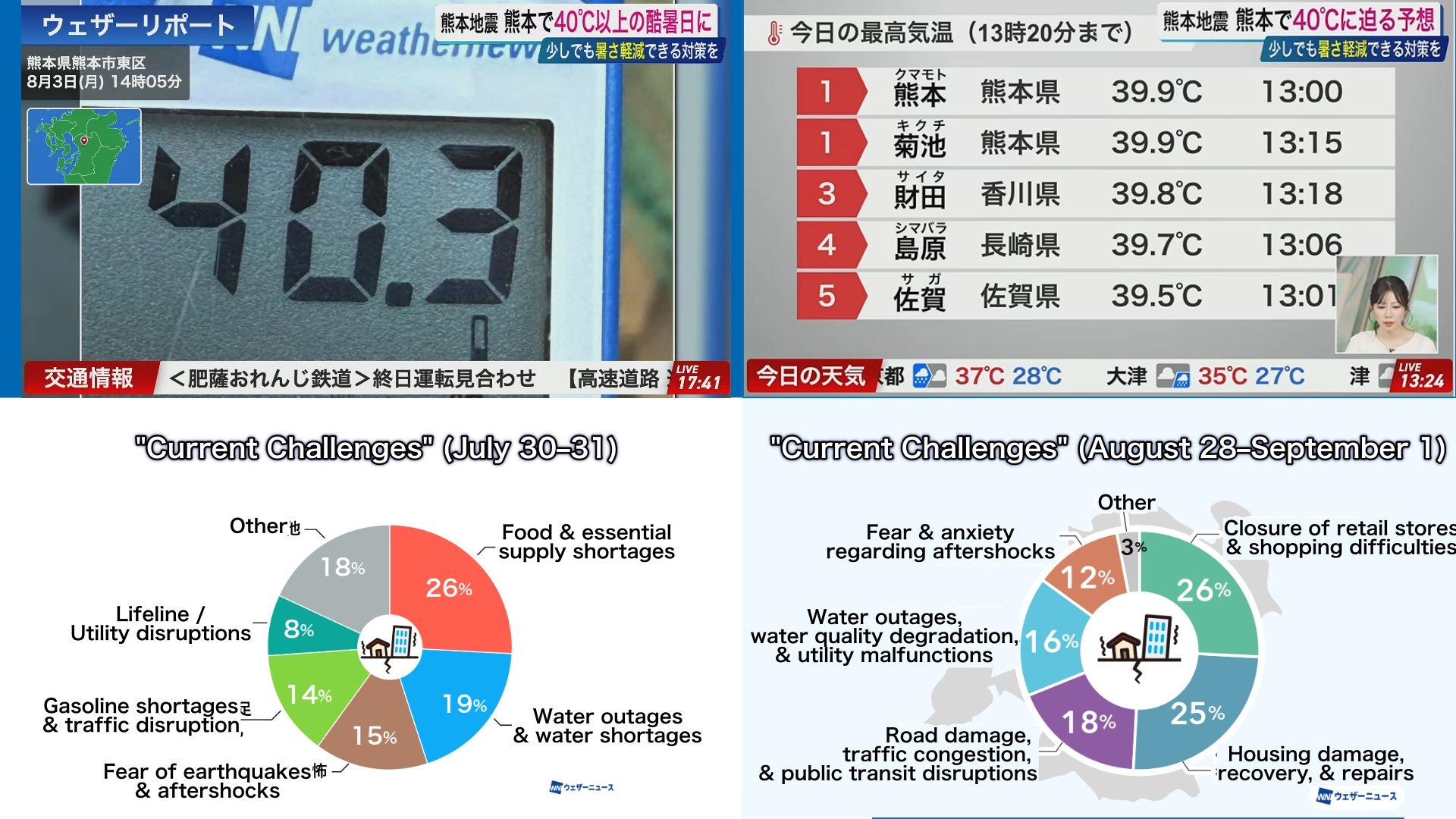
To further support the community, we conducted in-app surveys to visualize on-the-ground challenges, such as food and water shortages, and identify exactly what kind of assistance was needed locally. We then shared these vital insights through our broadcasts and web news to help direct aid where it was needed most23.
Special Website for Weather Information in the Affected Areas Launched on the Day of the Earthquake
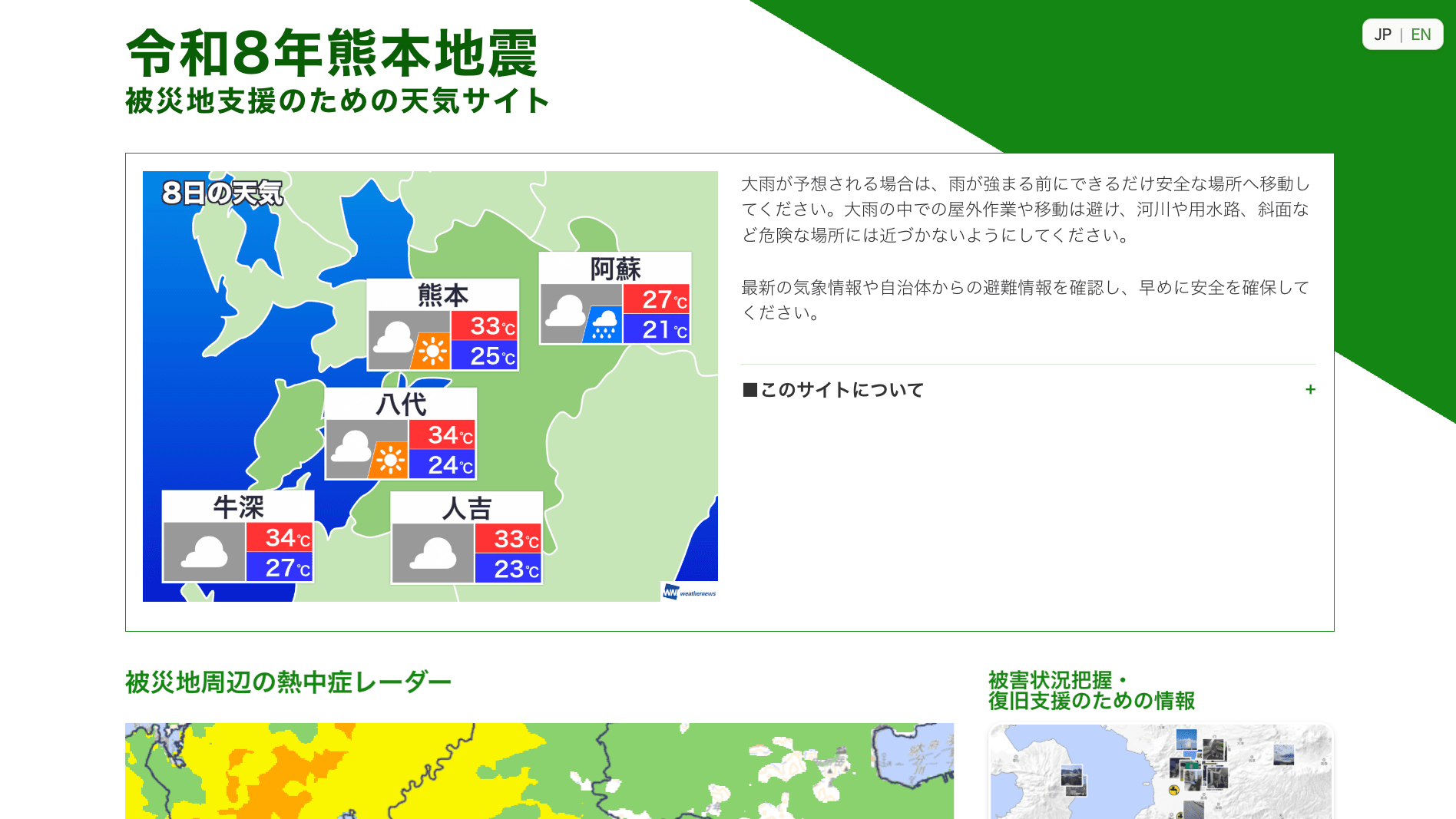
At Weathernews, we are deeply committed to being there for people when they need it most. By the evening of the earthquake, our team rapidly launched a dedicated "Kumamoto Earthquake Disaster Prevention Weather Information" website, accessible to everyone completely free of charge and without registration. Through this platform, we consistently urged people to protect themselves from heatstroke, providing real-time warnings and pinpoint weather forecasts to keep residents safe from life-threatening conditions. We made sure the website was available in both Japanese and English to support everyone in the area, including those from outside Japan.
Japanese: https://weathernews.jp/info/news/quake_kumamoto2026/
English: https://weathernews.jp/info/news/quake_kumamoto2026_en/
The "Weather Reports" submitted by our users—ranging from photos of the sky to localized condition updates—do more than just improve our forecast accuracy. They serve as a vital lifeline and reference for surrounding communities. Weathernews Inc. remains dedicated to combining these firsthand reports with expert weather analysis, sharing them across our platforms to help keep our users safe, informed, and connected.
Footnotes
- 1:Moment magnitude is an indicator calculated directly from the physical scale of a fault rupture underground—the area of the fault that slipped, the amount of slip, and the rigidity of the rock. Unlike conventional magnitude scales based on the amplitude of seismic waves, which tend to reach a limit when measuring very large earthquakes, moment magnitude accurately reflects the physical characteristics of fault rupture and can therefore measure the size of even extremely large earthquakes without losing accuracy. ↩︎
- 2:2026.07.31 ウェザーニュース 令和8年熊本地震 現地から届いた「今、困っていること」 ↩︎
- 3:2026.09.02 令和8年熊本地震 発生から1ヶ月 現地から届いた「今、困っていること」 ↩︎
Share

September 15, 2026
Behind the AI System Delivering Forecasters’ Messages to People Around the World in Just Three Lines
September 7, 2026
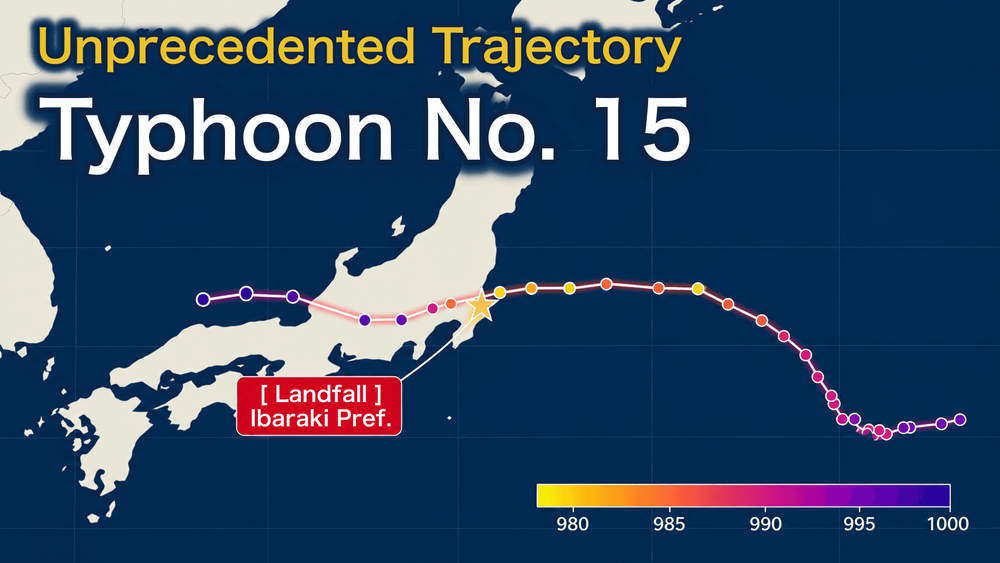
Unprecedented Trajectory: Typhoon No. 15 Makes Historic Ibaraki Landfall and Crosses Japan Westward
September 2, 2026
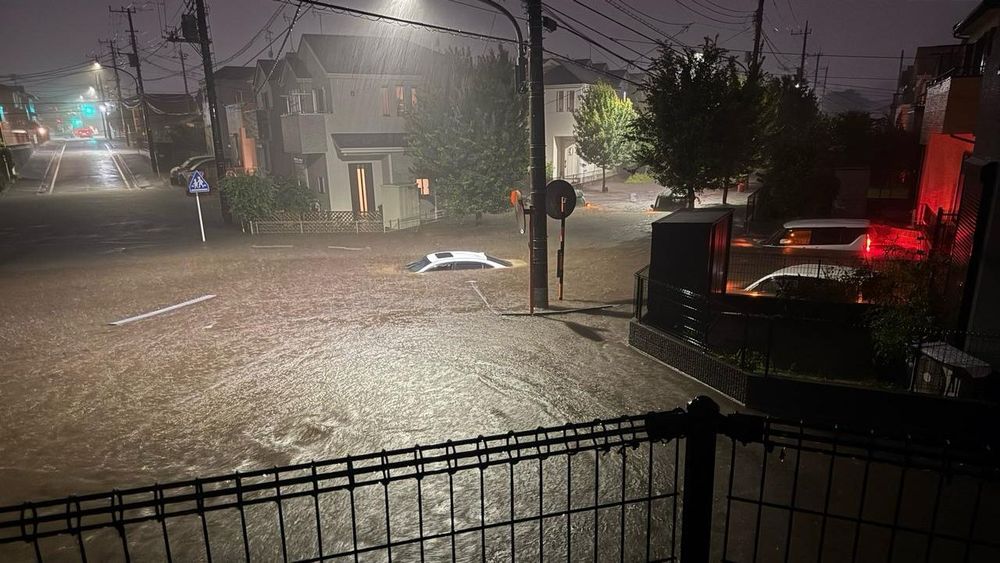
Analysis: The August 2026 Chiba Torrential Rain — Inside a Once-in-10,000-Year Downpour