
August 7, 2026
Solving Societal Challenges Through AI-Powered Weather Forecasting



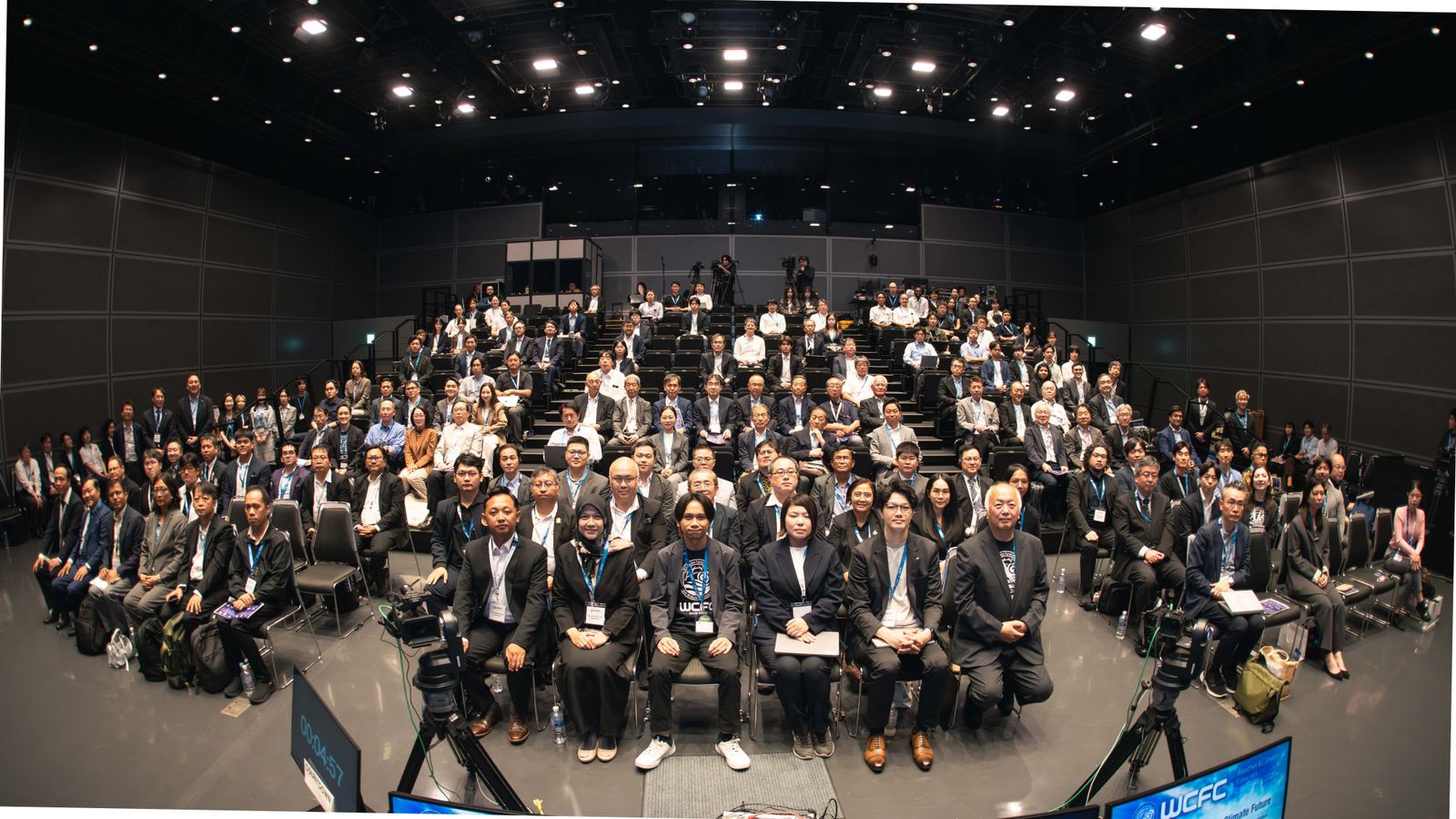
In June 2026, the WNI Weather Culture Creation Center hosted the second international Weather & Climate Forecast Conference (WCFC). Following our participation in the first event, Weathernews Inc. returned as a sponsor. We contributed to the dialogue through technical presentations and panel discussions alongside AI leaders and meteorological agencies from across Asia.
While the first WCFC focused on creating new value for the weather industry through AI, this year's theme shifted toward immediate, actionable impact: "Solving Societal Challenges Through Weather Forecasting Powered by the Latest AI Technologies."1 Conversations centered on how to translate rapid AI advancements into real-world applications to address the increasingly severe weather disasters driven by climate change. Most importantly, experts explored how to seamlessly connect early warnings to early actions to protect communities and reduce disaster impacts.
Below, we highlight key insights from the conference. These presentations showcase how AI is bringing a paradigm shift to weather forecasting, and how meteorological agencies, tech innovators, and researchers are collaborating to reshape the future of disaster preparedness across Asia.
Empowering Citizens for Climate Resilience: The Emerging Role of AI in Adaptation
Yuichiro Nishi Technical Director, Weathernews Inc.
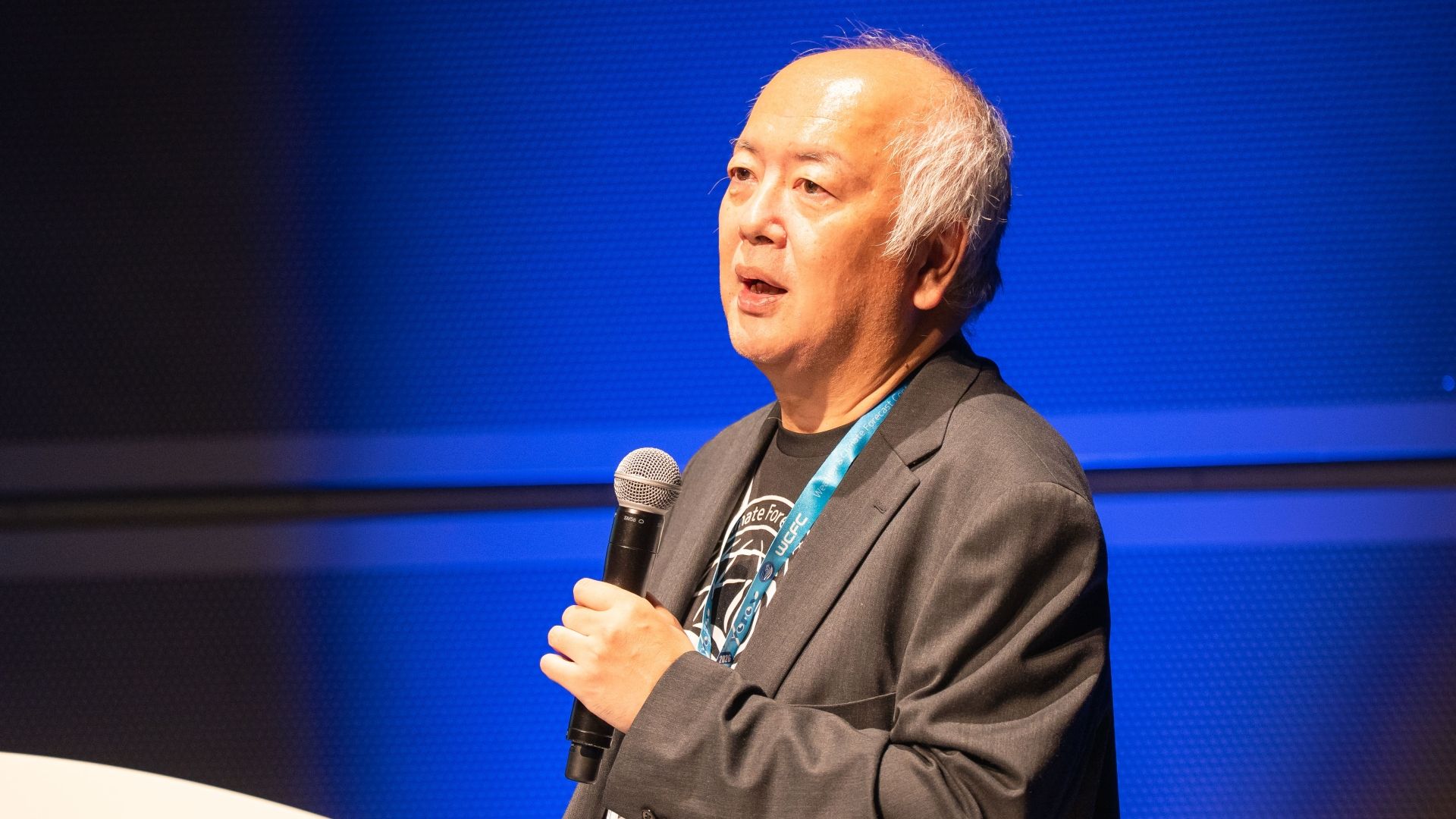
Addressing the escalating risks of extreme weather events like heatwaves, floods, and wildfires, Yuichiro Nishi reflected on critical lessons from the Noto Peninsula Earthquake. He noted a key vulnerability in modern society.
Centralized systems that usually work perfectly well and have expanded over time can become weak points during catastrophic disasters. To achieve the vision of "Early Warning for All" without leaving anyone behind, Nishi argued for a shift toward decentralized community mechanisms. These systems enable citizens to share information and distribute available resources flexibly.
Nishi expressed strong expectations for AI agents to support citizens' disaster literacy, helping to foster a more circular and resilient society. Looking ahead, he identified three essential elements for strengthening future resilience. These include high-precision forecasting, the cultivation of communities where citizens can exchange information on a daily basis, and improved literacy through the use of AI. Through these points, he proposed a vision for a genuinely people-centered society.
Connecting Early Warnings to Early Action
Mami Mizutori
Specially Appointed Professor, Tohoku University / Strategic Management Advisor Former Special Representative of the UN Secretary-General for Disaster Risk Reduction and Head of UNDRR
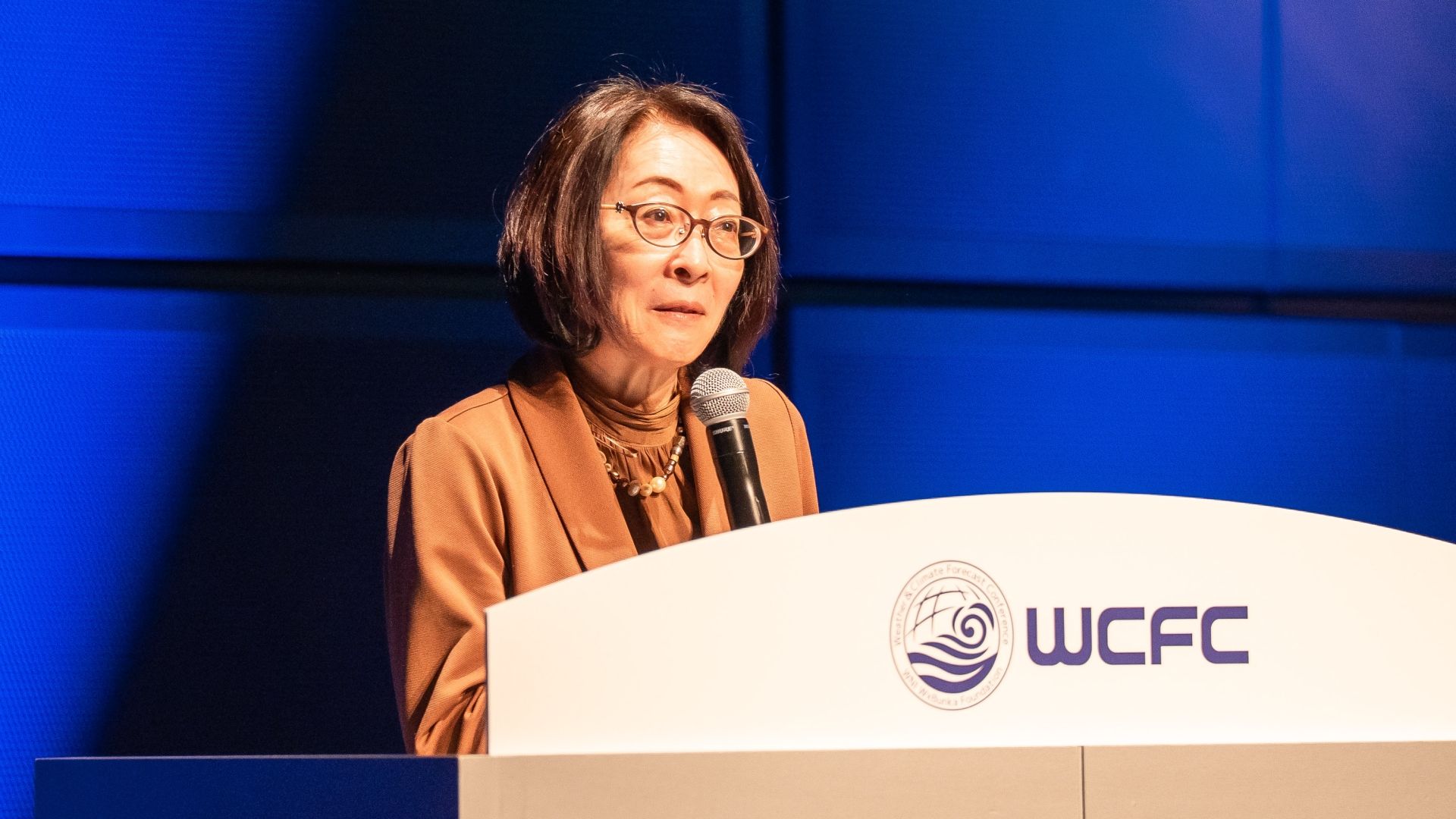
Mami Mizutori discussed the United Nations-led "Early Warnings for All" initiative, a global effort to ensure every person on Earth is protected by an end-to-end early warning system by 2027. Rather than replacing existing disaster risk reduction systems, this initiative is designed to complement and strengthen them. The Asia-Pacific region is leading the world in the spread and advancement of early warning systems. Between 2015 and 2023, 2.7 billion people evacuated in advance of disasters globally, and over half of them were located in this region. However, she noted that the digital divide and the "last mile" problem continue to hinder the delivery of warnings to the most vulnerable populations.
True disaster risk reduction that saves lives is not just about issuing warnings, but about ensuring those warnings lead to early action. To make this possible, Mizutori argued that collaboration must extend beyond meteorological and disaster management agencies to include governments, the private sector, academia, and civil society. She also called for a shift in investment from post-disaster response toward proactive prevention and preparedness. She expressed hope that AI will be a key enabler of this transition. From analyzing vast amounts of data in real time to optimizing warning messages for local languages and cultural contexts, AI can automate links between forecasts and relief deployment. This will accelerate the shift toward a culture of prevention and help save more lives.
NVIDIA Earth-2 Developments and Directions
Stan Posey Program Manager, Earth System Science Domain, NVIDIA

Stan Posey showcased the latest advancements in Earth-2, NVIDIA's digital twin platform for global climate and weather. NVIDIA does not produce its own forecasts. Instead, it provides cutting-edge AI technologies to partners like Weathernews and national meteorological agencies to elevate global early warning systems. Posey noted that in conventional weather forecasting, the high computing cost of ensemble prediction typically limits the number of forecast scenarios to only a few dozen. AI now allows for thousands to even 10,000 forecast scenarios at almost zero computational cost. This makes it easier to capture low-probability, high-impact extreme weather risks like heatwaves with much greater accuracy.
Posey also introduced several powerful new models. CorrDiff enhances broad-area forecasts into high-resolution local predictions. Storm Scope generates real-time severe weather forecasts directly from observational data. Climate in a Bottle allows users to interactively explore massive climate datasets. Looking ahead, Posey highlighted several major trends shaping the future of weather forecasting, including 1-kilometer scale ultra-high-resolution forecasting, Direct Observation-to-Prediction (DOP) technologies, and the wider adoption of hybrid models that combine physics and AI. He reaffirmed NVIDIA's commitment to disaster risk reduction in partnership with the World Meteorological Organization (WMO).
Social Implementation of a Wildfire Risk Forecast System
Mayuko Yoshikawa Forecast Center, Weathernews Inc.
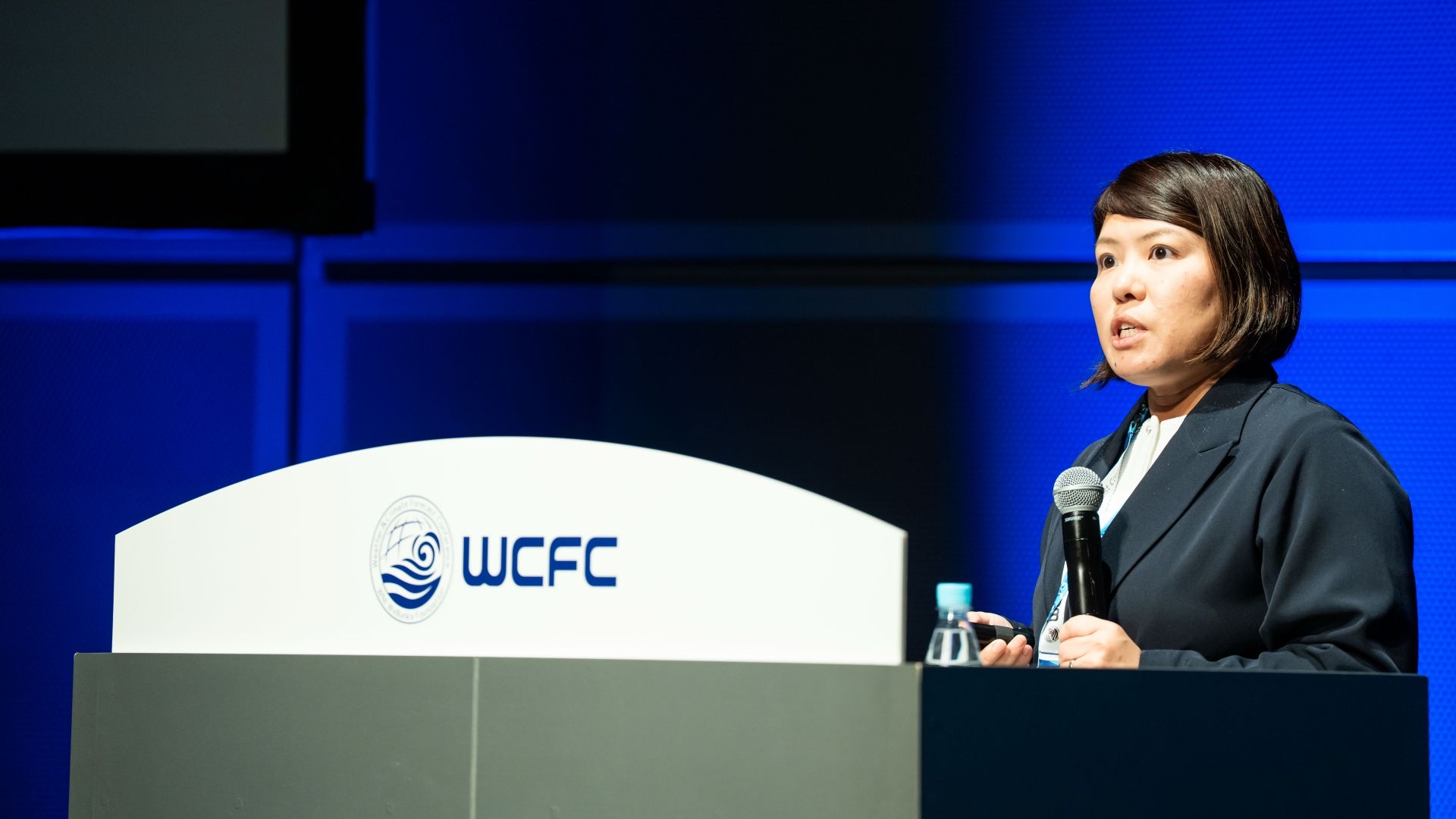
Large-scale wildfires in Japan have surged since 2025 and are becoming a growing threat to residential areas. Mayuko Yoshikawa, a specialist in air pollution and smoke dispersion modeling, explained that following revised local ordinances in January 2026, municipalities began operating systems like official wildfire warnings. However, this has significantly increased the operational burden on local authorities. In response, Weathernews developed a proprietary forecasting service utilizing four key functions. These include automated detection of actual fire events, forecasts up to 72 hours ahead, smartphone notifications with generative AI support, and high-precision satellite detection via J-HAWK.
Yoshikawa explained that the global standard Fire Weather Index (FWI) is widely used in Canada and Europe, but it is not the best fit for Japan. In Japan, fires are more likely to occur from winter to spring due to dry conditions and human activity. Therefore, Weathernews built a custom model focusing on factors like moisture levels in the forest floor. As a result, the model achieved a high wildfire detection rate of 76% across Asian regions, including South Korea and the Philippines. She emphasized that by complementing the FWI, this system has the potential to strengthen disaster preparedness not only in Japan but across all of Asia.
Real-time Disaster Detection - Toward Social Implementation
Koji Nakata WNI Data Store, Weathernews Inc.
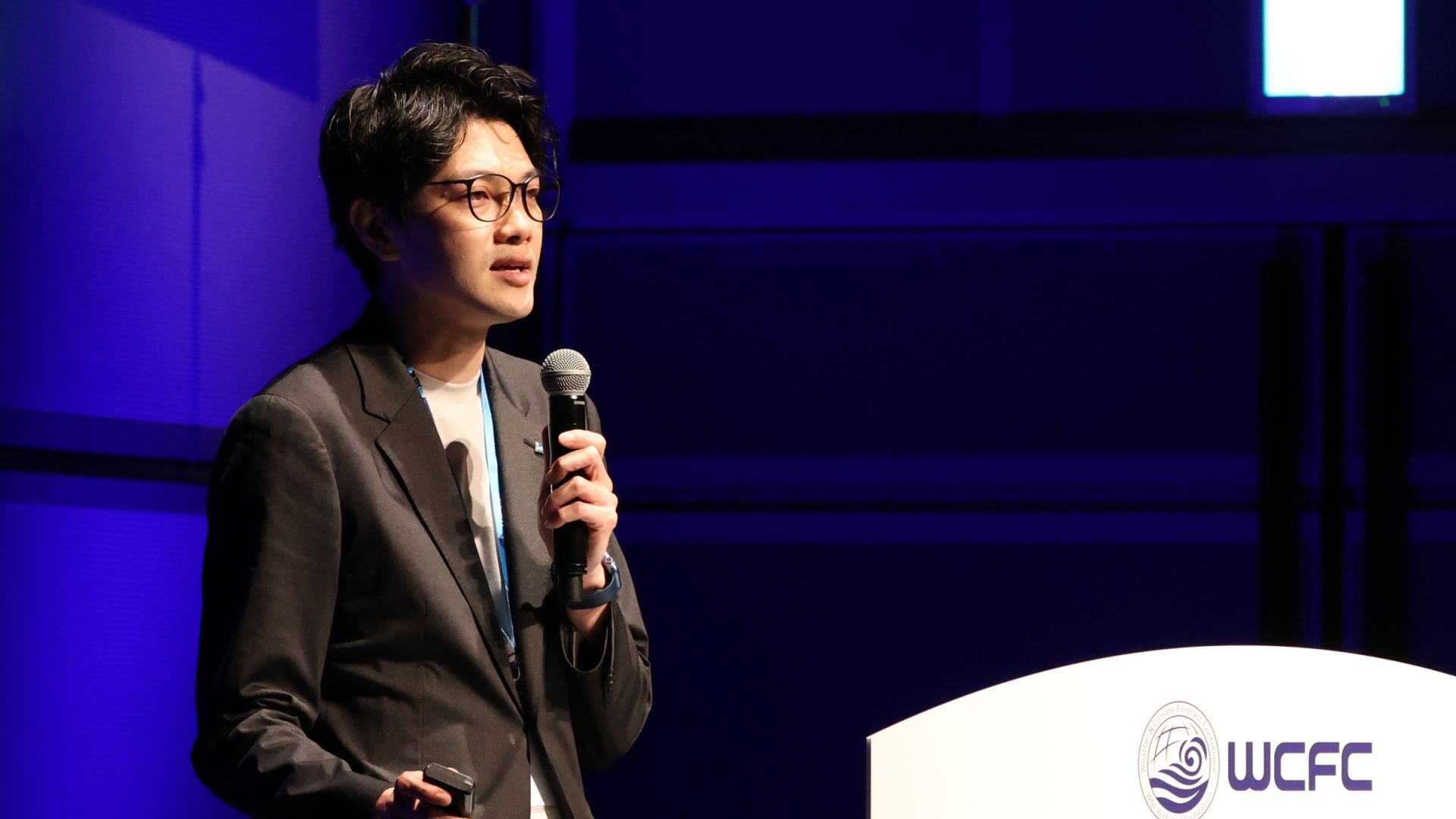
To address this issue, Nakata highlighted the potential of the world's 4.8 billion social media users. By treating online posts as human sensors and analyzing social media voices alongside weather data through AI, Weathernews developed a technology called "Eyeservation", a coined term combining eyes and observation. Drawing on case studies like a September 2025 typhoon in Vietnam and a June 2026 heatwave, he demonstrated how this approach detects visible damage as well as impacts that are otherwise difficult to identify. By continuously cycling through forecasting, observation, and damage assessment, organizations can provide more effective support for decision-making during future disasters. Nakata stressed that building a community where companies, governments, and citizens work together is essential for taking action ahead of an impact rather than merely responding after the fact.
While AI Adoption Advances Across Asian Meteorological Agencies, Data Gaps and International Cooperation Remain Key Challenges
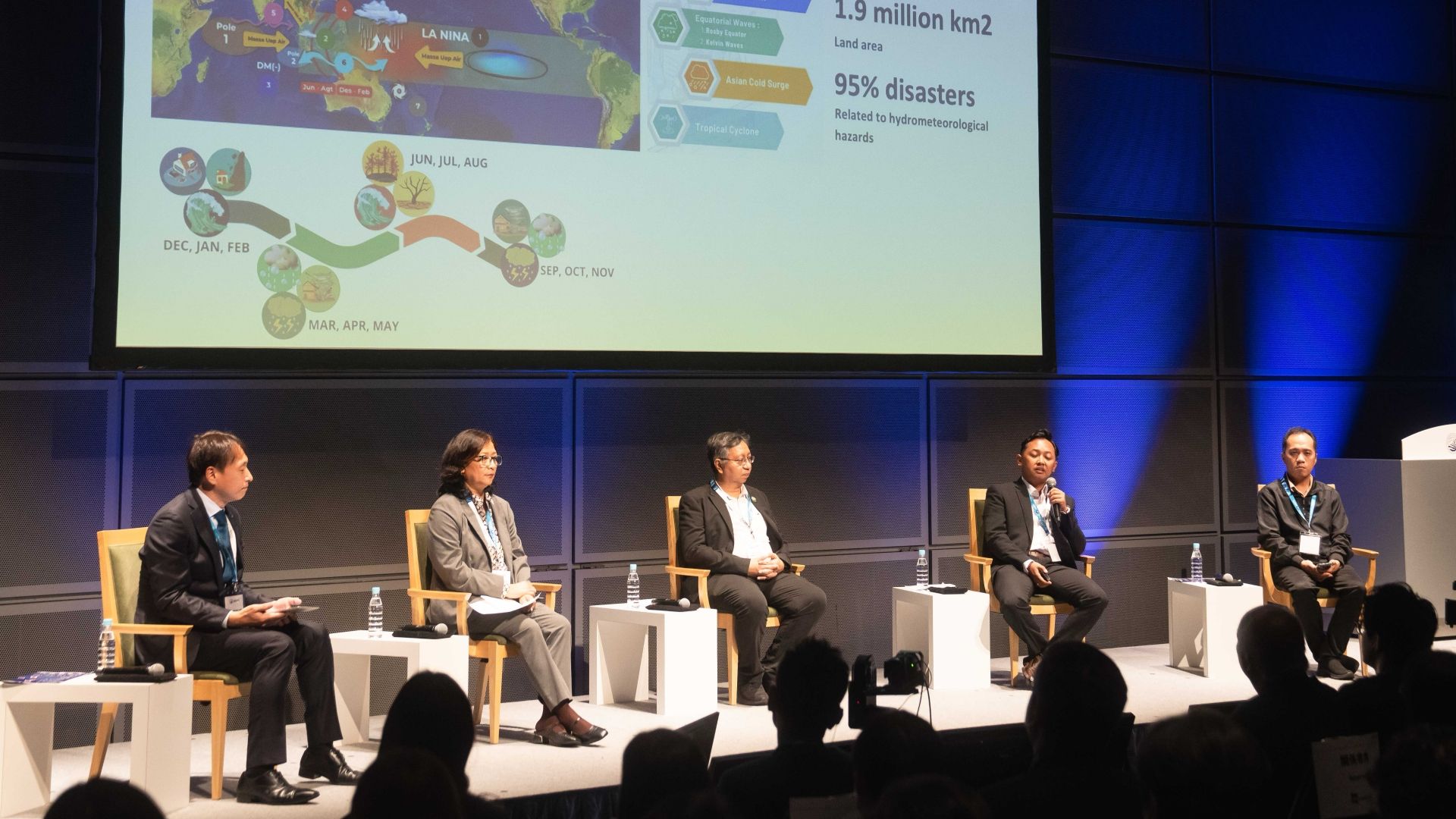
Two panel sessions explored disaster preparedness, climate change response, Early Warning Systems (EWS), and AI technology adoption in Thailand, Indonesia, Nepal, and Pakistan. While the use of advanced technologies like AI is expanding, representatives from Thailand and Indonesia stressed that the human dimension remains essential for ensuring safe evacuations. They noted that trusted communication from community leaders and human judgment on the ground, often described as the "first mile", continue to play a critical role.
The discussions also highlighted two major challenges commonly faced across countries when implementing AI. The first is a barrier of data and infrastructure. There is a shortage of high-quality historical data needed for AI training, and there is an urgent need to improve the density of observation networks. The second challenge is a shortage of resources and skilled personnel. Participants emphasized the importance of securing the computational resources required to operate advanced AI models, as well as developing talent with expertise in both AI and meteorology. Furthermore, in regions like Pakistan where the headwaters of major rivers lie outside national borders, forecasting cannot rely solely on domestic data. Cross-border data sharing and international cooperation are absolutely essential. Throughout the session, participants reaffirmed that building truly effective Early Warning Systems requires advanced technology, robust data foundations, public-private collaboration, and strong human connections.
Session Materials
Presentation content is publicly available. For more details, please see the links below.
On-demand session: WCFC 2026 |
Presentation materials: https://wxtech.weathernews.com/event/20260617-wcfc-summary/
Event report: Weather & Climate Forecast Conference (WCFC) 2026 June – Event Report
The next event is scheduled for December 2026. Weathernews will continue to deepen collaboration across industry, government, and academia, and to actively contribute to the advancement of weather technology and the social implementation of emerging technologies.
Footnotes
Share
October 16, 2026
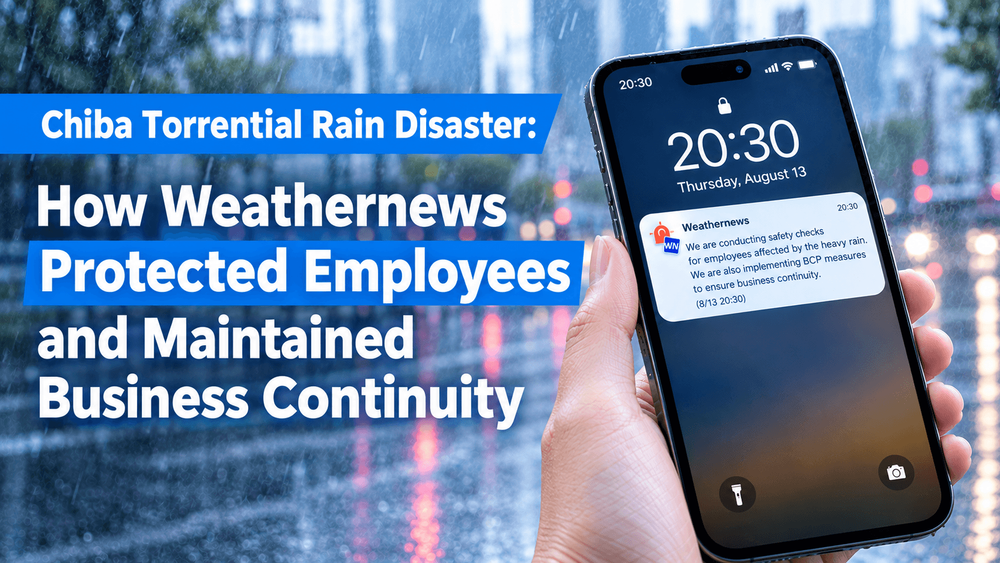
Chiba Torrential Rain Disaster: How Weathernews Protected Employees and Maintained Business Continuity
September 15, 2026
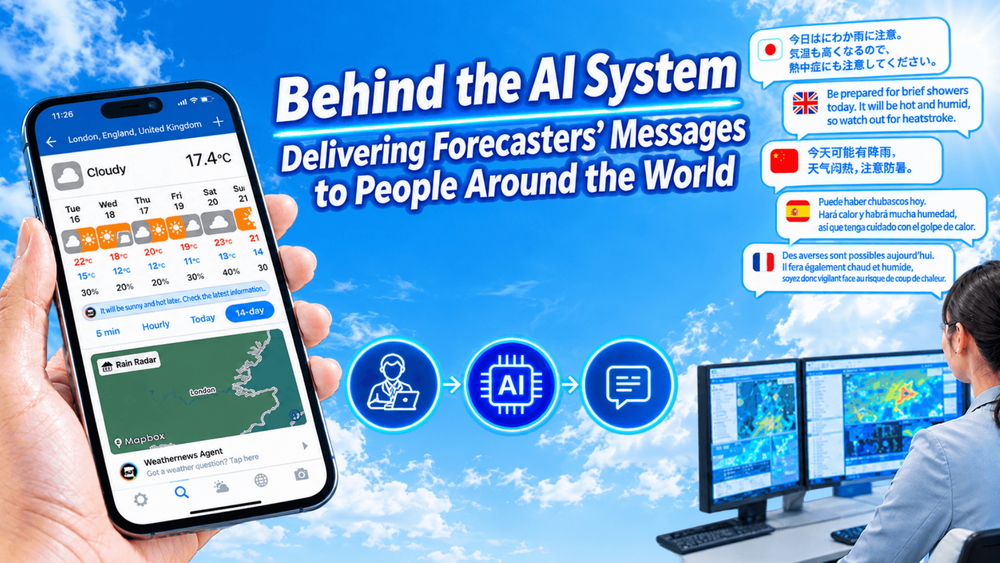
Behind the AI System Delivering Forecasters’ Messages to People Around the World in Just Three Lines
![[2026 Kumamoto Earthquake] How Weathernews LiVE Protects Lives Through User Reports and Expert Analysis](https://gvs.weathernews.jp/wni_blog_media/large_20260914_top_3958fce7fc.png)
September 14, 2026
[2026 Kumamoto Earthquake] How Weathernews LiVE Protects Lives Through User Reports and Expert Analysis