
July 30, 2026
How Weathernews Built an AI System That Detects Inappropriate Images in Just 2 Seconds



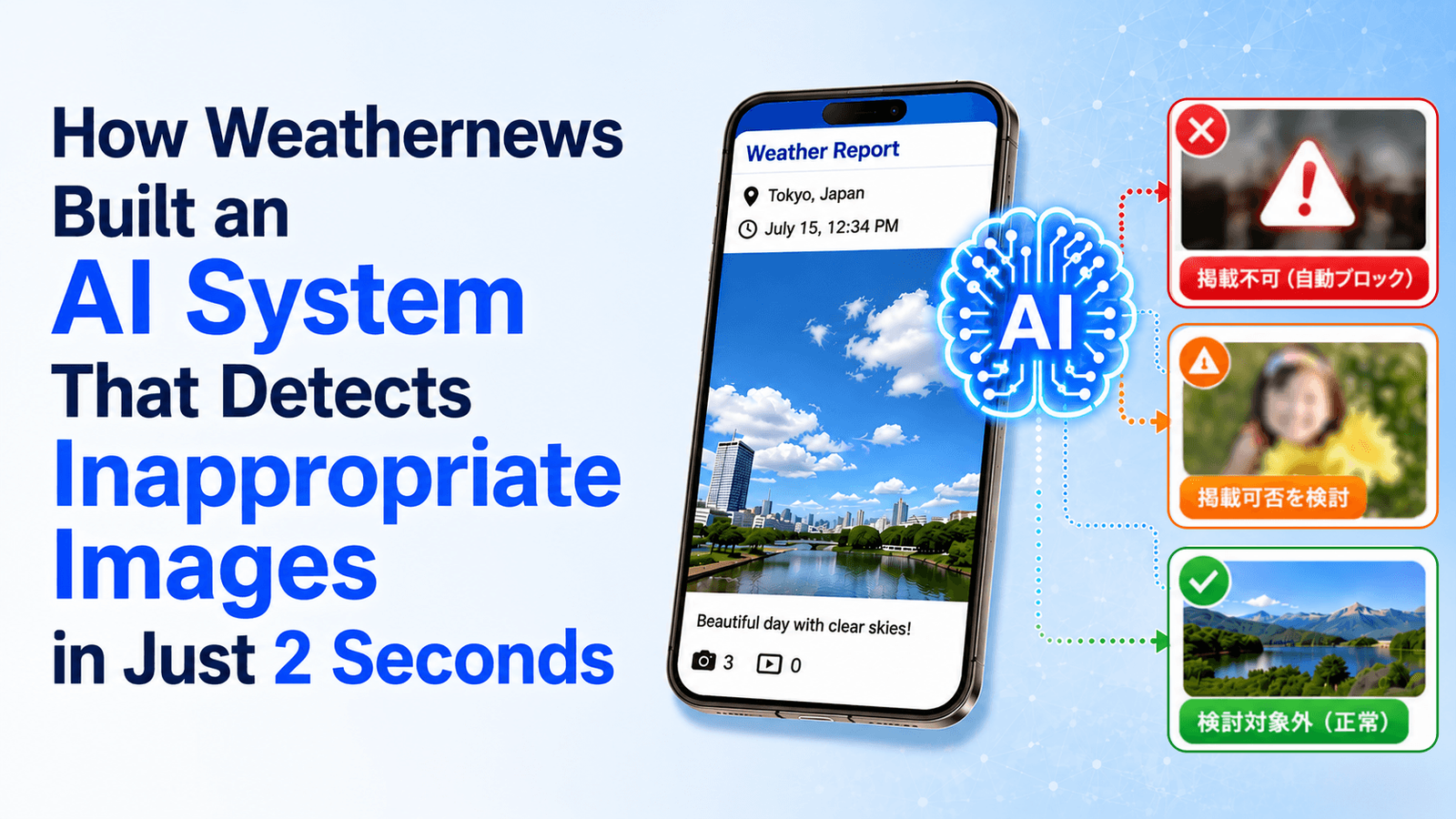
Every day, Weathernews receives approximately 200,000 Weather Reports from users across Japan. These submissions are integral to our forecasting operations: real-time observations from the ground that no sensor network alone can replicate, feeding directly into forecast models and live broadcasts.
With that volume, however, comes an inevitable challenge. A small but steady stream of images are unrelated to weather or otherwise inappropriate for publication. For years, flagging and removing that content fell entirely to human moderators, a time-consuming process that also meant repeated exposure to disturbing material. As submission volumes climbed, the approach simply wasn't sustainable.
To ensure that users and business partners can always rely on safe, high-quality information, Weathernews developed an in-house AI system that automatically detects and blocks inappropriate images within just a few seconds of upload. This article takes a behind-the-scenes look at how it was built.
Protecting Over 100 Million Weather Reports: Why Image Quality Matters
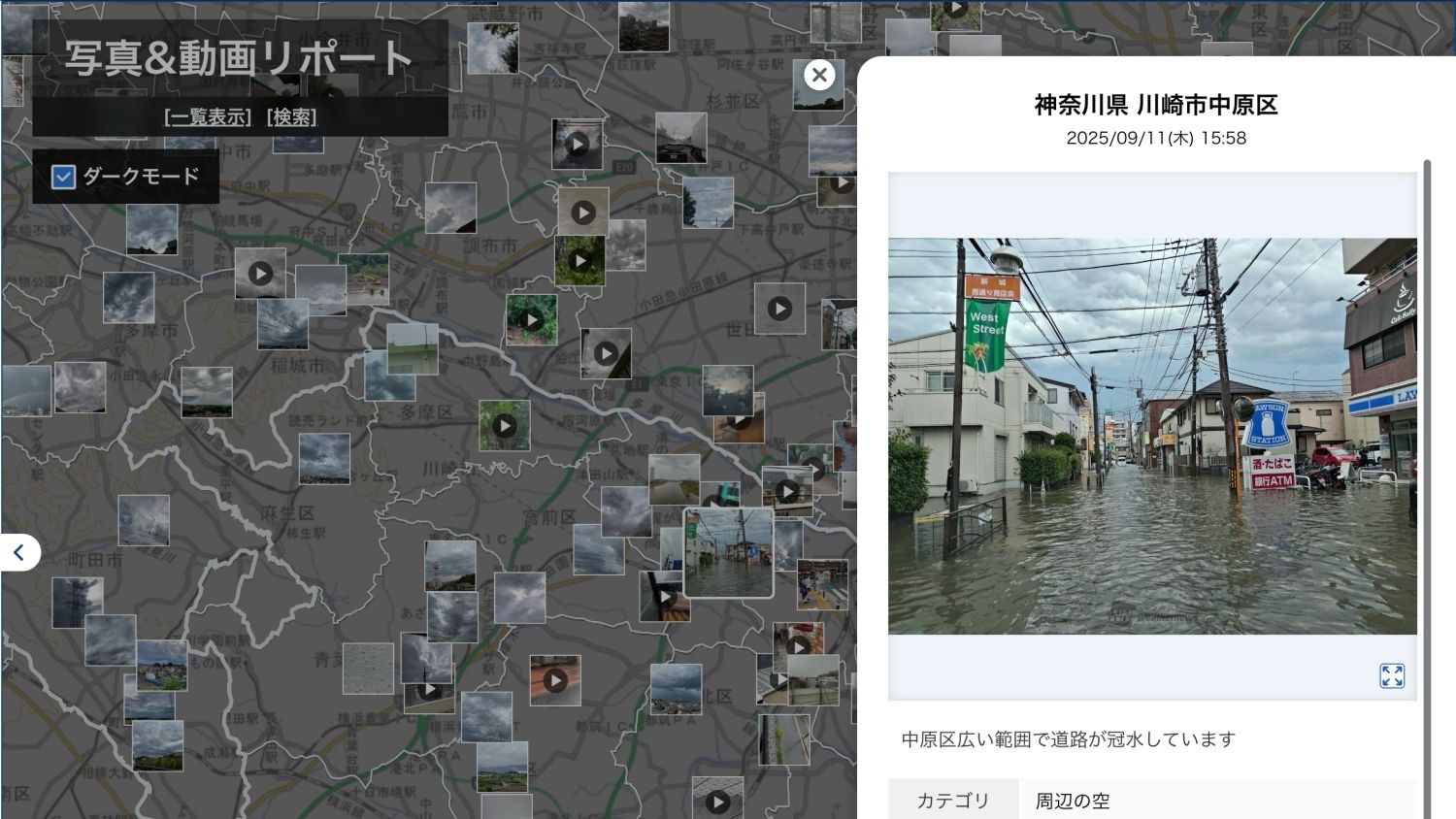
Weather Report is Weathernews' unique crowdsourcing initiative, through which users submit real-time weather observations from their locations. Since the service launched in 1999, users have submitted more than 100 million reports in total. Even today, roughly 30,000–40,000 reports containing photos or videos arrive daily from across Japan.
These contributions capture what conventional weather stations cannot: what is actually happening on the ground, right now. They are an essential part of Weathernews' forecasting system and are also widely featured on Weathernews LiVE, the company's 24-hour weather broadcast, to show current conditions across the country.
With such a volume of user-generated content, however, some inappropriate or irrelevant images inevitably make their way into the system. If incorrect information or unsuitable content were published, it could affect forecast accuracy while also seriously damaging the trust and brand value of the service.
At the same time, operations staff were required to manually check each submission, meaning they were directly exposed to unpleasant images, which placed a significant psychological burden on the team.
It was the desire to protect both valuable weather data and brand integrity, and to spare staff from having to view inappropriate content, that set the development of an AI-powered automated system in motion.
2 Seconds After Upload: AI-Powered Automatic Detection of Inappropriate Images
"Inappropriate images" cover a surprisingly wide range of content. Beyond adult material, the system must also identify privacy concerns such as visible faces of individuals or children, copyrighted anime and game artwork, and even AI-generated images depicting weather disasters that never actually occurred.
Previously, image management staff had to inspect every submission manually, remove inappropriate content one by one, or wait for user reports before acting on individual cases. As volumes increased, this approach reached its operational limits.
Inspired by an internal AI workshop, the development team set out to build an automated system capable of reviewing uploaded images within seconds. The result is a pipeline that activates the moment an image is submitted, classifying it into one of three categories within approximately two seconds:
⭕️Automatically Blocked – Clearly inappropriate images are immediately hidden. 🔺Requires Review – Borderline cases are forwarded to human moderators. ❌️Approved – Images are published without additional review. Images flagged for review are further sorted automatically into four categories:
👤 Images primarily featuring people 👶 Images containing children 🎮 Anime or video game images 🤖 AI-generated images
This means staff can focus exclusively on submissions that genuinely require human judgment, combining AI's speed with human expertise to create a safer and more efficient moderation workflow.
~40% Cost Reduction: From Trial to Full Operation
With the core system in place, two major hurdles remained: detection accuracy and operating costs. Cloud-based AI services can become expensive at scale, making long-term operation difficult regardless of how well the system performs. For some time, the team continued in a trial environment while searching for solutions.
After several months of work, including a complete reassessment of which AI models to use and an optimization of the processing pipeline, the team successfully reduced operating costs by approximately 40% compared to peak levels.
Today, the system automatically processes around 30,000–40,000 uploaded images every day, enabling fast and accurate moderation at full production scale.
From the Developer (Odajima, Development Team)
Weather Report is a platform designed to provide a safe and secure experience for users of all ages, including minors. Until recently, inappropriate images were primarily handled through manual monitoring. However, as extreme weather has become more frequent, the number of submissions has increased sharply, making it difficult to rely on human review alone.
Following an internal AI workshop, development accelerated rapidly. By combining multiple AI models, each with different strengths and specialties, we were able to build a highly accurate automated image detection system.
Although there is still room for improvement, ensuring that inappropriate images do not reach users has already proven to be an extremely effective solution for maintaining the quality and safety of Weather Reports. Going forward, we will continue evaluating and adopting the latest AI models to create a platform that users and business partners can rely on with even greater confidence.
From Blocking Inappropriate Images to Disaster Response and Business Applications: The Expanding Potential of Weather Reports with AI
The AI image detection system is not the finished product. Once it went live, the team discovered some distinctly AI-related challenges in practice.
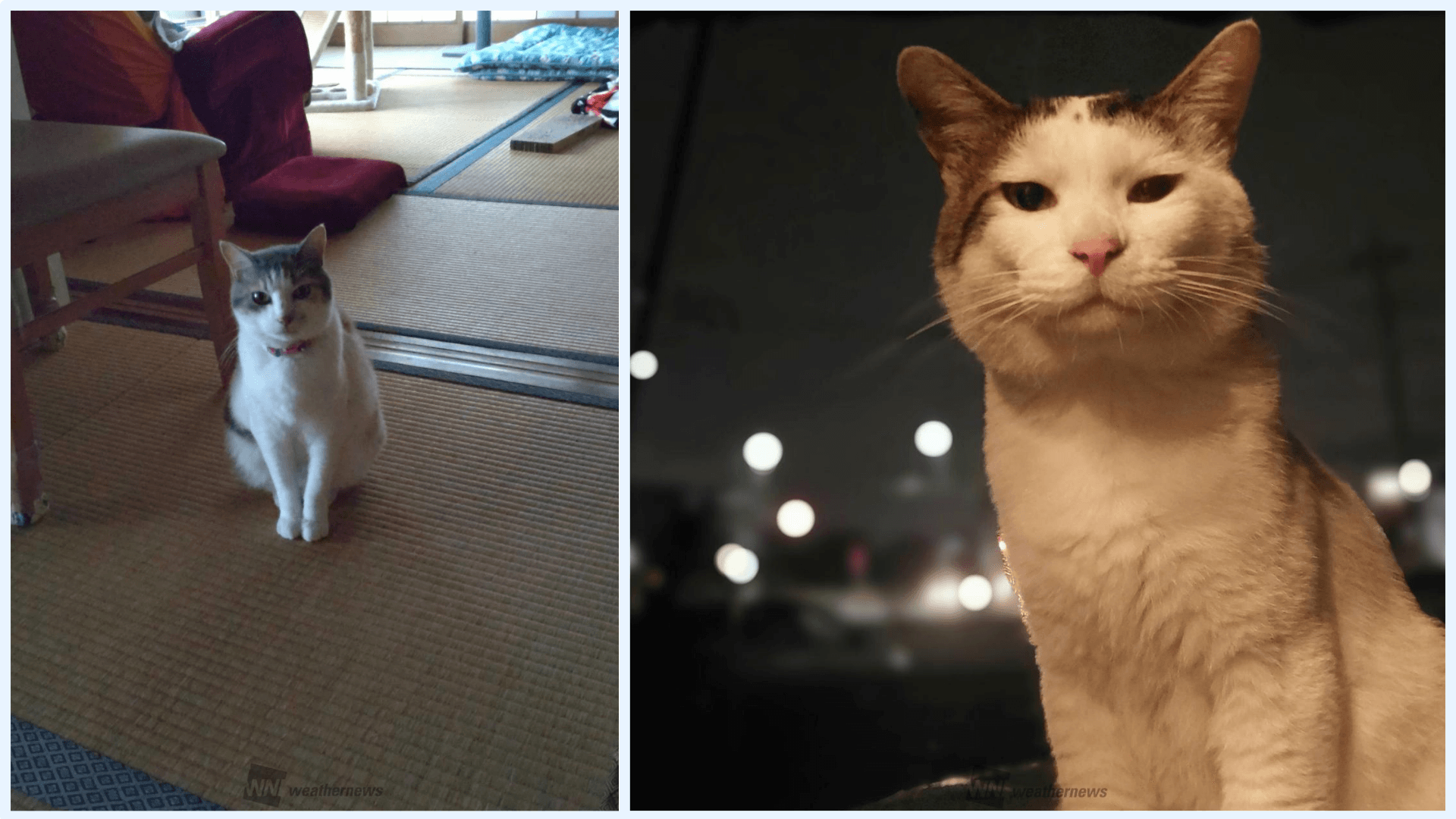
For example, even when a child appeared only as a tiny figure in the background of an otherwise ordinary landscape photo, the AI would sometimes flag the image as containing a child. On other occasions, it would, somewhat amusingly but inconveniently, mistake the faces of cats or dogs for human faces.
The team will continue improving detection accuracy through ongoing tuning of instructions and model optimization, reducing the amount of manual review required and further automating operations. Development is also underway to extend the technology beyond still images to user-submitted video reports.
Looking further ahead, having started with this "defensive" application of AI to block inappropriate content, Weathernews now plans to move into more proactive territory: using AI to automatically identify what is actually depicted in submitted images, such as flooding, snow accumulation, or other significant weather phenomena.
Weather Reports are already widely used in television weather segments and in enterprise services such as Weathernews for Business. By automatically recognizing image content, the system could help detect dangerous situations from user photos even when people are unable to type comments during a disaster. It could also recommend the most relevant images in real time for live broadcasts or business customers looking for specific weather conditions.
Rather than simply preventing risk, Weathernews aims to unlock the full potential of crowdsourced weather data through AI. By embracing the latest technologies, Weathernews will continue working toward a future where every report submitted by a user creates greater value for more people and for society as a whole.
Share

October 23, 2026
【Behind the Scenes of the 2026 Aichi-Nagoya Games】What Kind of Weather Information Is Being Used to Ensure the Safety of Staff and Athletes from 45 Countries and Regions?
October 16, 2026
Chiba Torrential Rain Disaster: How Weathernews Protected Employees and Maintained Business Continuity
September 15, 2026
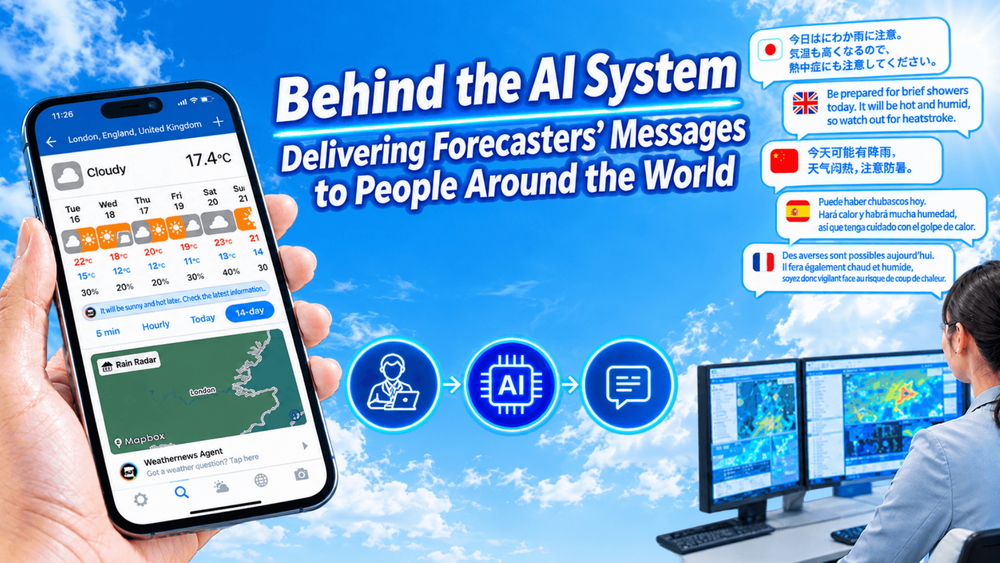
Behind the AI System Delivering Forecasters’ Messages to People Around the World in Just Three Lines