
April 1, 2026
[Developer Interview] Building the World’s Most Accurate Wave Forecasting Model



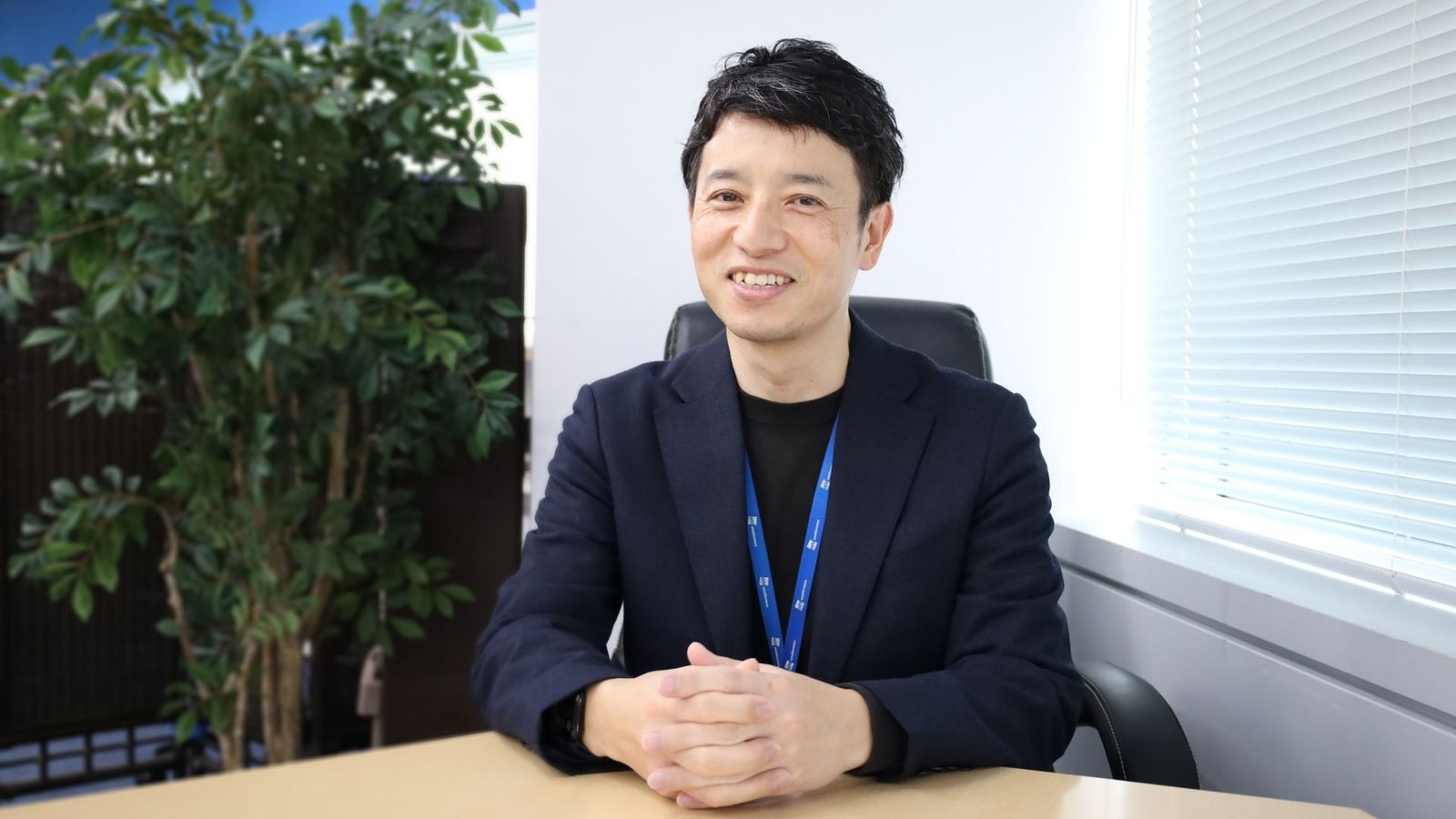
— Supporting the maritime industry with information that enables captains to steer with confidence —
Wave forecasting plays a critical role in maritime safety, directly impacting shipping operations, fisheries, and offshore industries worldwide. In March 2025, Weathernews launched an advanced wave and wind forecasting model that sets new standards for precision and reliability.
What drove this breakthrough in forecasting accuracy? We sat down with Mr. Sakamoto, the development leader, to explore the innovation behind this achievement.
Developing an Ensemble Forecasting Model Powered by Advanced Technology and Proprietary Data
— Congratulations on the release of the new model, Mr. Sakamoto. What were your main priorities for this development?
Sakamoto: Thank you. We have been hearing that there are strong expectations from our customers and operational teams for improved forecast accuracy, so we set out to develop a new model with a strong focus on precision.
In real maritime operations, a single wave forecast can determine whether a vessel alters its route or proceeds as planned. To support these critical decisions, we focused not only on achieving the highest possible accuracy but also on presenting information in a way that’s intuitive and actionable for professionals at sea.
— We understand that your accuracy evaluation showed better results than leading global models such as ECMWF and NCEP.
Sakamoto: That’s correct. We conducted in-house verification comparing our model with two widely used global forecasting models, focusing on the root mean square error (RMSE) of significant wave height.
Our results showed a 6% improvement over ECMWF (European Centre for Medium-Range Weather Forecasts) and an 18% improvement over NCEP (National Centers for Environmental Prediction).
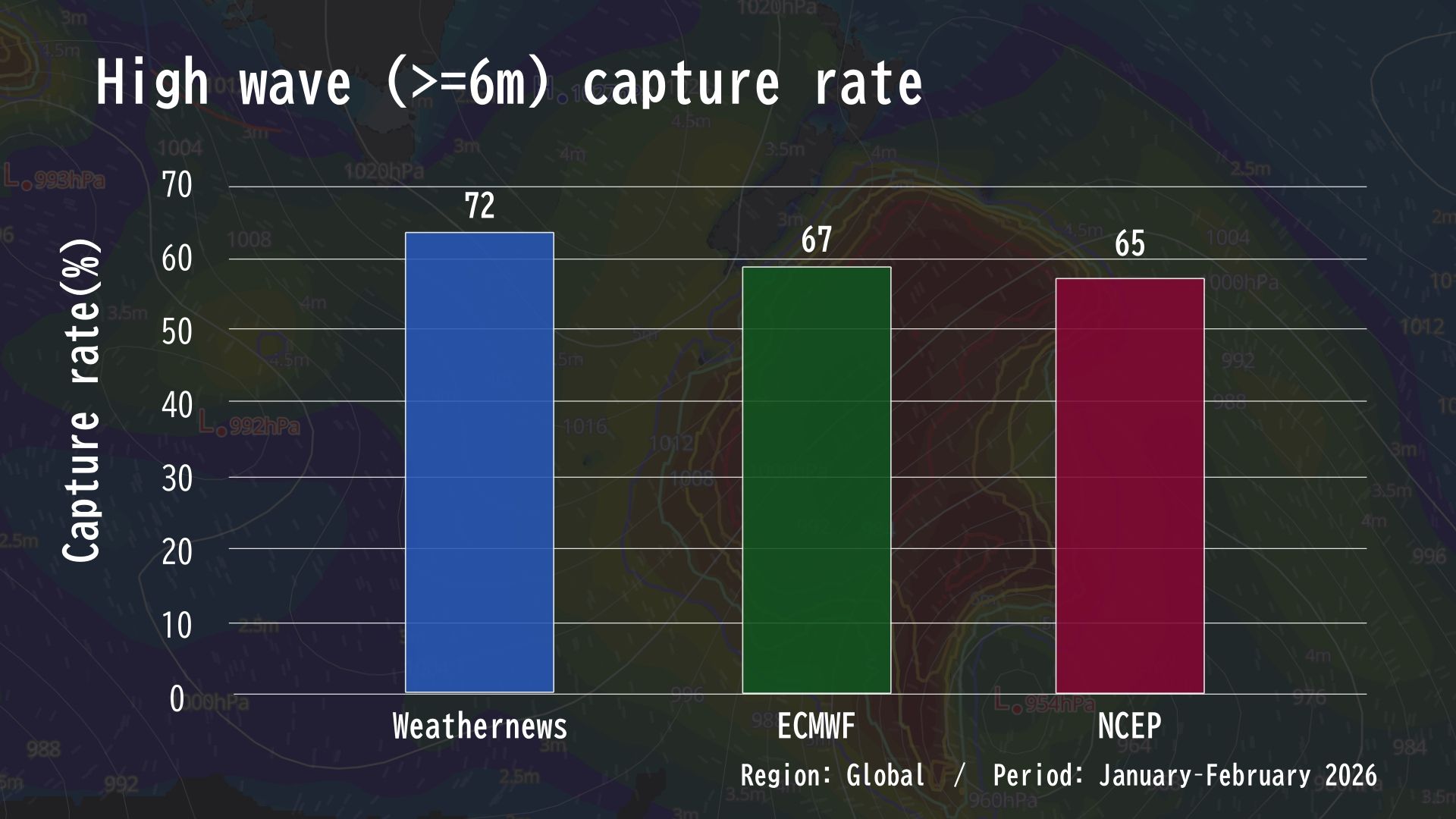
We also specifically evaluated forecast accuracy for wave heights exceeding 6 meters—a critical threshold for vessels when assessing navigation safety. Our model demonstrated a lower miss rate for these high-wave conditions compared to both ECMWF and NCEP.
—Can you walk us through how the model works?
Sakamoto: This new model is built on ensemble forecasting methodology, drawing from outputs produced by major meteorological institutions worldwide. It generates a unified global wind and wave forecast by analyzing and synthesizing more than 80 different forecast models using our proprietary analysis.
— What were the key factors that enabled this level of accuracy?
Sakamoto: Three core capabilities set this model apart:
1. 10,000 proprietary data reports per day Most people know that wave data comes from satellites and ocean buoys, but we also get more than 10,000 daily reports from ships at sea around the world. Feeding that massive amount of real-time observational data into our proprietary analysis makes a huge difference in forecast accuracy.
2. Cloud computing efficiency We migrated our computing environment from on-premises systems to the cloud. This allows us to flexibly scale up thousands of servers only during forecast computations and shut them down afterward, achieving both efficiency and scalability. The result? Faster computation times, and we’re now able to deliver updated forecasts a full hour earlier than we could before.
3. Our proprietary typhoon forecasts Here’s the challenge with ensemble forecasting: when those 80 models give you completely different predictions, you can end up with an averaged-out forecast that misses dangerous typhoons, the high wind speeds and wave heights you really need to catch.
However, we have the Global Storm Center, our dedicated typhoon team. They produce highly accurate typhoon forecasts using multiple meteorological models and our own analysis techniques. By integrating those into the ensemble system, we can sharpen the overall accuracy and properly flag the truly dangerous areas.
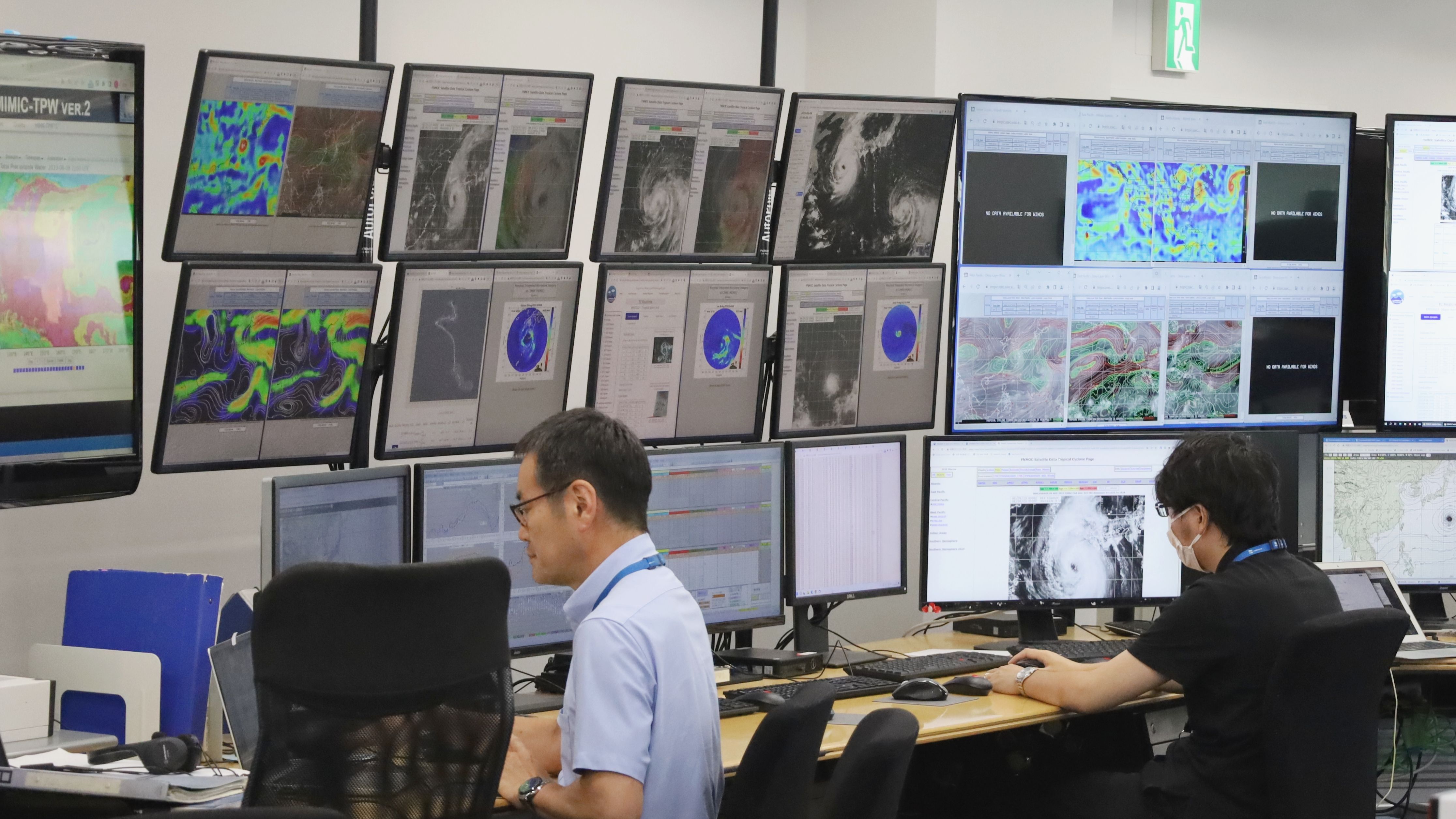
"Verification took longer than development"—Completing nearly 300 quality checks
— What was the most challenging part of the development process?
Sakamoto: Quality control. We ended up with nearly 300 validation items. Using AI, we compared outputs from the old and new models. Whenever even a slight anomaly was detected, we thoroughly investigated the cause and made corrections. This process was repeated over and over.
— 300 checks—that’s a lot!
Sakamoto: Wave forecasting outputs include more than 20 parameters, such as swell, wind waves, wave period, and direction. All of these directly impact vessel safety. While we leveraged AI in the process, we ultimately relied on the trained eyes of professionals to ensure quality.
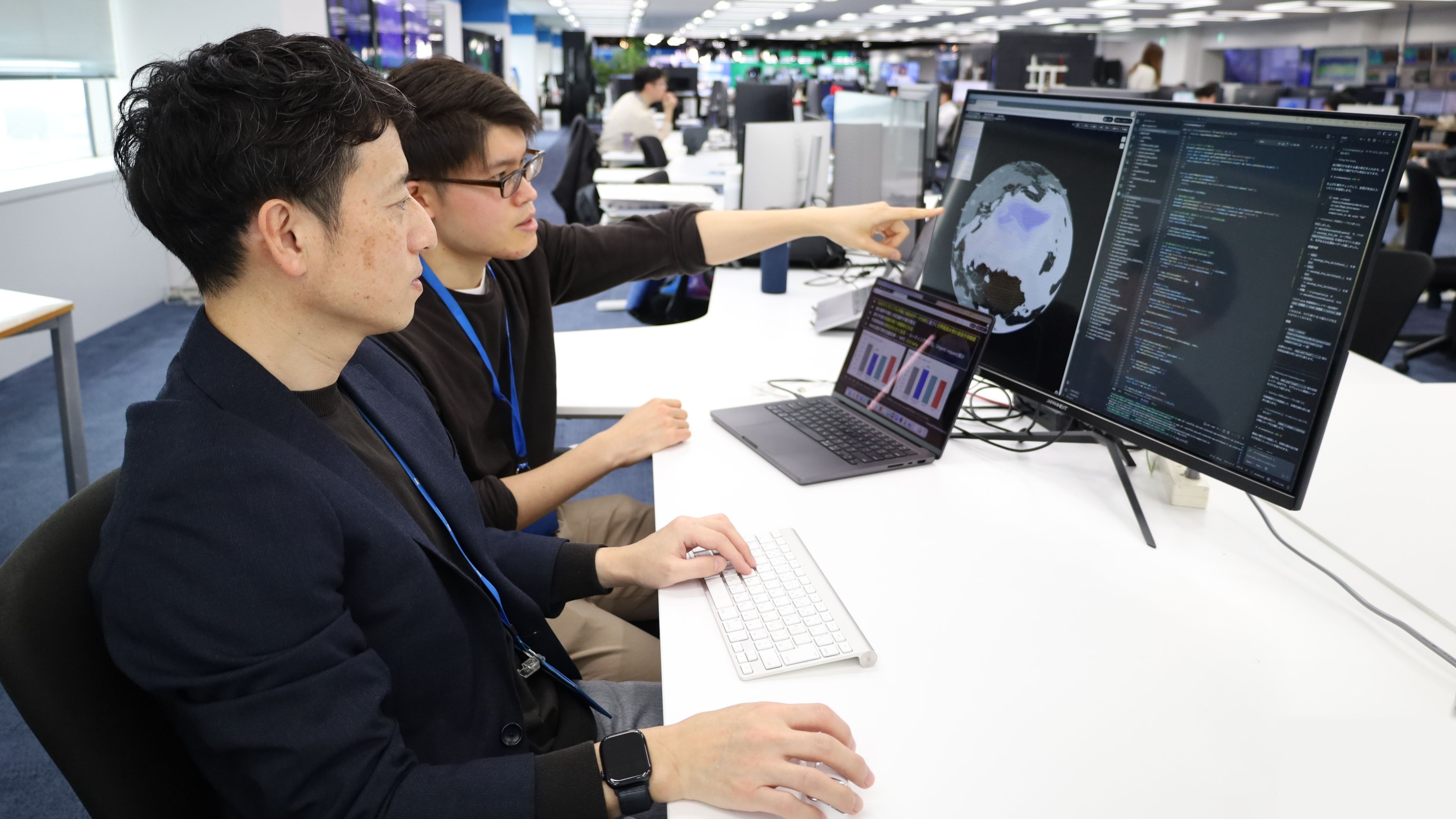
— How will this new model change on-site decision-making?
Sakamoto: Here's a good example: back in January 2026, a bomb cyclone developed rapidly in the North Pacific. Our model caught that intensification accurately three days before it happened.
— Three days makes a big difference.
Sakamoto: Exactly. It’s not just about dodging the storm. With three days, you can recalculate your entire route—minimizing, fuel consumption, adjusting your arrival time, all while maintaining safety margins.
In our platform SeaNavigator, in addition to traditional forecasts like “wave height will be 6 meters tomorrow,” users can also view Wave Possibility, which indicates the probability of waves exceeding 6 meters.
Just as people decide to carry an umbrella based on the probability of rain, operators can make more advanced decisions tailored to vessel type and conditions. If you’re operating a car carrier where any rolling is unacceptable, you might choose a route where the navigation risk is 0%. It’s about making smarter decisions based on your specific vessel and cargo.
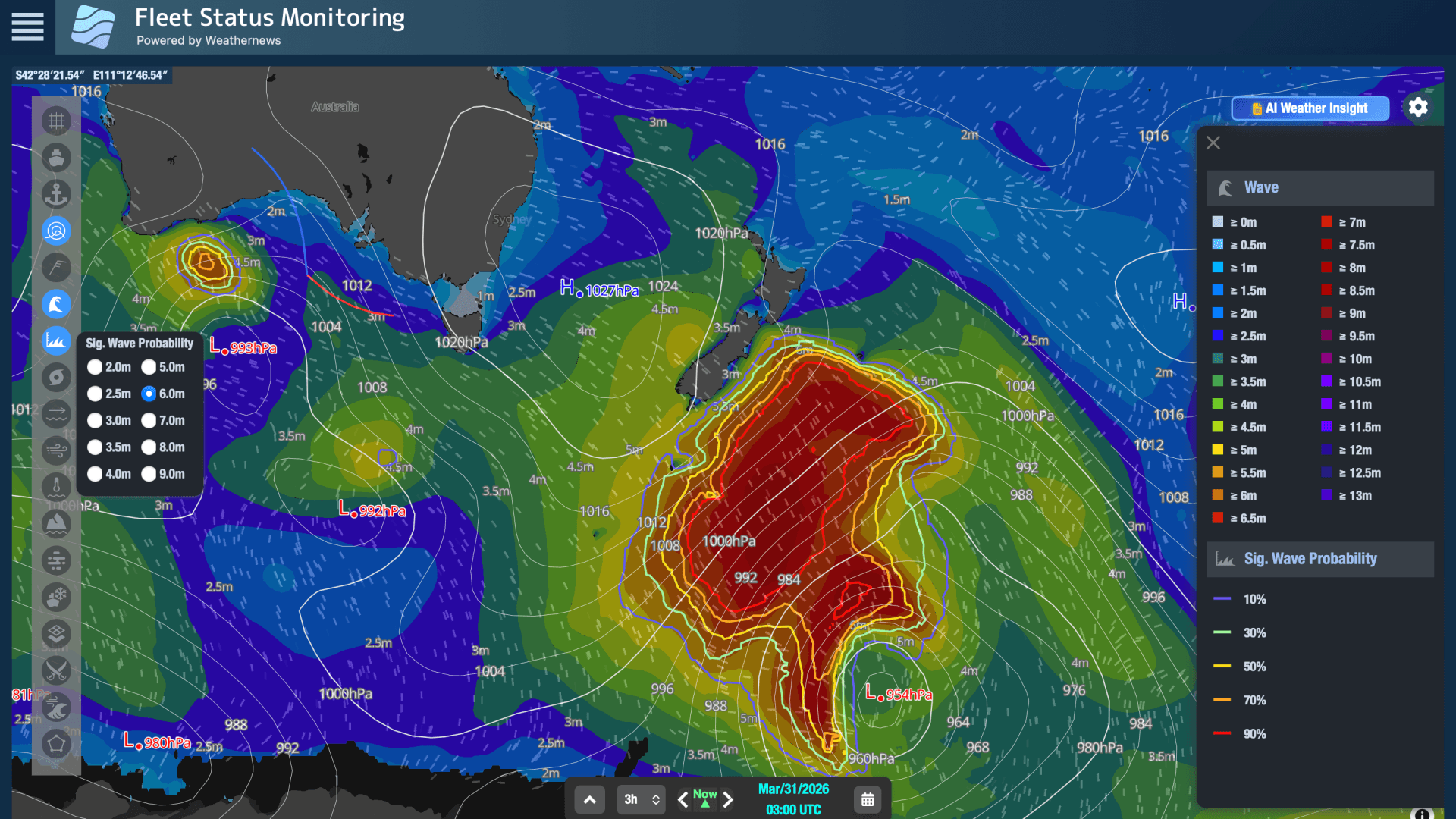
Enabling Captains to Steer Without Hesitation
— Finally, what are your goals moving forward?
Sakamoto: Weather is inherently uncertain, which is exactly why we’re so committed to this mission: giving seafarers information they can trust enough to act on without hesitation.
Right now, we’re seeing impressive results from AI models in typhoon prediction, and that same wave of AI innovation is heading toward wave forecasting too. I’m really excited about that. We want to keep embracing the latest technologies and continue improving safety and efficiency across the maritime industry.
Share
April 1, 2026
Enhancing Safety for Vessels and Coastal Operations with a Weather IoT Sensor You Can Deploy Anywhere: Enabling Hyper-Local AI Forecasting in Ports
March 27, 2026
Ogasawara Islands to Achieve Japan's Highest Weather Observation Density Through Digital Innovation
March 16, 2026
Japan's Most Comprehensive Cherry Blossom Forecast