April 1, 2026
Enhancing Safety for Vessels and Coastal Operations with a Weather IoT Sensor You Can Deploy Anywhere: Enabling Hyper-Local AI Forecasting in Ports



As an island nation, Japan's extensive port network supports the frequent arrival and departure of large international cargo vessels, as well as robust domestic maritime transport that sustains logistics nationwide.
This results in a diverse range of critical operations taking place at ports every day. Operators must constantly make crucial decisions such as whether large vessels can safely berth or depart. On windy days, ships may be unable to dock, halting cargo operations entirely. The operation of massive gantry cranes that tower over port facilities is particularly sensitive to wind conditions. When wind speeds exceed 15-20 m/s, cranes can begin to slip, brakes may fail, and in extreme cases, there is risk of structural collapse.
Compounding these challenges, coastal terrain is highly complex, and wind conditions can vary dramatically within just a few kilometers.
In this article, we introduce a weather information service designed specifically to address the unique challenges of coastal and port environments, along with Weathernews’ innovative approach using the affordable, high-performance weather IoT sensor “Soratena Pro,” including real-world deployment examples.
Visualizing Weather Changes in Ports: High-Resolution Weather Services for Complex Coastal Terrain
Accurate weather information is essential for personnel working in coastal areas. However, many ports lack on-site anemometers, making it difficult to determine exact wind speeds at any given moment. Without reliable data, operators are often forced to rely on experience and intuition when making critical operational decisions. To address this challenge, Weathernews offers a specialized weather information service for port operations called "Weathernews for business."
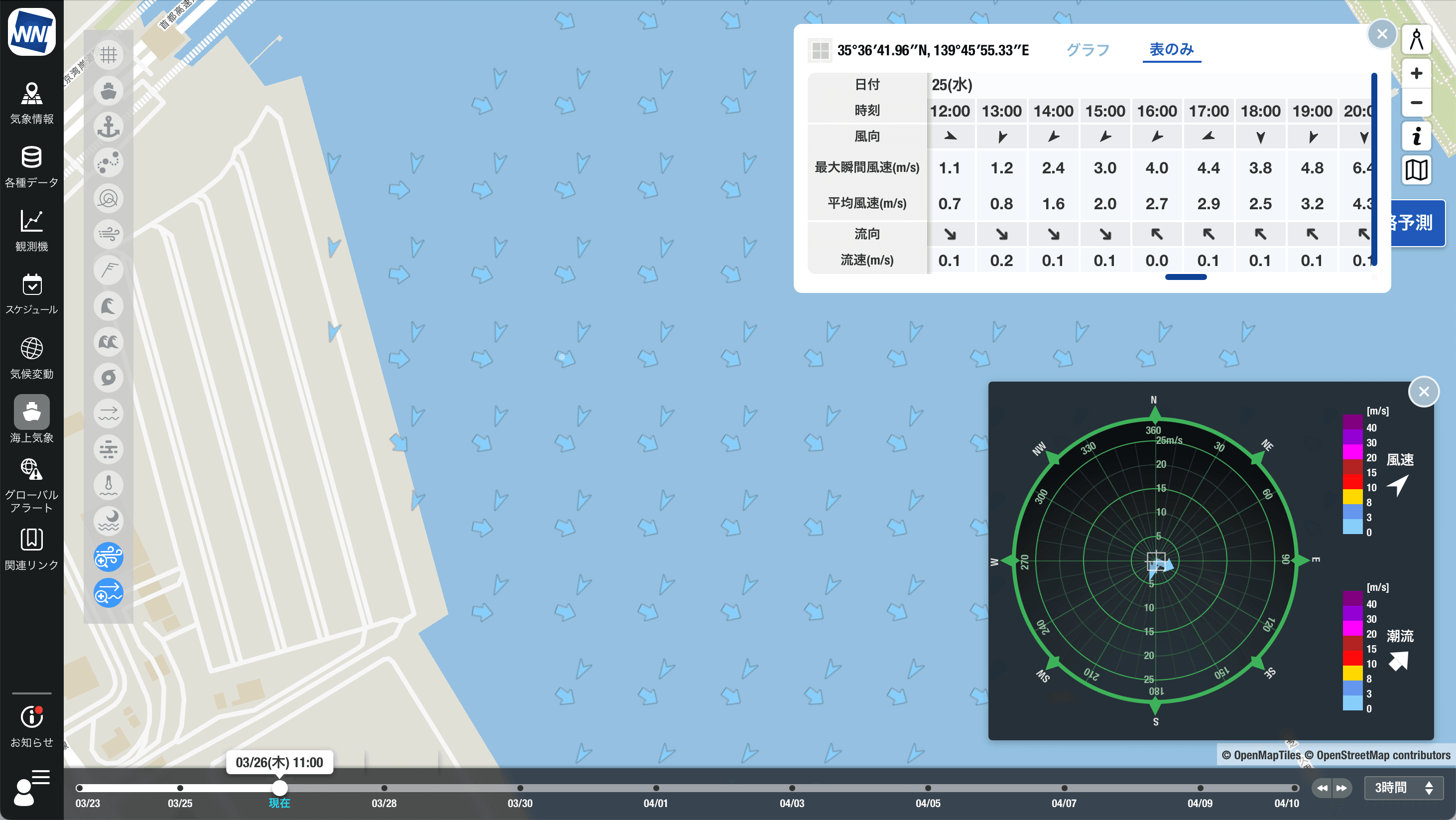
This service is accessible from both PCs and smartphones, enabling users to check professional-grade weather and ocean data even while working outdoors. One of its standout features is high-resolution forecasting data—including wind and tidal current predictions at 100-meter resolution—updated every 30 minutes.
"Soratena Pro": A High-Performance, 1kg Weather IoT Sensor
AI Forecasting Models Available in as Little as Two Weeks After Installation
For those requiring not only forecasts but also real-time observations at specific locations, the high-performance weather IoT sensor "Soratena Pro" offers an ideal solution1.
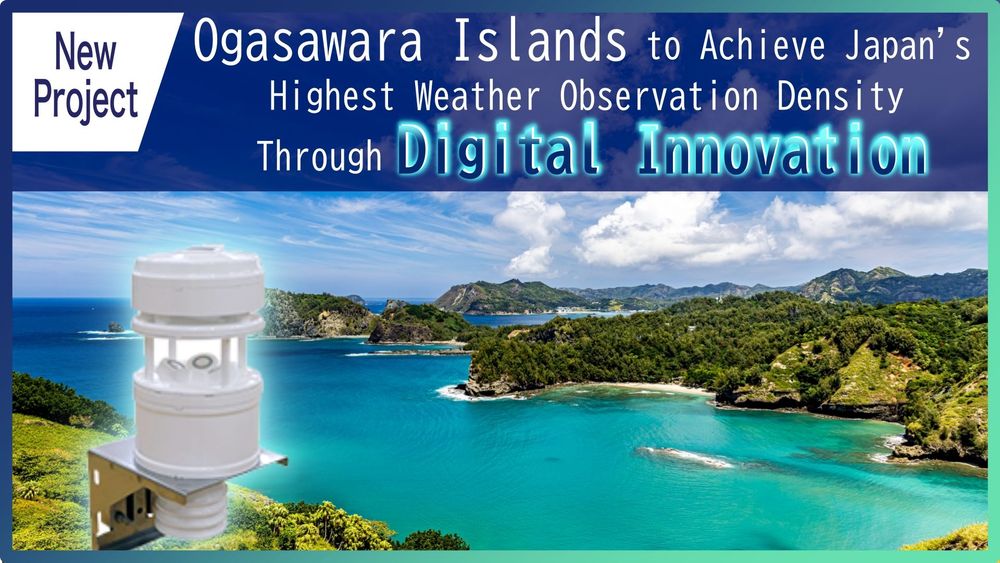
Measuring approximately 13 × 13 × 27 cm (5.1 × 5.1 × 10.6 inches) and weighing just 1 kg, the device is remarkably compact. It captures seven weather parameters—including temperature, humidity, precipitation, and wind speed—every minute.
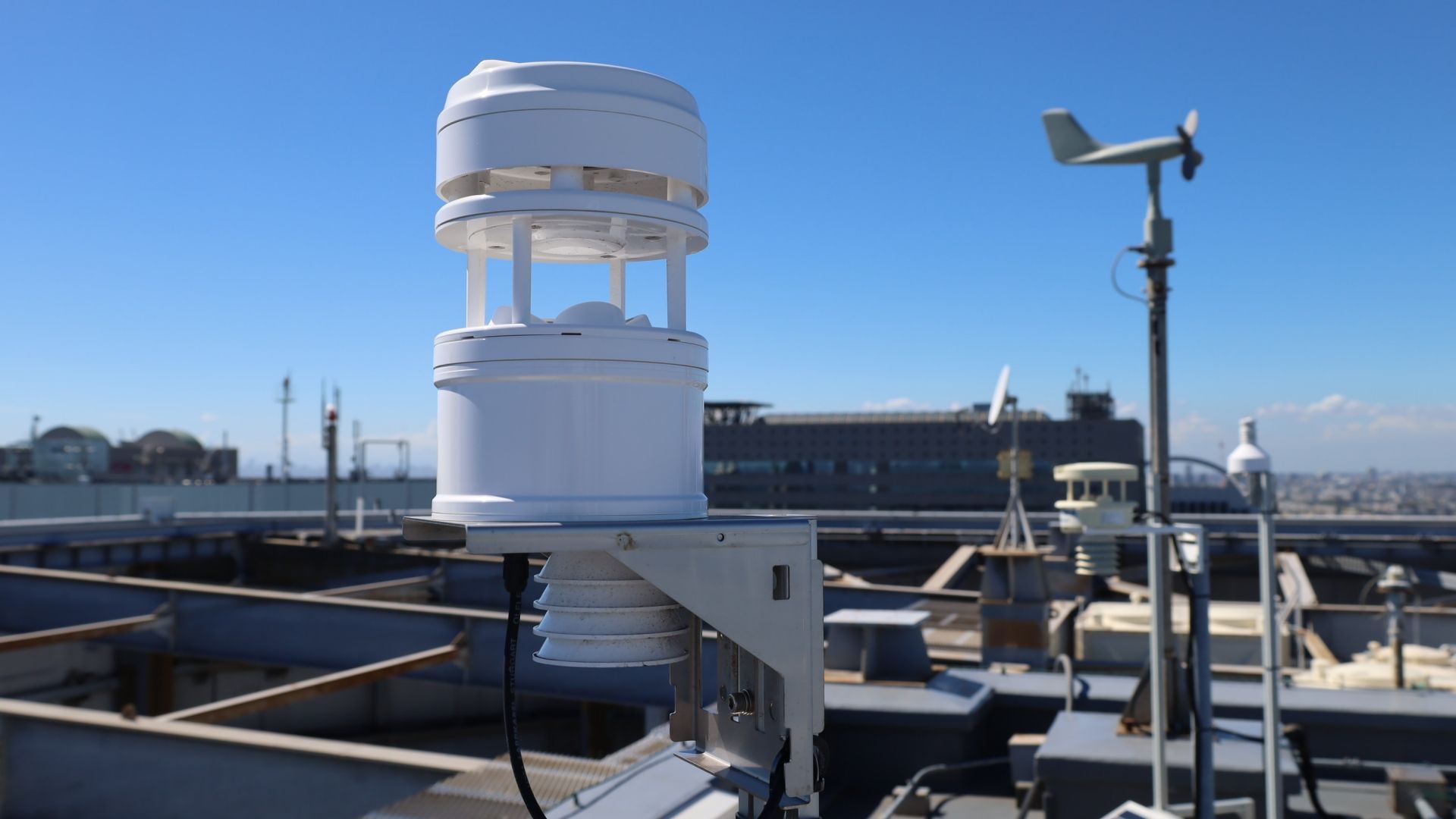
Its standout feature is ease of deployment: simply connect it to a power outlet, and observation begins immediately. All collected data is automatically transmitted to a cloud server and can be accessed through "Weathernews for business."
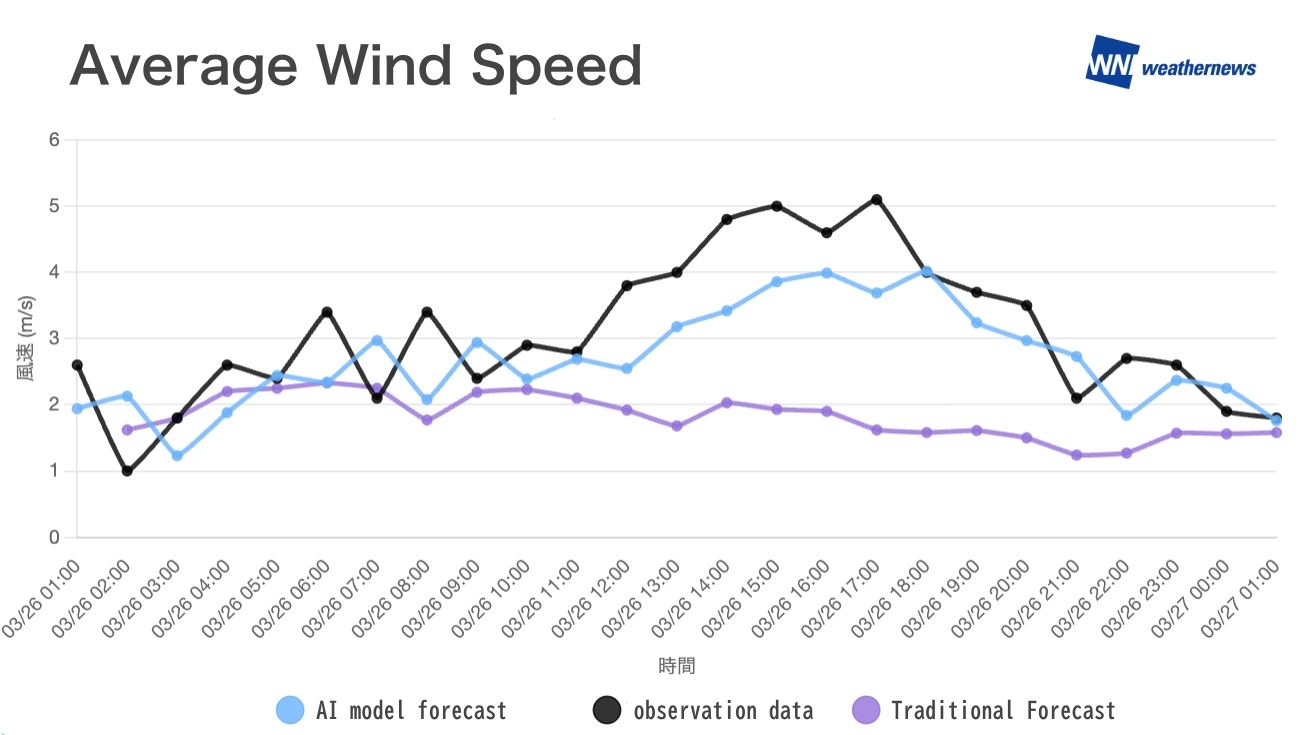
Beyond real-time monitoring, this observational data is used to train AI algorithms, enabling the creation of location-specific forecasting models.
The speed of implementation is particularly impressive: AI-powered forecasts can be delivered in as little as two weeks after installation. Because data is managed on Weathernews' cloud infrastructure, the entire workflow—from installation to data availability and forecast integration—is exceptionally streamlined. With more than two months of observational data, forecast accuracy improves even further.
Notably, "Soratena Pro" is the first weather observation device in Japan to receive official approval from the Japan Meteorological Agency (JMA) as supplementary observation equipment for forecasting operations. This certification represents a nationally recognized standard of quality and reliability. The sensor combines ease of installation and operation with the data integrity required for professional forecasting applications.
Supporting Autonomous Vessel Operations with "Soratena Pro"
Case Study: Hokuren No. 2
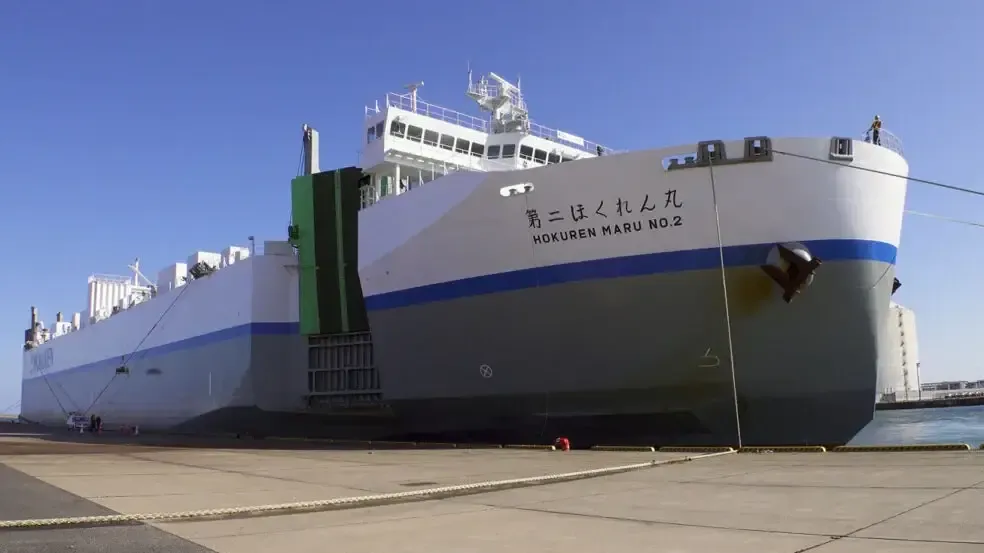
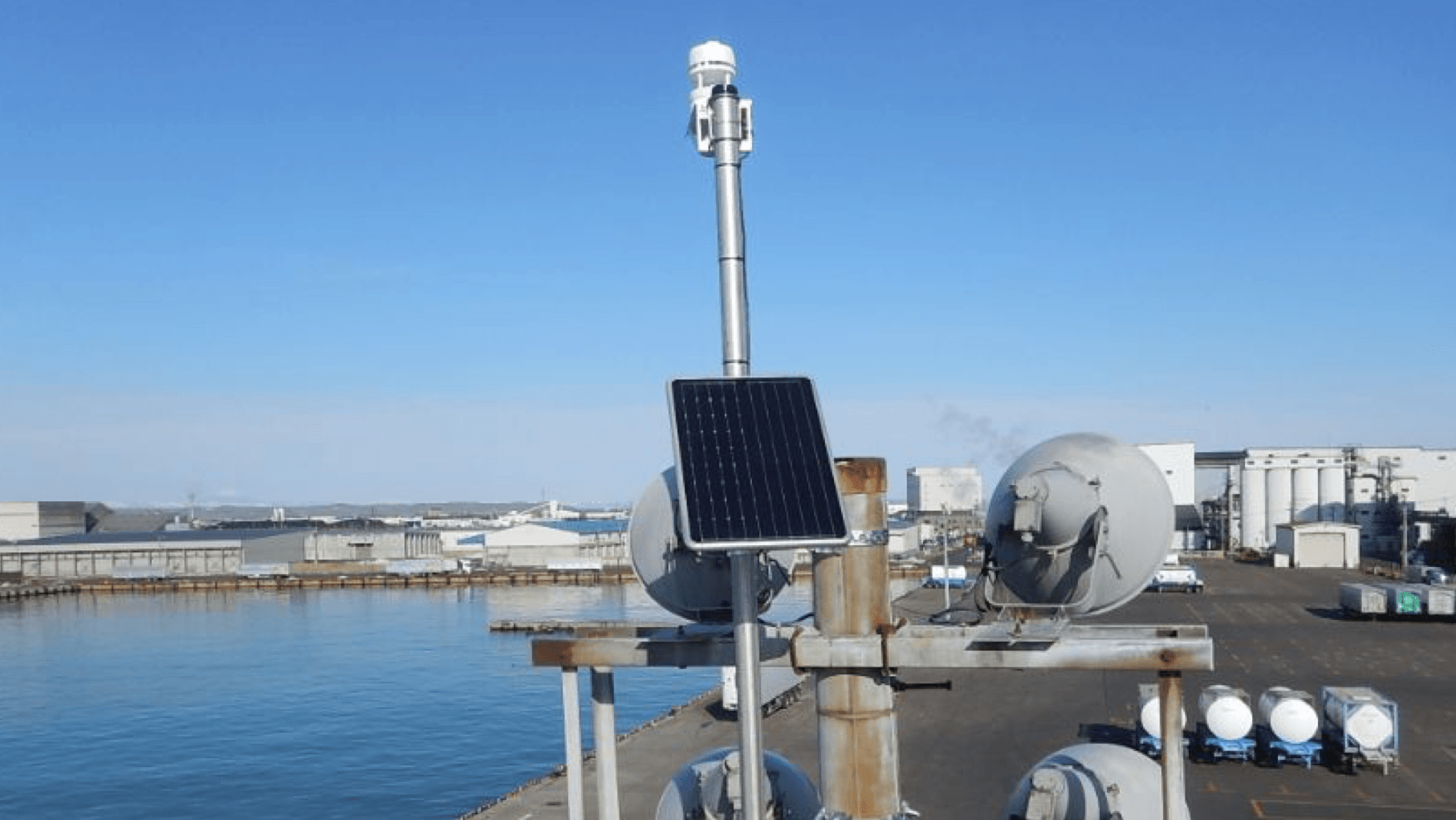
AI forecasting models utilizing "Soratena Pro" are already in practical use, supporting operations of the autonomous cargo vessel "Hokuren No. 2," which travels between Kushiro Port in Hokkaido and Hitachi Port in Ibaraki2.
At the Fleet Operation Center (FOC), which manages the vessel's operations, AI-powered forecasts inform critical decisions—particularly regarding the feasibility of berthing and departure.
When installing "Soratena Pro" sensors at Kushiro and Hitachi, the units were deliberately positioned 14 meters above ground—matching the height of the vessel's deck and cargo operations.
This strategic placement is crucial because, over open water, wind conditions can vary significantly between sea level and higher elevations where vessels and cargo are actually affected. For crane operations and vessel maneuvering, what matters most is not ground-level wind, but wind conditions at the height where cargo sways and where the vessel experiences forces.
The compact, flexible design of "Soratena Pro" enabled placement at these operationally critical, high-risk points—delivering the most relevant data for safe decision-making.
A Future Where AI Supports Decision-Making in Coastal Operations
Toward Safer, More Efficient Maritime Operations in Japan
For over 30 years, Weathernews has supported companies engaged in coastal and port operations. In the past, when observational data was available, human forecasters manually refined predictions and communicated the latest insights via phone to support real-time decision-making on-site.
Today, it is possible to digitize forecasters' expertise and combine it with advanced technology to automatically generate highly localized forecasts at scale.
As Japan faces population decline and labor shortages, reducing reliance on individual experience and institutional knowledge has become a critical business imperative. Digitalizing information and visualizing decision-making processes are essential steps toward truly data-driven operations.
By structuring human expertise in formats that AI can interpret and learn from, we are building a future in which AI actively supports the decision-making of professionals working in coastal environments—enhancing both safety and operational efficiency.
Our mission continues, in partnership with those on the front lines of maritime operations.
Footnotes
- 1:Simple and ready-to-use high-performance weather IoT sensor equipped with 7 observation elements "Soratena Pro" ↩︎
- 2:DFFAS+ is a consortium responsible for technological development and the social implementation of these technologies in the second stage of the "MEGURI2040" fully autonomous ship project, spearheaded by The Nippon Foundation. Comprising 53 Japanese companies, including the NYK Group, this "All-Japan" collaborative entity aims to achieve the social implementation (practical application) of fully autonomous ships by 2025 and the standardization of autonomous maritime technologies. ↩︎
Share
![[Developer Interview] Building the World’s Most Accurate Wave Forecasting Model](https://gvs.weathernews.jp/wni_blog_media/large_20260331_TOP_177db7c4c9.JPG)