
February 27, 2026
Sakura AI: Bloom Forecasts for Any Tree from a Single Photo



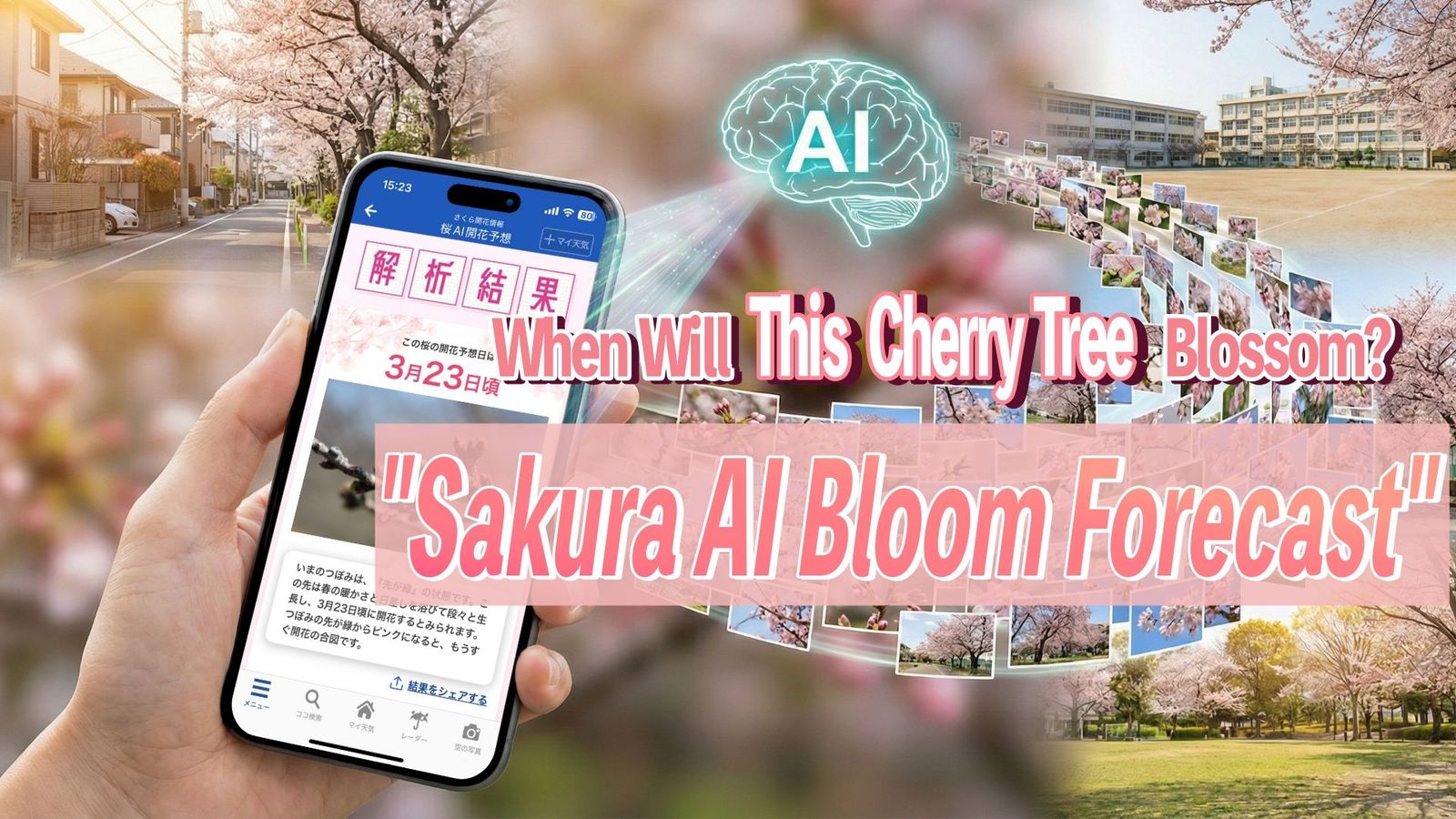
As spring approaches, anticipation builds for one of nature's most beloved spectacles: cherry blossoms in full bloom.
Each year, weather forecasts announce when cherry blossoms are expected to bloom across different regions. However, these predictions are based on designated "sample trees" in each prefecture. This leaves many people wondering: "When will the cherry tree on my daily commute bloom?" or "When's the best time to plan hanami at my local park?"
To answer these hyper-local questions, Weathernews developed the "Sakura AI Bloom Forecast." The concept is simple yet powerful: snap a photo of a cherry blossom bud with your smartphone, submit it, and our AI predicts when that specific tree will bloom.
But how can a single photo determine a bloom date? In this article, we sit down with Fumiya Kimura from our Forecast Center development team to explore the story behind Sakura AI Bloom Forecast – from its initial concept and the team's passion for the project, to the technical innovations that enhance the AI's prediction accuracy.
Over 2 Million Sakura Reports – Giving Back to Our Community Through Data
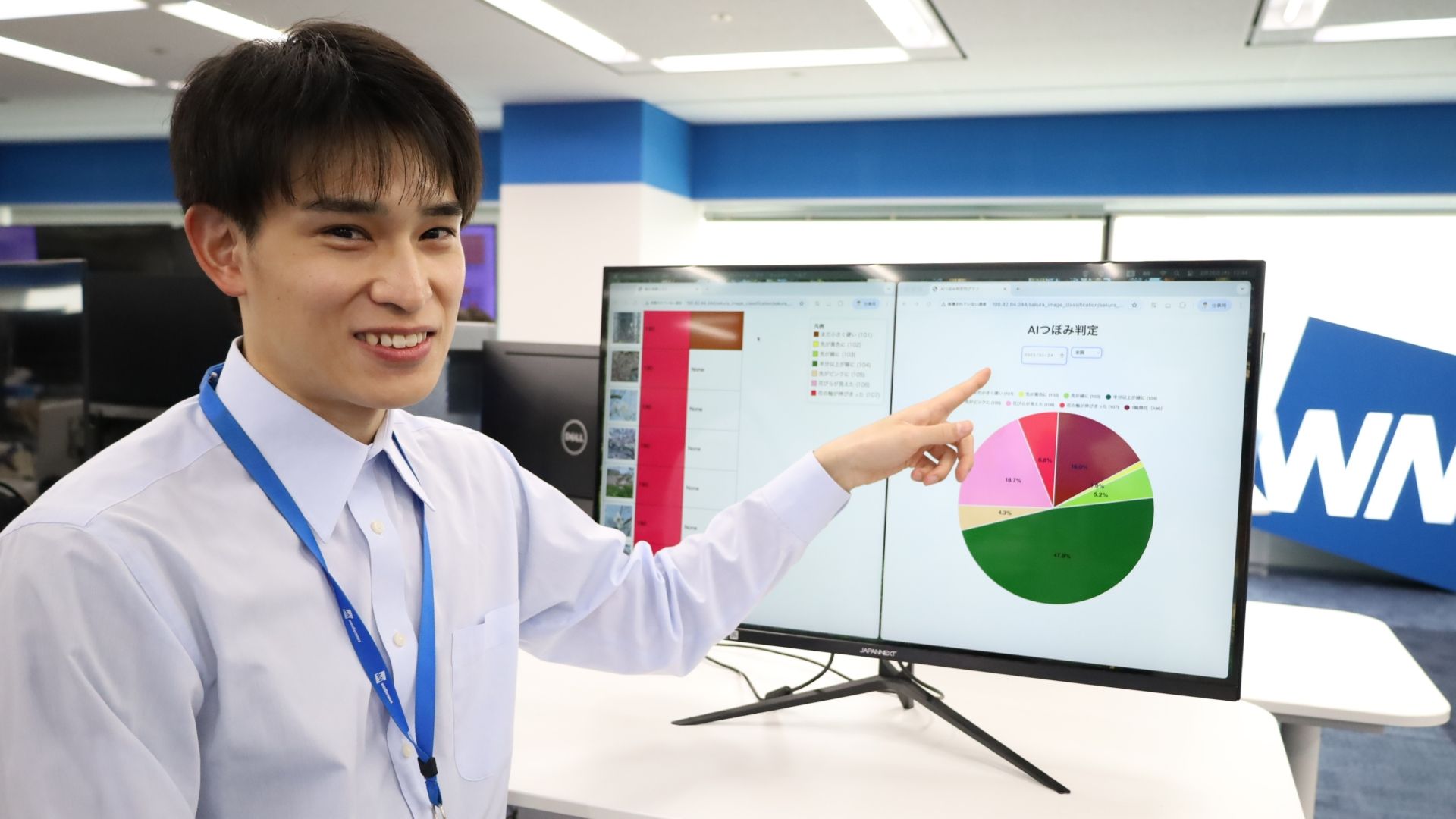
Since 2004, Weathernews has partnered with app users nationwide through the "Sakura Project," tracking cherry blossom growth from bud to bloom. Users register their nearest cherry tree—whether at a local park or along their daily route—as "My Sakura," and share photos documenting its progress. These daily reports help us refine and improve our bloom forecasts.
To date, we've received over 2 million sakura reports from our community. With such a rich dataset built through years of collective observation, we knew we had an opportunity—and a responsibility—to transform this data into something even more valuable for the people who made it possible.
Combining AI Image Analysis with 1 km Mesh High-Resolution Forecasts
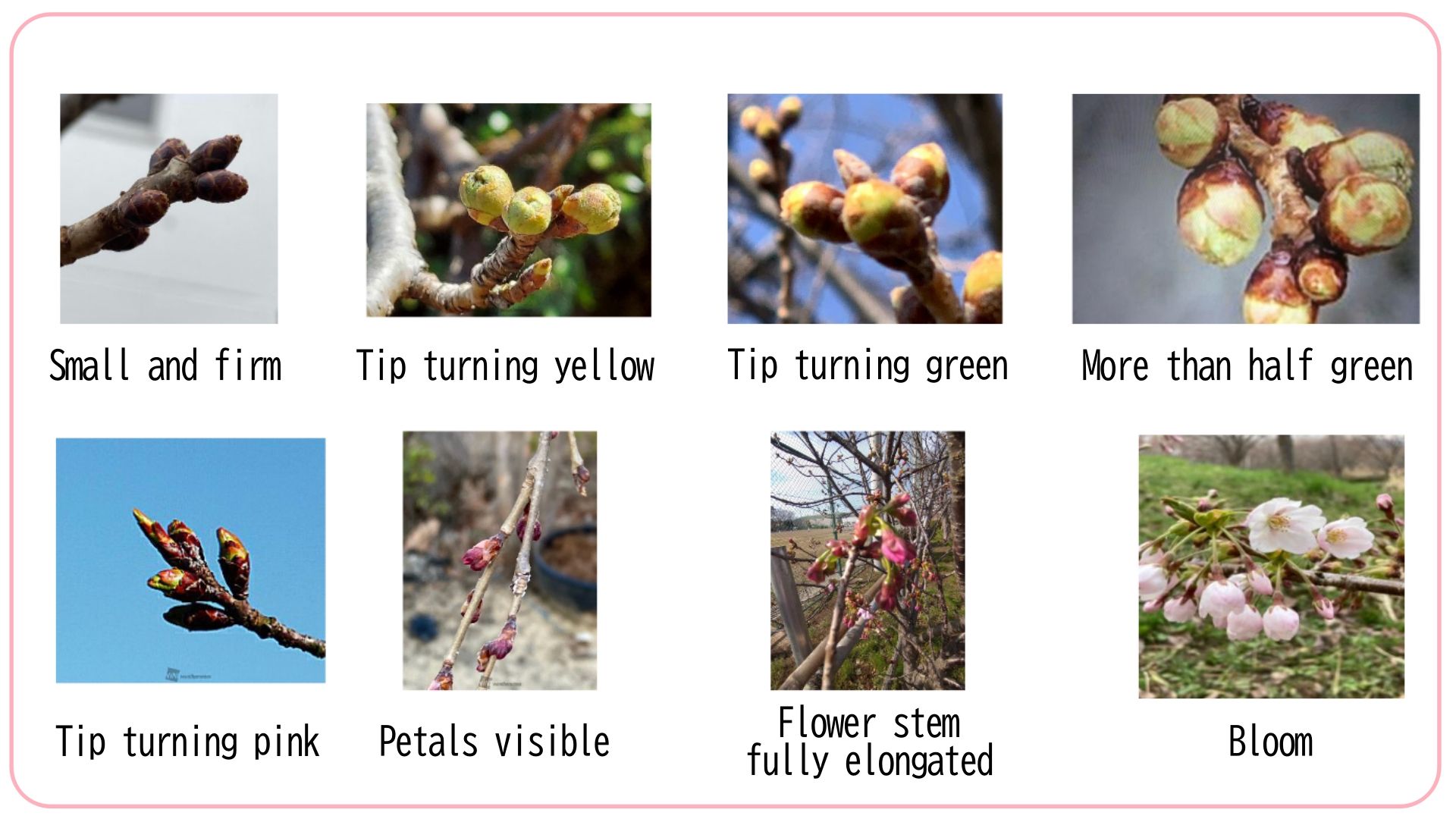
To make this vision a reality, we developed a unique AI model trained on the extensive "My Sakura" image dataset and corresponding bloom dates submitted by our app users. When you submit a photo of a cherry blossom bud, the AI analyzes and classifies its growth stage into one of seven distinct levels:
1 Small and firm 2 Tip turning yellow 3 Tip turning green 4 More than half green 5 Tip turning pink 6 Petals visible 7 Flower stem fully elongated 8 Bloom
The Sakura AI Bloom Forecast service, launched last year, takes the growth stage identified by the AI and combines it with Weathernews' proprietary 1 km mesh high-resolution weather forecast data to calculate a personalized bloom prediction for that specific tree.
For buds that are still tight and firm—indicating blooming is more than two weeks away—the system displays the predicted bloom date for the prefectural sample tree instead, providing users with a useful baseline estimate.
This year, we're enhancing the system by adding a new "Bloomed" category to our bud stage classification, expanding it from seven to eight levels for even greater precision. Beyond predicting bloom dates, the updated service will now also forecast when that specific tree will reach full bloom—helping users plan the perfect time for hanami viewing.
Professionals Reviewed Over 6,000 Images – Building Accuracy Through Rigorous Data Preparation
Improving the accuracy of our sakura stage classification required a significant investment in training data preparation and AI testing.
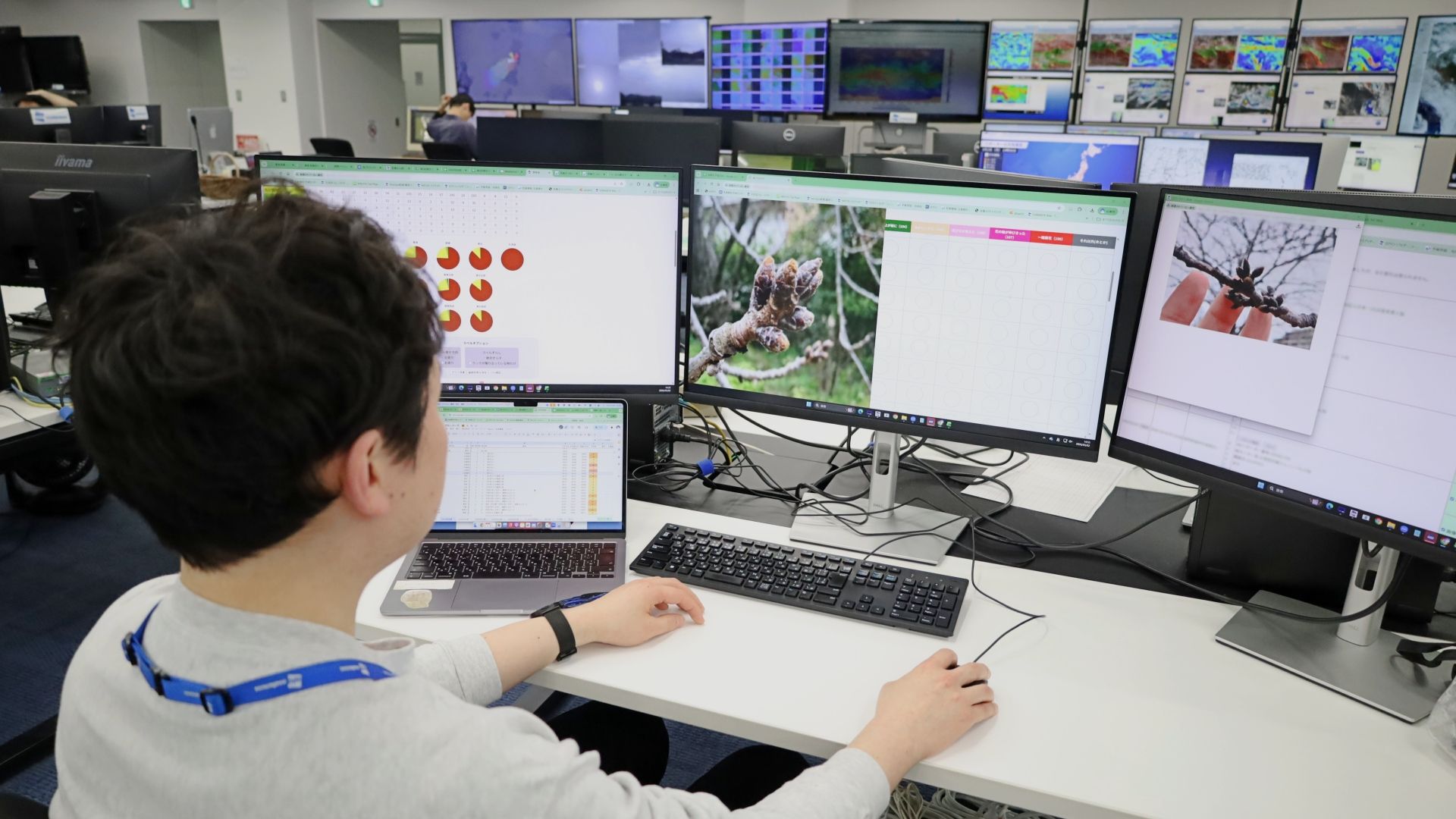
We started by developing a custom internal tool that enabled our Forecast Center specialists—experts in cherry blossom forecasting—to manually review over 6,000 images for AI training. Each image was carefully tagged with the correct growth stage, ensuring our training dataset met the highest quality standards.
When we launched the service last year, we also gave users the ability to flag assessments that didn't seem quite right. Our Forecast Center team reviewed every piece of feedback, manually correcting misclassifications and using this refined data to retrain the model. This continuous feedback loop steadily improved the system's performance.
This year, we've taken accuracy even further. After validating multiple AI models, we've deployed an upgraded version that delivers more reliable predictions, ensuring an even better experience for our users.
Tips for More Accurate Predictions: Focus on the Branch Tip
Through extensive testing with our cherry blossom forecasting team, we've identified specific image characteristics that can affect AI accuracy. Images that tend to cause issues include:
• Wide shots capturing the entire tree • Photos where other plants appear in the background • Out-of-focus images
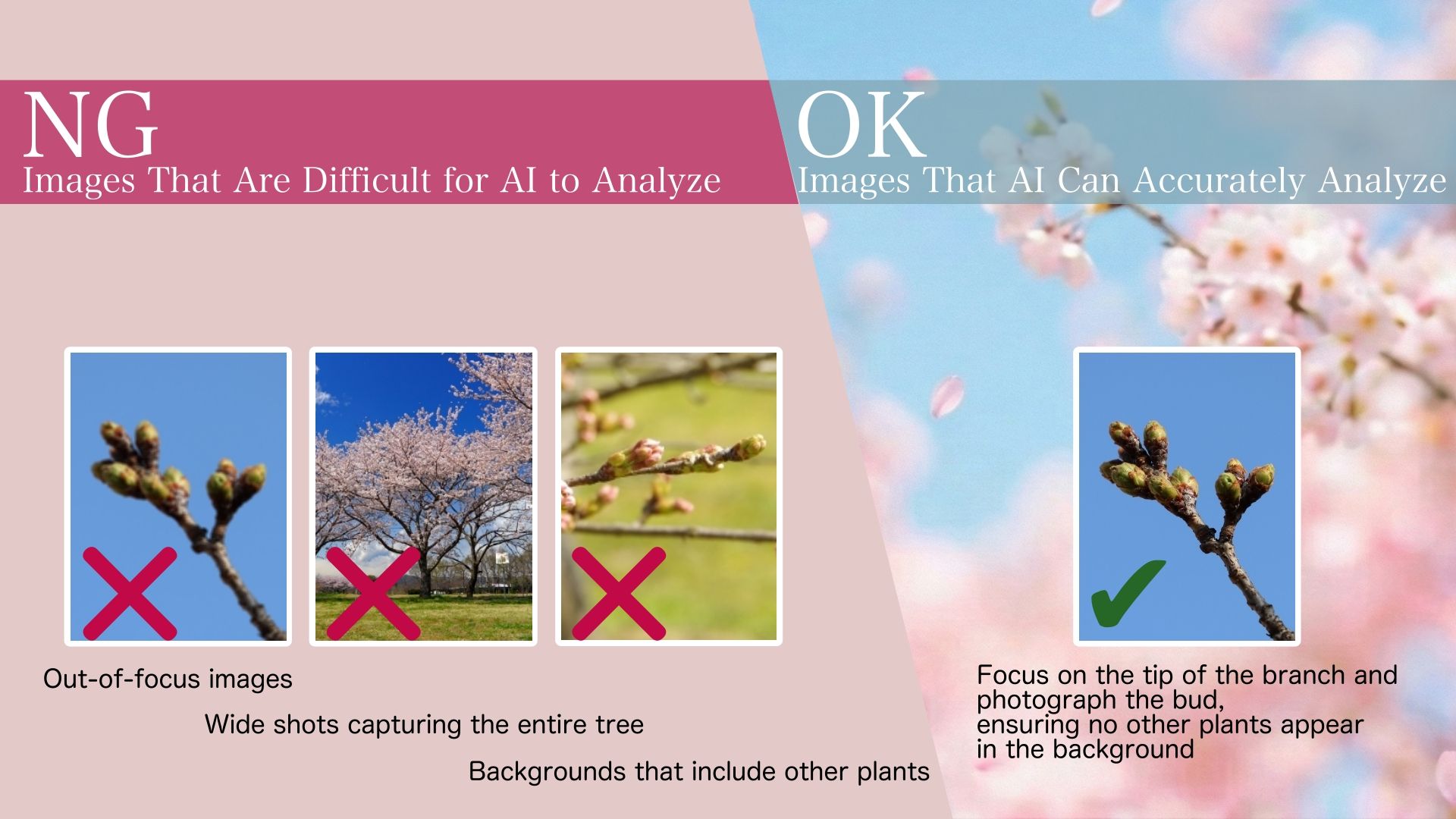
In these situations, the AI may struggle to distinguish the branch from surrounding elements, or mistake background foliage for cherry blossom buds.
Having worked closely with the AI's learning curve, our team has identified two simple tips that can dramatically improve prediction accuracy:
• Focus on the branch tip and capture a single bud clearly • Keep the background free of other plants (especially green or pink foliage)
Following these guidelines can make a significant difference in your forecast results.
How to Take the Perfect Photo: Position yourself so that approximately 3 cm (about 1 inch) of the branch tip fills your screen, with the camera focused on the specific bud you want analyzed. Don't worry if multiple buds appear in the frame—when several are visible at different growth stages, the AI will automatically assess the bud with the most distinguishable characteristics.
If other plants are visible in the background, try changing your angle—sometimes simply photographing the branch from the opposite side does the trick. And yes, nighttime photos work too! Just turn on your phone's flash for best results. At Weathernews, we're committed to combining the valuable data our community provides with the latest technology to continue developing innovative features that make cherry blossom season even more memorable!
Share
![[Developer Interview] Building the World’s Most Accurate Wave Forecasting Model](https://gvs.weathernews.jp/wni_blog_media/large_20260331_TOP_177db7c4c9.JPG)
April 1, 2026
[Developer Interview] Building the World’s Most Accurate Wave Forecasting Model

April 1, 2026
Enhancing Safety for Vessels and Coastal Operations with a Weather IoT Sensor You Can Deploy Anywhere: Enabling Hyper-Local AI Forecasting in Ports

March 27, 2026
Ogasawara Islands to Achieve Japan's Highest Weather Observation Density Through Digital Innovation