
Basic Policy
Our Group aims to provide weather services that reduce the risks to the lives and property of all companies and individuals around the world while expanding their opportunities. Because we provide these services continuously to the entire world, we recognize that ensuring business continuity contributes not only to our Group but also to society and the economy as a whole.
In recent years, the business environment has grown increasingly difficult to predict, owing to factors such as environmental issues including climate change, resource depletion, and large-scale disasters, as well as shifts in the complex global political and economic landscape. Responding appropriately to these changes has a significant impact on the achievement of our management objectives and on the continuity of our business. For this reason, our Group defines risk as uncertainty that significantly affects the achievement of management objectives and the continuity of the business, and grasps and analyzes the business environment from both quantitative and qualitative perspectives. By preparing for both the risks to guard against and the opportunities for further growth, we manage risk from both angles and create business opportunities.
Risk Management Structure / Critical Risk Determination Process and Monitoring
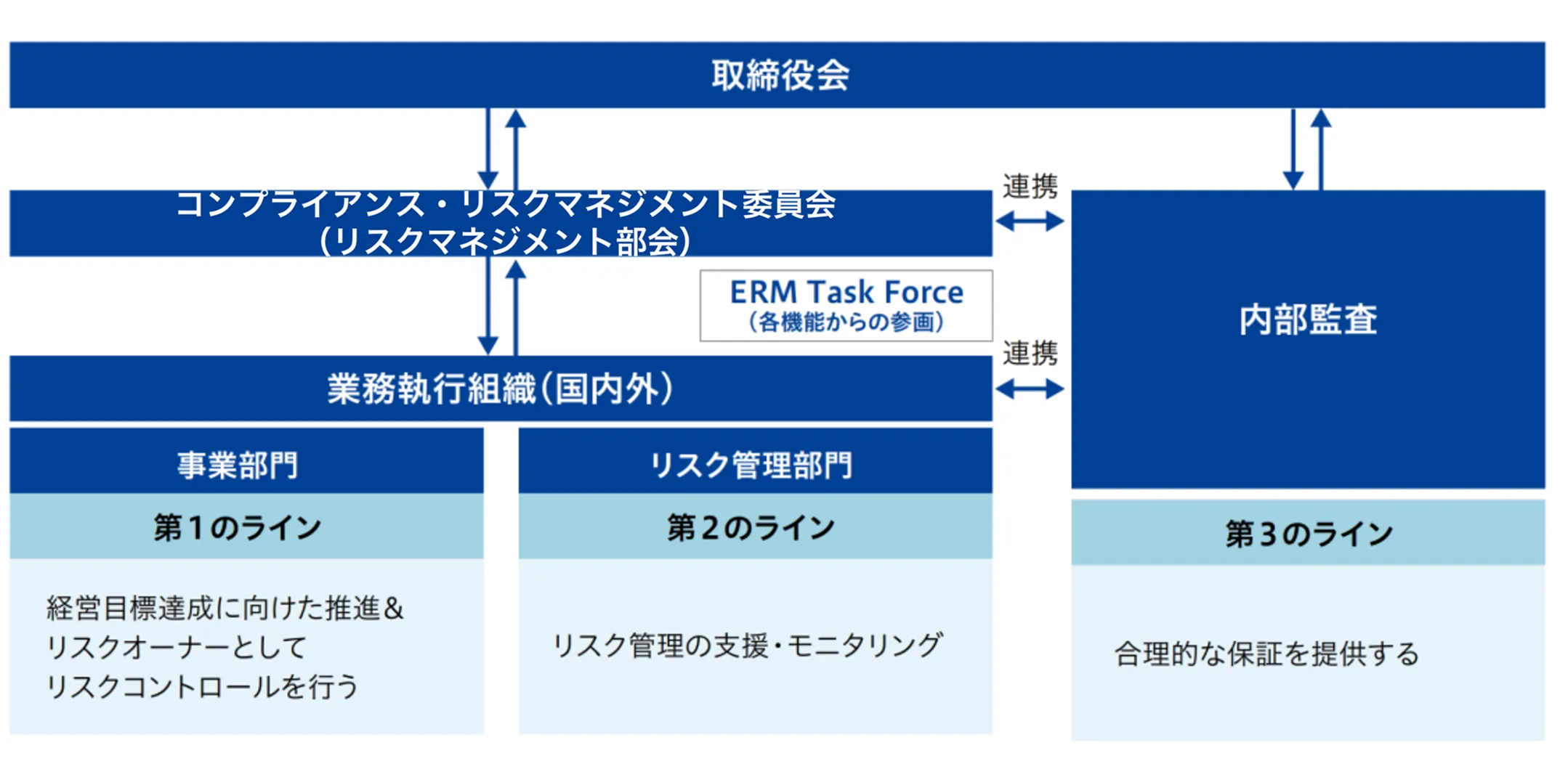
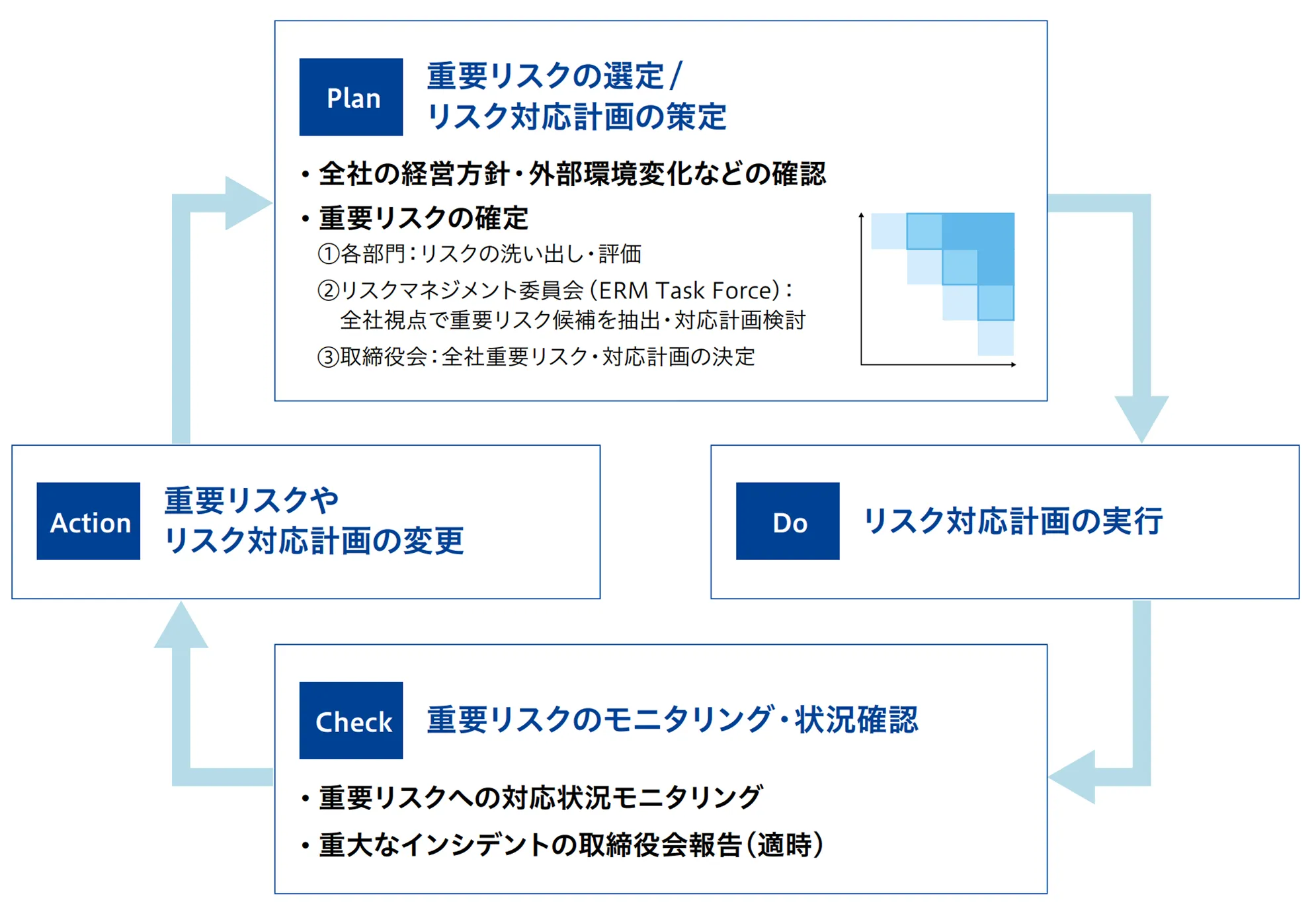
We have established a company-wide risk management structure with reference to international frameworks for risk management such as COSO-ERM. Once a year, based on changes in external and internal factors, we comprehensively identify the risks we anticipate and update our Risk Inventory. We evaluate the business impact and the likelihood of occurrence for every risk in the inventory, and identify the critical risks through deliberation by the Board of Directors. For these critical risks, the Board of Directors regularly confirms any changes in circumstances and reviews the countermeasures in place.
Our Group and each business division (the First Line) plan and implement various measures according to the nature of each risk, while the risk management department (the Second Line) provides the necessary support and monitoring, so that risk management is promoted through mutual cooperation. We also conduct monitoring from both strategic and risk perspectives on a quarterly basis to prevent risks from materializing. Through this structure, we appropriately control our risks.
Risk Management for Environmental Issues
Our Group positions the risks that environmental changes such as climate change and biodiversity loss pose to our business activities as important risks. For this reason, we collect and analyze the relevant information and conduct business risk assessments.
For risks that may arise in our daily operations, each department determines specific countermeasures and evaluation indicators and regularly reports on their progress to the Risk Management Committee. For risks that may arise over the medium to long term, we formulate countermeasures, and we report risks with a significant business impact to the Board of Directors so that countermeasures can be discussed.
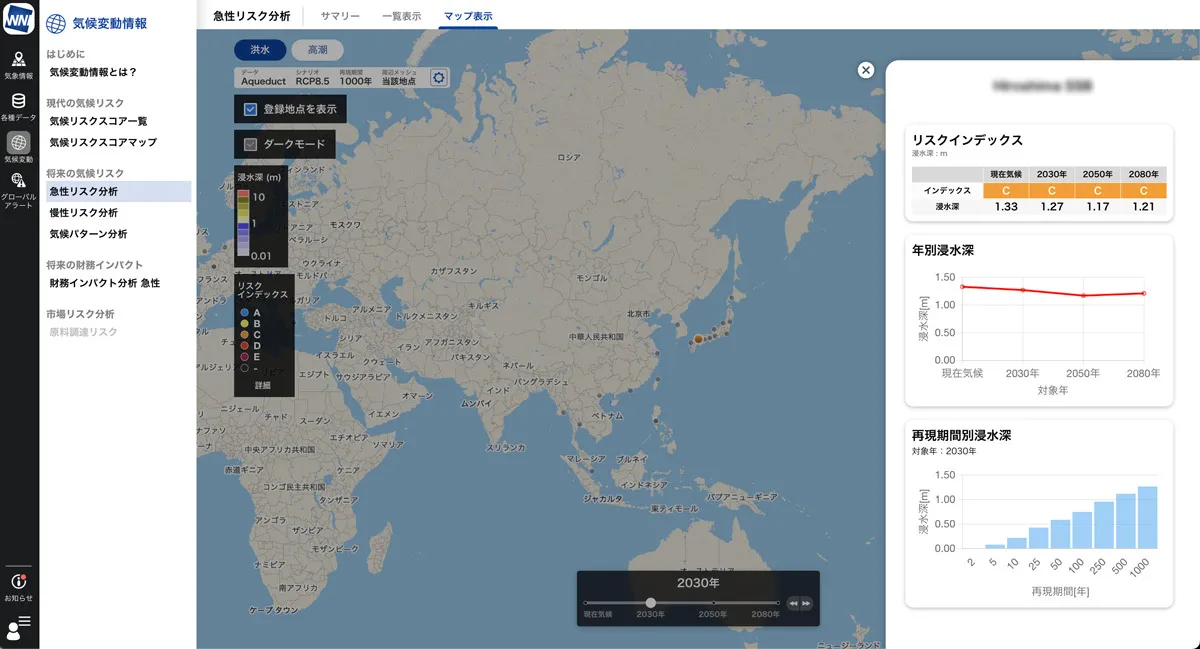
Scenario: RCP8.5 / Return Period: 1000 years
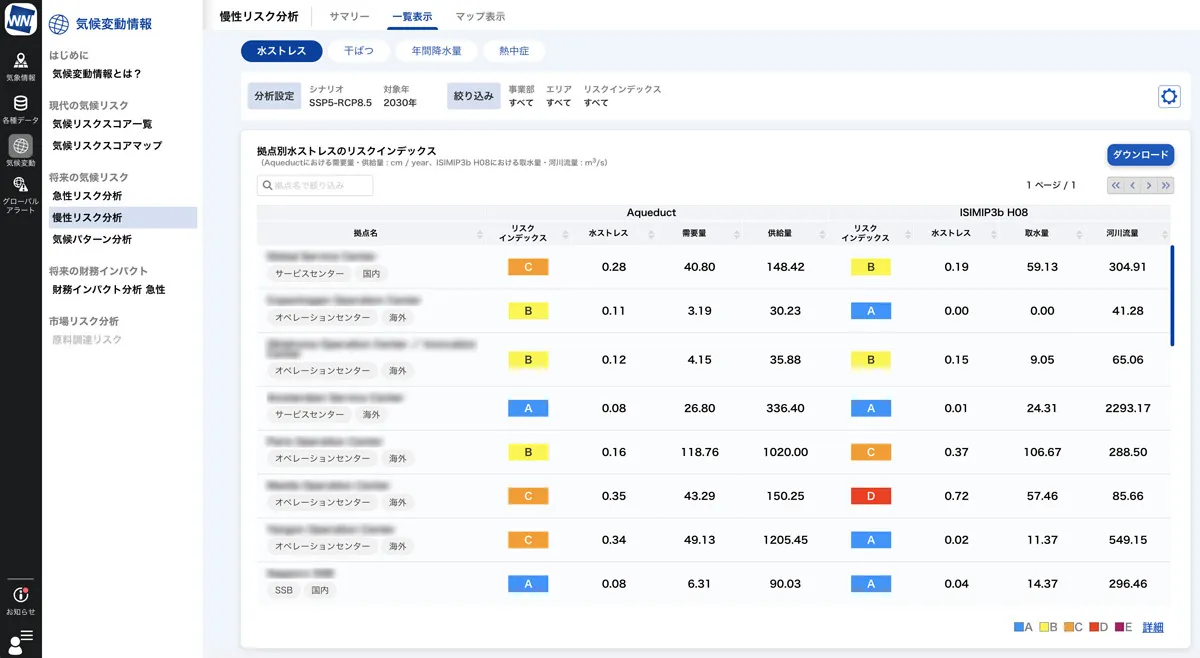
Scenario: SSP5-RCP8.5 / Target Year: 2030


