News & Press Release
MEGURI2040 Second Stage Results Announced
4 Test Ships in the Nippon Foundation Fully Autonomous Ship Project Have Been Certified as Autonomous Ships Achieving Level 4 High Automation*1 Under Commercial Operations, Marking a New Phase in the Real-World Implementation of Autonomous Ships
Shipping >Weathernews Inc., a participant in the Nippon Foundation MEGURI2040 Fully Autonomous Ship Program (“MEGURI2040”*2), announced on March 27, 2026, that all four ships used in the second stage of testing for this project have passed inspections by the Ministry of Land, Infrastructure, Transport and Tourism and began commercial operations as autonomous ships.
MEGURI2040 is a project led by the Nippon Foundation since 2020 to achieve fully autonomous ships and enable the stable transport of people and goods, addressing pressing challenges in the maritime industry, such as crew shortages due to a declining and aging population and accidents caused by human error.
A total of 53 Japanese companies that have endorsed the purpose and social significance of this project have formed the Designing the Future of Fully Autonomous Ships Plus (DFFAS+*3) Consortium, where they leverage their individual strengths to develop technologies and implement them in real-world settings. Weathernews has joined the DFFAS+ Consortium to help build a weather risk management infrastructure for autonomous ships.
Key Points of Testing and Development
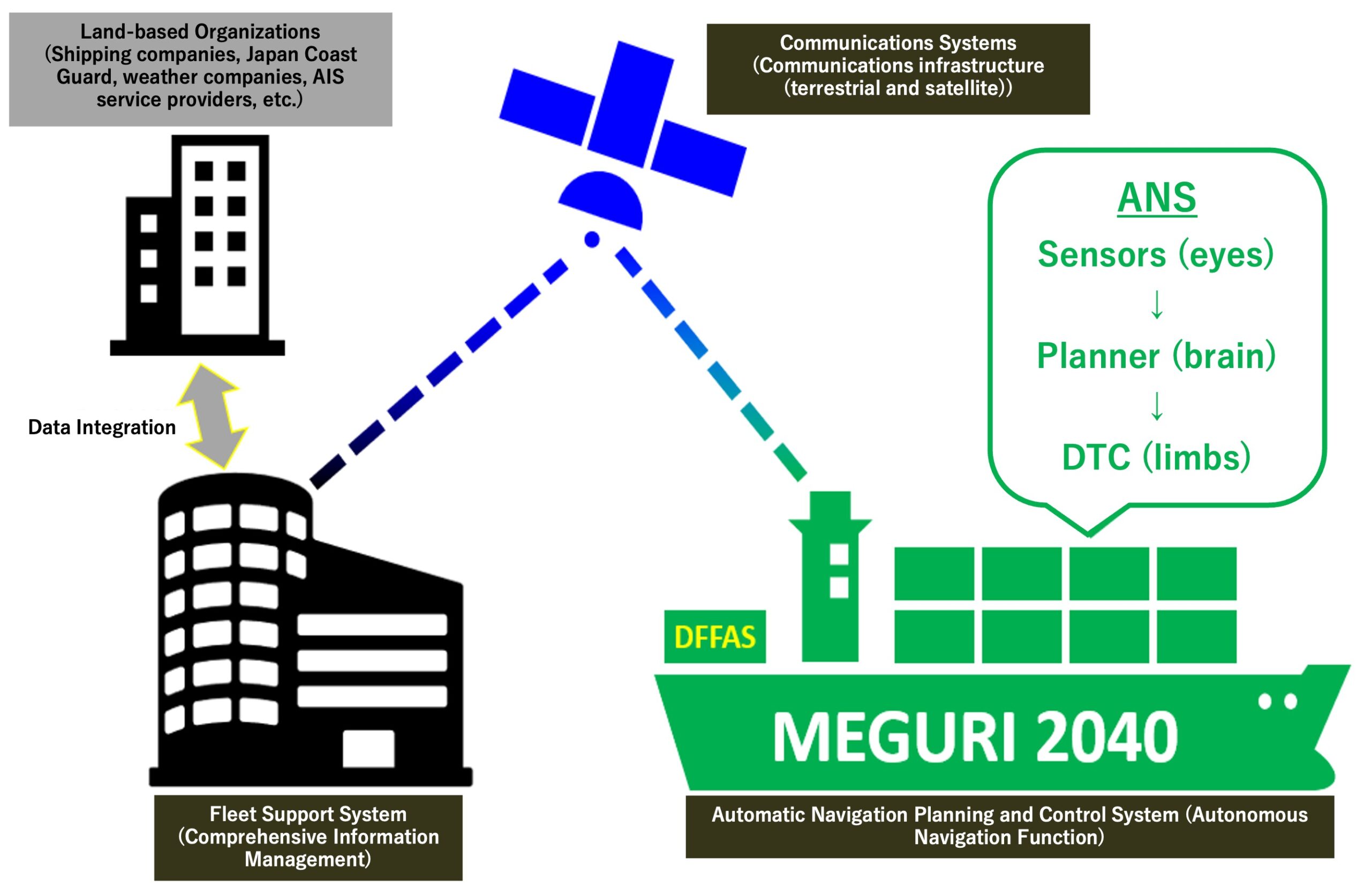
The DFFAS+ Consortium has designed and developed autonomous ships not as a standalone technology but as an integrated operational system that combines onboard systems, communications systems, and land-based support systems.
The test ships include cargo ships, passenger ships, and other vessel types with different uses and operating conditions. Through new construction or retrofitting (adding new functions to existing equipment to improve performance), these vessels were equipped with autonomous navigation equivalent to Level 4 automated driving (“High Automation”). The system combines such features as vicinity detection, integrated display of navigation conditions, prediction of future behavior, collision avoidance, and route planning, the design is based on autonomous decision-making with human monitoring and intervention.
These ships navigate through coordination with land-based support centers (a two-site system consisting of one permanent and one mobile center), which can monitor and support multiple ships simultaneously using stable satellite and cellular communications links, ensuring safety and redundancy in operations.
Initiatives by Weathernews
Weathernews has participated in MEGURI2040 from its first stage, the DFFAS Consortium, through its second stage, the DFFAS+ Consortium.
During the first stage, Weathernews developed a route planning system that uses AI to automatically recommend optimal routes, providing operational support from a land-based support center. During the second stage, Weathernews provided support not only during navigation but also while ships were berthed, offering high-resolution forecasts suited to complex terrain and data corrected in real time using observational data to respond to sudden changes in weather.
To address social challenges in the Japanese shipping industry, including labor shortages, workload reduction, maritime accident prevention, and the maintenance of routes to remote islands, Weathernews will collaborate with the Nippon Foundation, DFFAS+ member companies, and partner organizations in Japan and abroad to achieve safe maritime transportation.
The Four Test Ships
During the second stage, the following four ships, operating under different navigation environments and use cases, were used as test vessels to verify Level 4 High Automation autonomous navigation during commercial operations and all four ships passed inspections by the Ministry of Land, Infrastructure, Transport and Tourism and were certified as autonomous ships.
Genbu, a New Domestic Container Ship
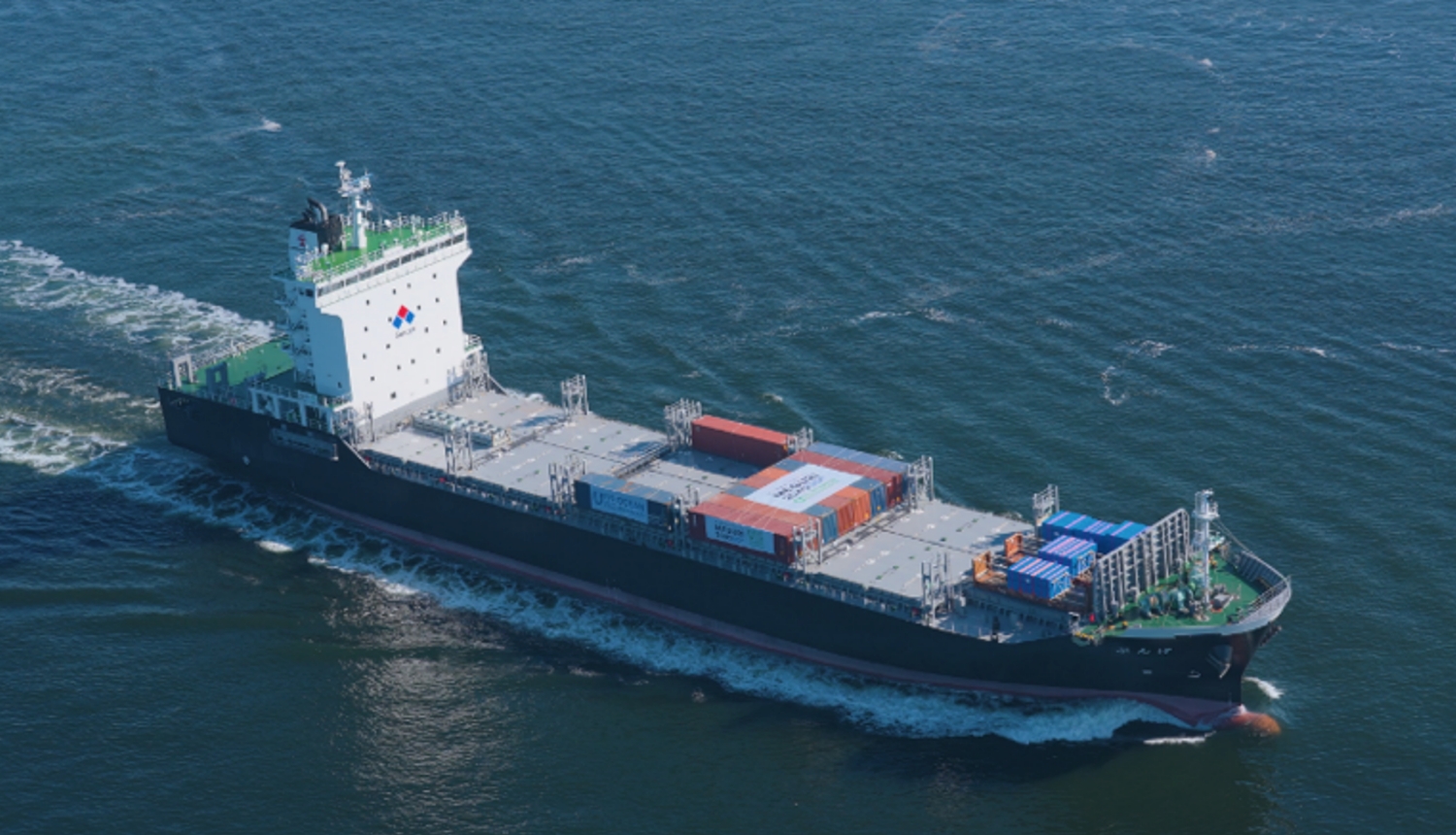
Genbu, a domestic container ship roughly 134 meters in length with a capacity of 700 TEU, managed by Icors Co., Ltd. and operated by Suzuyo Shipping Co., Ltd., transports container cargo along a route from Kobe to Tokyo that passes through Osaka, Nagoya, Shimizu, and Yokohama. Designed and built as a flagship equipped with all of the features required for autonomous navigation in preparation for the widespread use of autonomous ships, Genbu passed national vessel inspections as an autonomous ship on January 28, 2026.
Olympia Dream Seto Passenger Ship
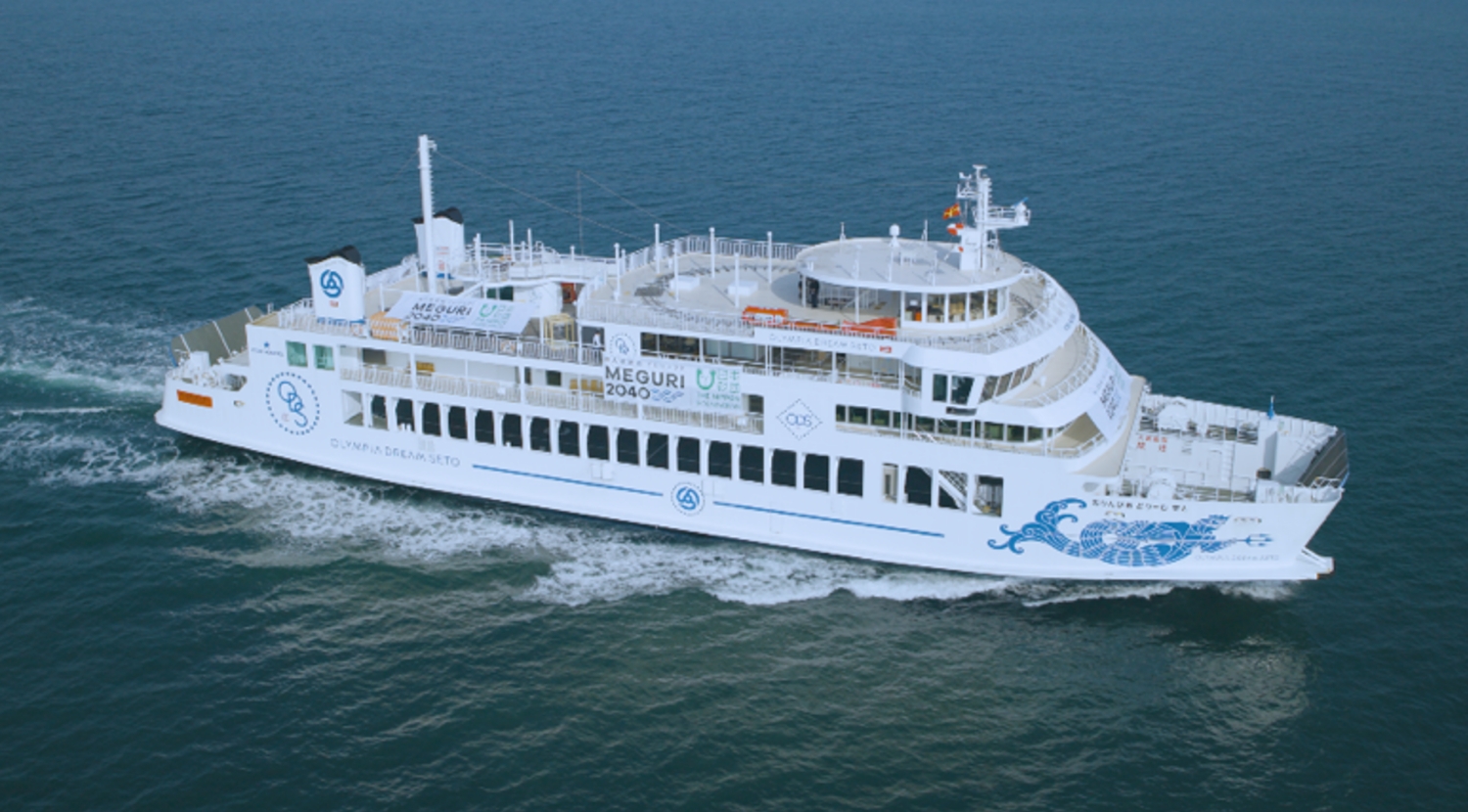
Olympia Dream Seto, a ship roughly 66 meters in length with a capacity for 500 passengers, operated by Kokusai Ryobi Ferry Co., Ltd., travels to remote islands between Shin-Okayama Port in Okayama Prefecture and Tonosho Port in Kagawa Prefecture. A safety assessment was conducted to determine whether it would be able to autonomously navigate in the Seto Inland Sea, an area with heavy ship traffic and numerous islands and reefs that present navigational hazards. It became the first in Japan to pass national vessel inspections as an autonomous ship on December 5, 2025.
Daini Hokuren Maru, an Existing Ro-Ro Ship
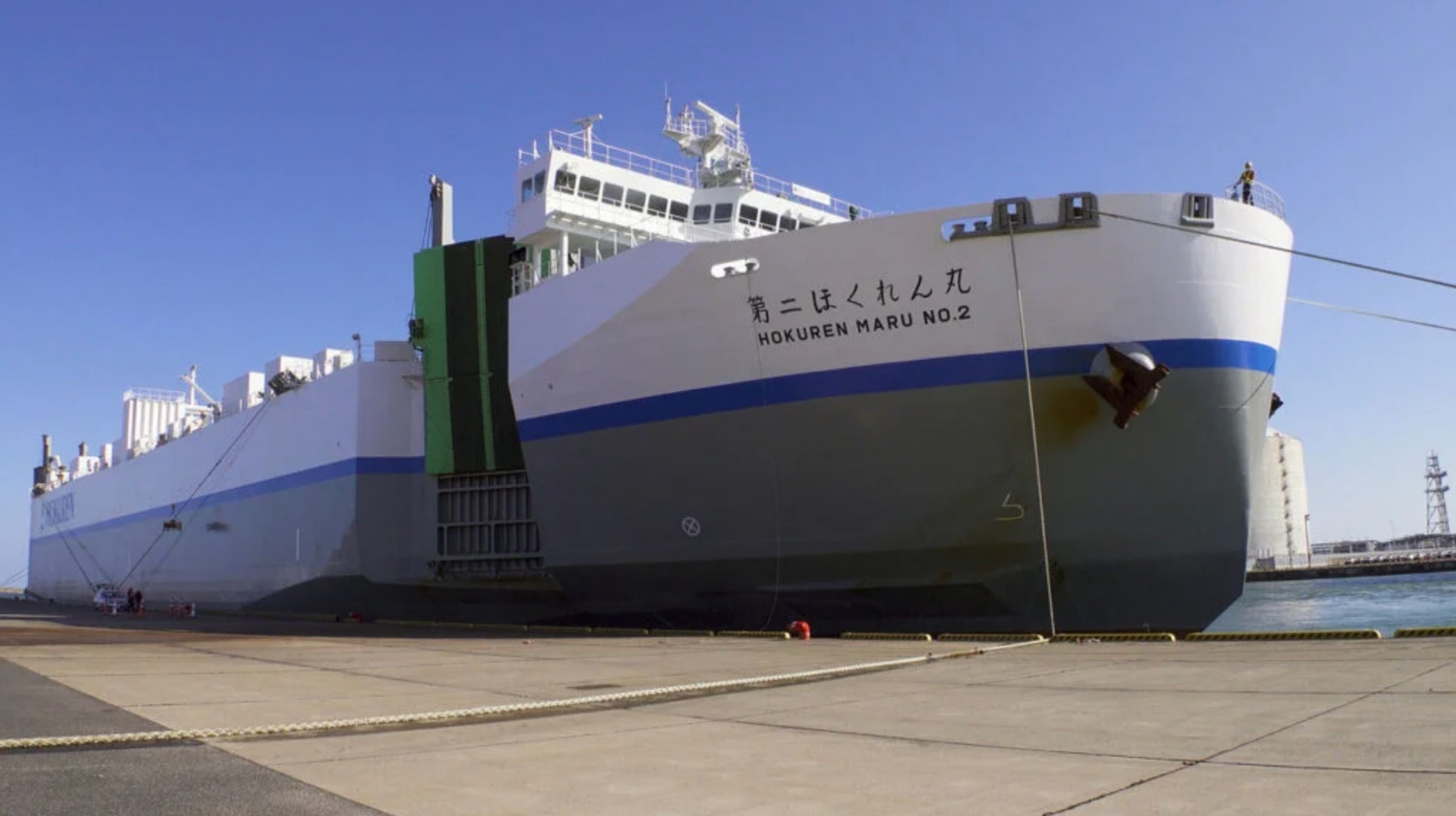
Daini Hokuren Maru, a domestic Ro-Ro ship (a “Roll-on/Roll-off” ship that allows trucks and trailers loaded with cargo to drive on and off), roughly 173 meters in length with a gross tonnage of 11,413 tons, operated by Kawasaki Kinkai Kisen Co., Ltd., transports agricultural products such as raw milk from Hokkaido between Kushiro Port in Hokkaido and Hitachi Port in Ibaraki Prefecture, and passed national vessel inspections as an autonomous ship on February 9, 2026.
Mikage, an Existing Domestic Container Ship
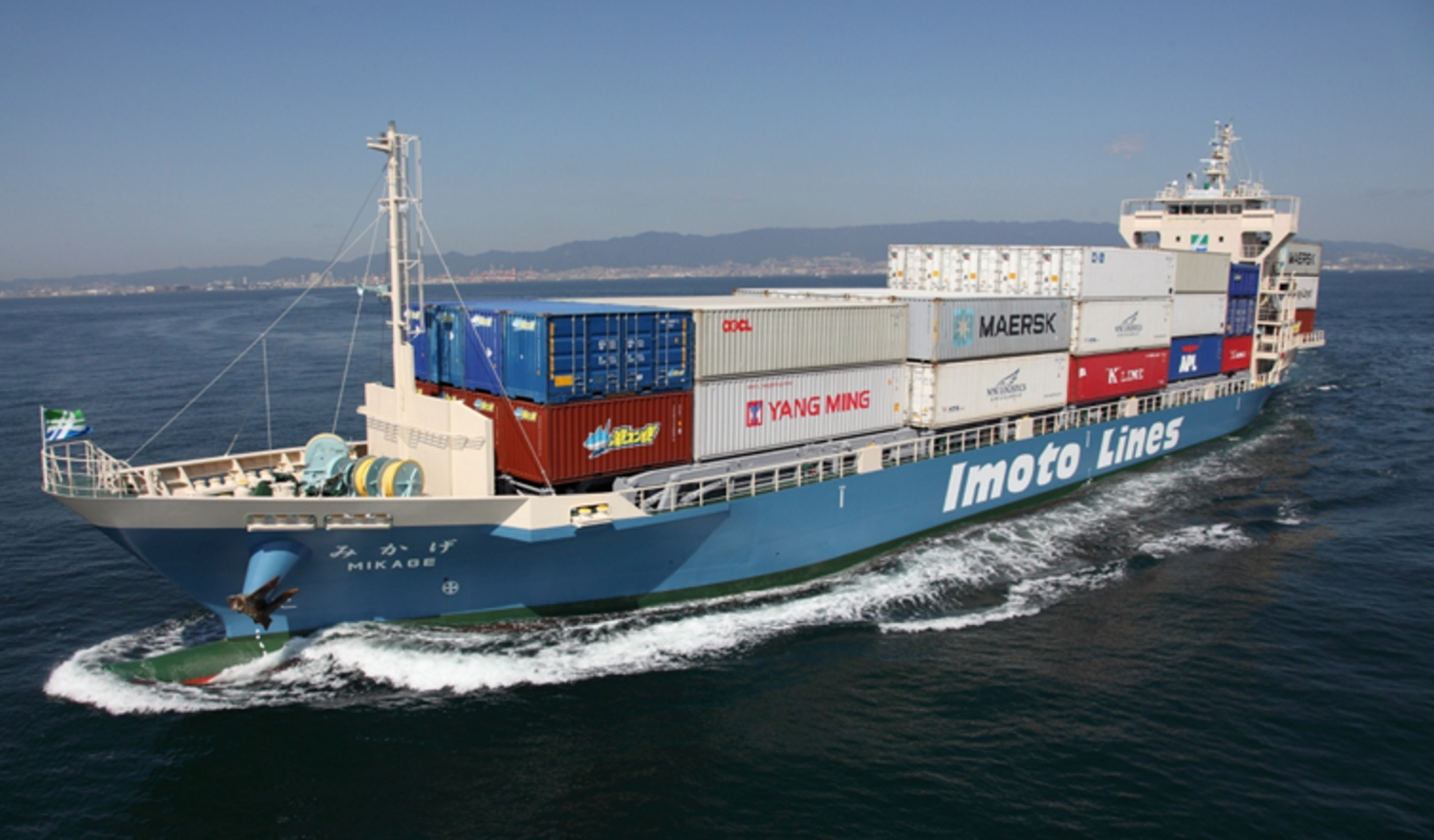
Mikage, operated by Imoto Lines Co., Ltd., is a 96.81-meter, 245 TEU, 749 gross-ton domestic container ship, the most common type in Japan. It connects ports throughout Japan, supporting domestic logistics. In order to promote automation aboard the most common domestic vessel in Japan and help maintain the efficiency of domestic logistics, Mikage passed national vessel inspections as an autonomous ship on March 25, 2026.
Note: The autonomous navigation area is between Kobe and Nagoya.
Two Land-Based Support Centers to Support Autonomous Shipping
In addition to onboard systems, autonomous ships rely on monitoring and support from land-based support centers to ensure safe and efficient operations. The land-based support centers aggregate, visualize, and monitor real-time data on navigation status, engine conditions, and surroundings for multiple autonomous ships, providing navigation and decision-making support as needed to improve safety and reduce the burden on the crew.
At a press conference, the company unveiled a demonstration of multiple autonomous ships in commercial operation connected in real time to land-based support centers for simultaneous support, marking a first of its kind in the world*4.
Permanent Land-Based Support Center
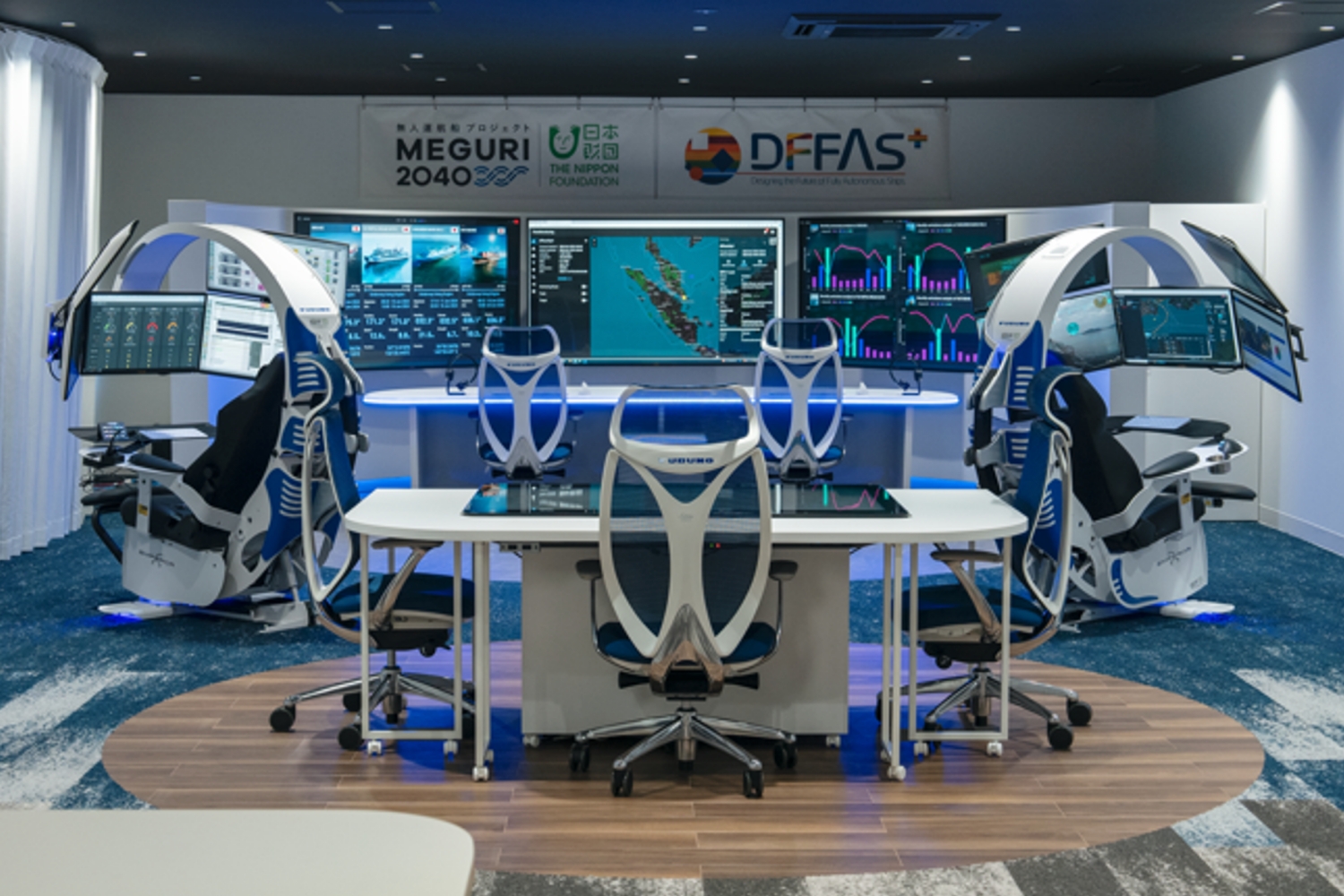
Located inside the Furuno Electric Co., Ltd. building in Nishinomiya, Hyogo Prefecture, this center is the first in the world to simultaneously provide navigation support from land for multiple ships under different usage and navigation environments. In addition to reducing the burden on crews and improving ship safety, the center contributes to the creation of operational models in preparation for the widespread use of autonomous ships.
Mobile Land-Based Support Center
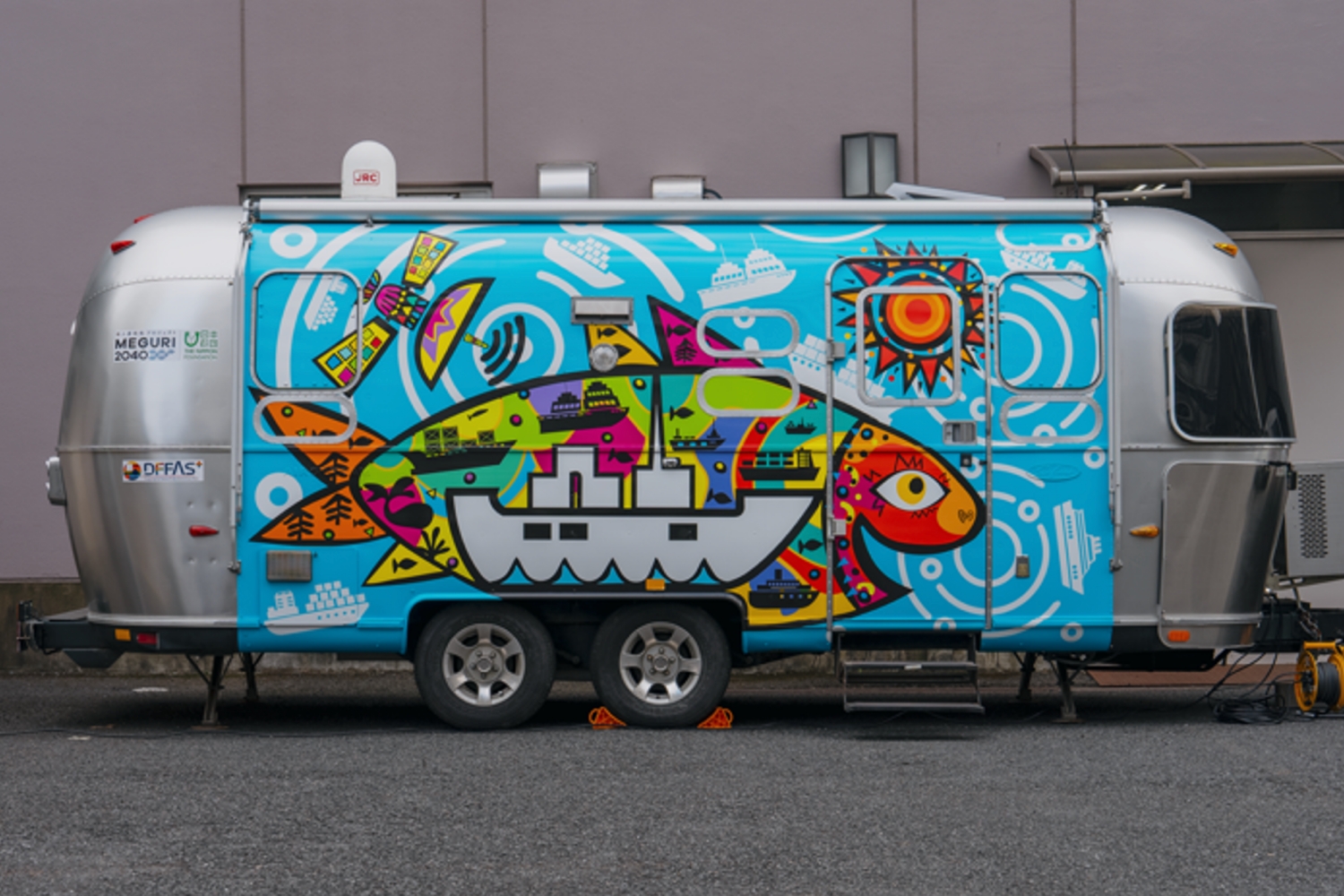
The mobile land-based support center is a cargo trailer-based support facility developed primarily by Japan Radio Co., Ltd. A key feature is that the center can be towed to a safe location in the event of disasters, power outages, or other emergencies to ensure continued provision of remote navigation support for multiple autonomous ships. All systems needed for navigation monitoring and decision-making support are consolidated into a compact space roughly 7 meters in length, making the center a practical operational model for the future widespread use of autonomous ships.
*1: Refers to a technical stage where fully autonomous operation that requires no human intervention is possible within specific areas or conditions. (The definition for autonomous operation for ships is currently under discussion at the IMO. The definition used for automobiles has been applied for convenience.)
*2: MEGURI2040 Fully Autonomous Ship Program, a technology development grant program for the real-world implementation of autonomous ships. This is a grant program to support technical development, build momentum, and drive transformation in Japanese logistics, economic, and social infrastructure through the development of technology that promotes the commercialization of autonomous ships.
*3: The DFFAS+ (Designing the Future of Fully Autonomous Ships Plus) Consortium is a consortium led by Japan Marine Science Inc. Member companies include Japan Marine Science (representative), Akasaka Diesels, IKOUS, Imoto Lines, Weathernews, Uyeno Transtech, EIZO, SK Winch, MTI, NX Shipping, NTT Docomo Business, Kawasaki Kisen Kaisha, Kawasaki Kinkai Kisen Kaisha, Kawasaki Heavy Industries, Kyokuyo Shipyard, Kinkai Yusen Kaisha, Kokusai Ryobi Ferry, Sunflame, Sanwa Dock, JRCS, Japan Hamworthy, Japan Marine United, Mitsui O.S.K. Lines, SKY Perfect JSAT, Suzuyo Marine, Space Compass, Tsuneishi Kure Dock, Tsuneishi Solutions Tokyo Bay, Terasaki Electric, Tokio Marine & Nichido Fire Insurance, Tokyo Keiki, TST, Naiken R&D, Nakashima Propeller, Nabtesco, Nihon Shipyard, Japan Radio, NYK Line, The Hanshin Diesel Works, BEMAC, pluszero, Fujiwara Shipbuilding, Furuno Electric, Honda Motor, Honda Heavy Industries, Marindows, Marubeni, Miura, Mitsui Sumitomo Insurance, Mitsubishi Research Institute, Mitsubishi Shipbuilding, Mukaishima Dock, and YDK Technologies.
*4: According to the Nippon Foundation (as of March 2026). Navigation support from land for multiple autonomous ships in commercial operation is a world-first achievement.