
March 6, 2026
Weathernews Launches Comprehensive BCP Service: Emergency Confirmation Powered by Weather Expertise



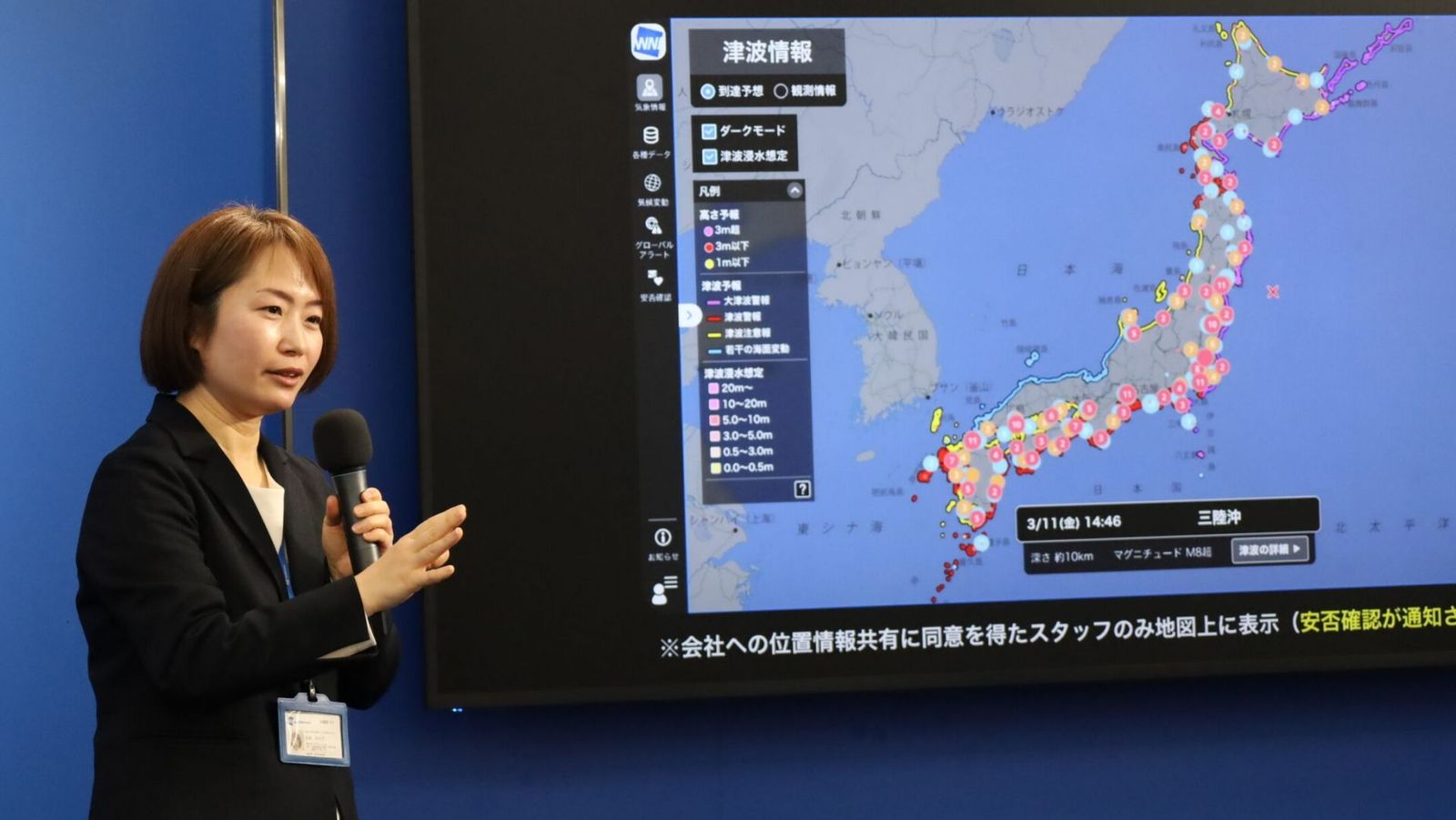
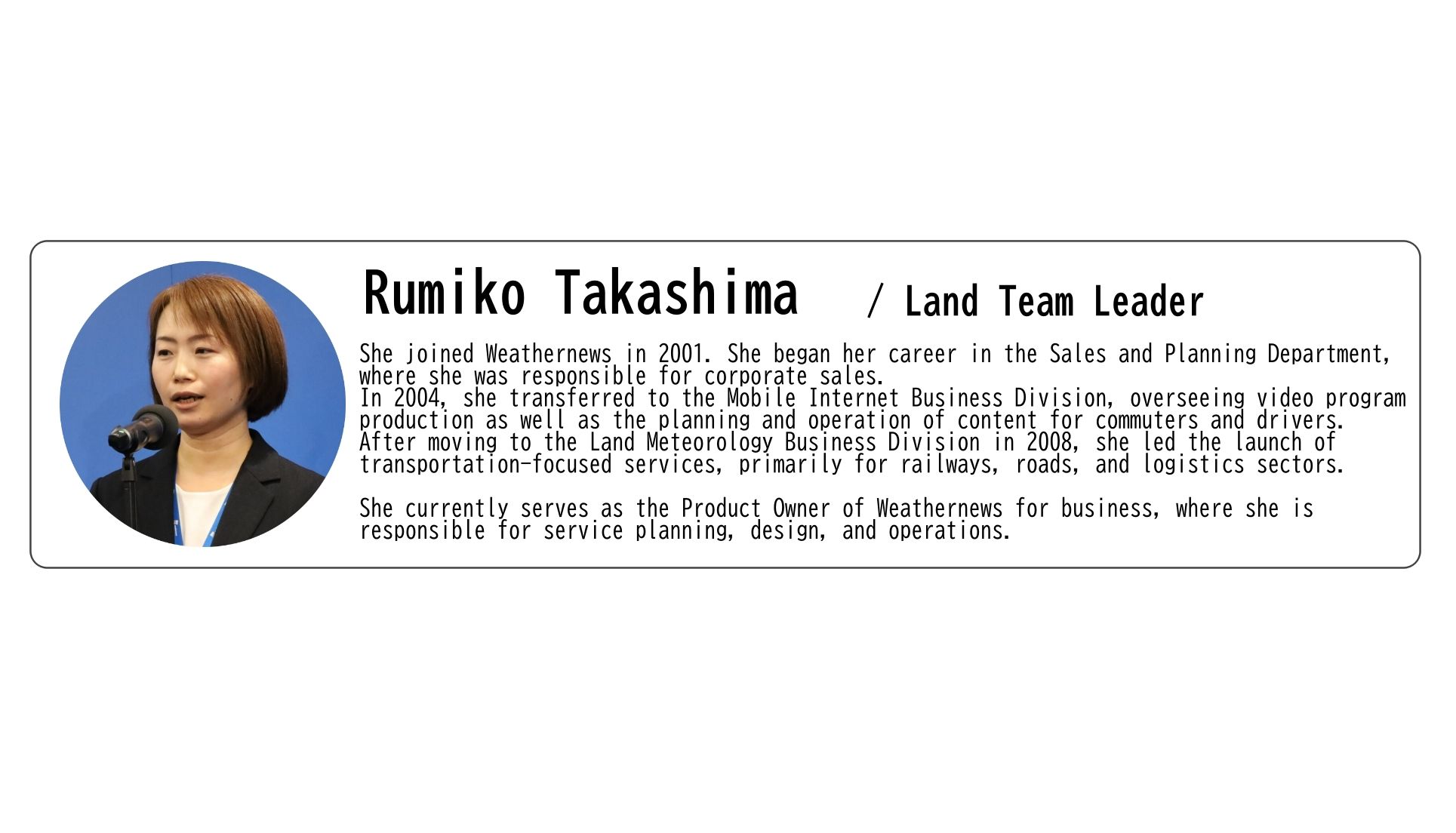
“Are Our Customers Safe?” — A Sense of Mission Sparked by the Noto Peninsula Earthquake
The catalyst for developing our emergency confirmation function came in January 2024, when the Noto Peninsula Earthquake struck. I was in Tochigi Prefecture at the time, and the moment I felt the tremors and heard about the tsunami warnings, I knew this was no ordinary event.
In the aftermath, our Weathernews team gathered with one shared goal: "We need to do everything we can to help." We began asking ourselves what information would truly make a difference for those in disaster-affected areas. Raw images and videos documenting the damage started flooding in from the field.
We asked ourselves: "How can we use this information more effectively to support the people ensuring safety and leading disaster response?" As we searched for answers, we decided to overlay our app access data onto a map. What we discovered was eye-opening: a real-time visualization showing where people could still open the app and access information. In other words, we could see where communications were still functioning.
Users who simply opened our app to check the weather for their own safety were unknowingly generating invaluable data for disaster coordinators and evacuation teams.
When I saw this, I recognized its enormous potential. While location-based content wasn't new, viewing it as communication activity data revealed something critical: we weren't just seeing where communication was possible — we were seeing proof of life.
This realization sparked a powerful conviction:
"By visualizing app access data, we can deliver entirely new value to corporate safety management. We need to create a Business Continuity Planning (BCP) service that truly serves organizations when disaster strikes."
That conviction became the driving force behind our new service.
Is Emergency Confirmation Only About Earthquakes and Tsunamis?
Aiming to Deliver a BCP Service Only Weathernews Can Provide
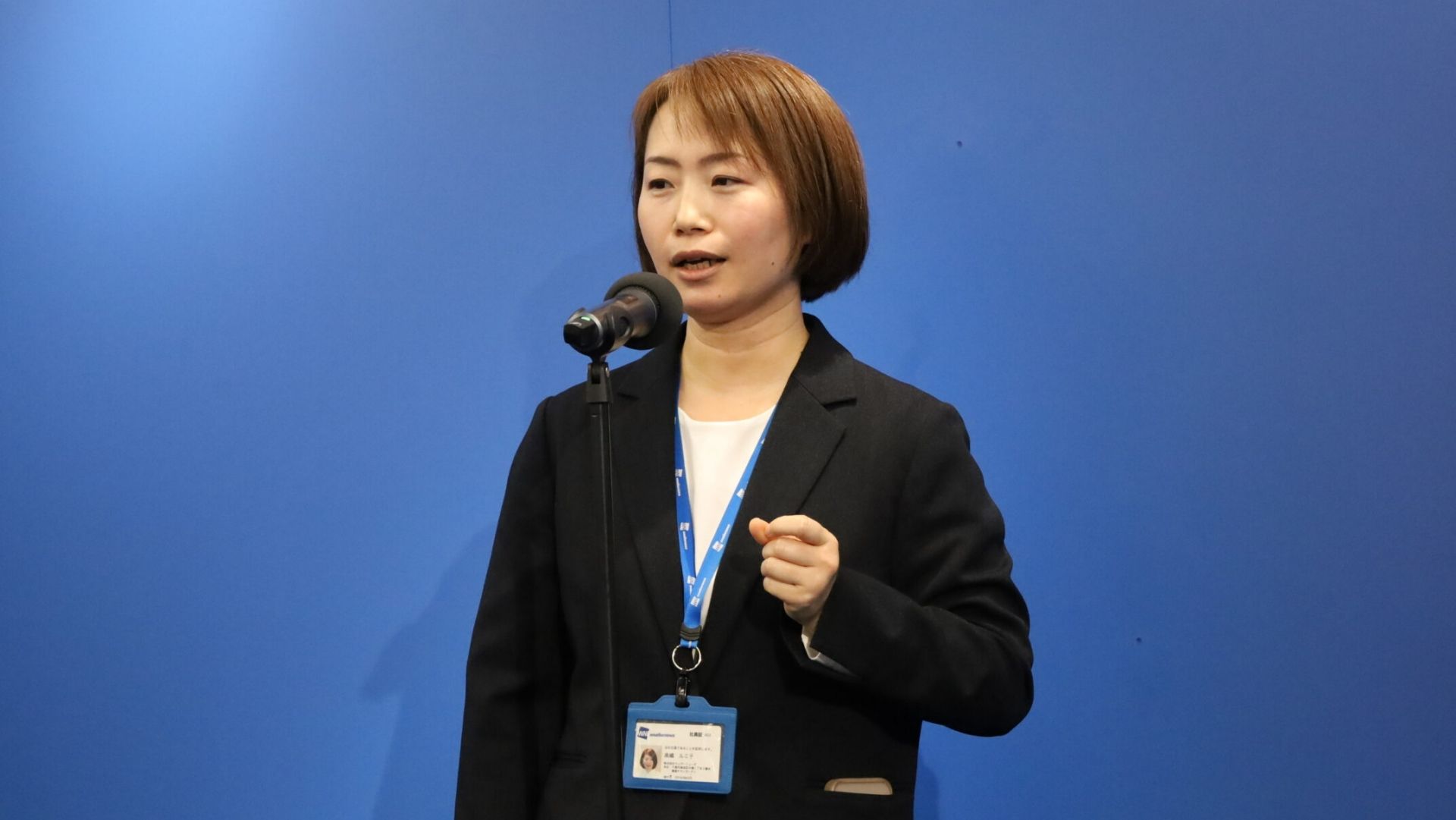
Today, most widely adopted emergency confirmation services focus on two primary functions: Notifications of earthquakes and tsunamis
Confirming employee safety status
As a result, these systems tend to sit idle until something happens, and often fall short when it comes to the increasingly severe weather-related disasters that have major impacts on society. This gap led us to ask ourselves repeatedly:
"As a private weather company, what unique value can Weathernews bring to BCP services?"
Unlike sudden earthquakes and tsunamis, weather-related disasters like typhoons, linear rainbands, and heavy snowfall can be forecasted. Weathernews has extensive data and prediction capabilities for all these disaster types. We realized that by combining this expertise with the operational knowledge from our consumer weather app, we could create a fundamentally different kind of emergency confirmation service.
We moved quickly to develop a prototype and tested it during employee-led volunteer recovery efforts in disaster-affected areas. Through these real-world trials, we experienced firsthand the value of forecast-driven communication, the convenience of using a familiar system, and the critical importance of location data.
On February 17, 2026, we launched our new comprehensive BCP service, built on our corporate weather information platform, Weathernews for business.
Comprehensive Weather and Disaster Information — From Typhoons to Heavy Snow, Warnings to Evacuation Alerts
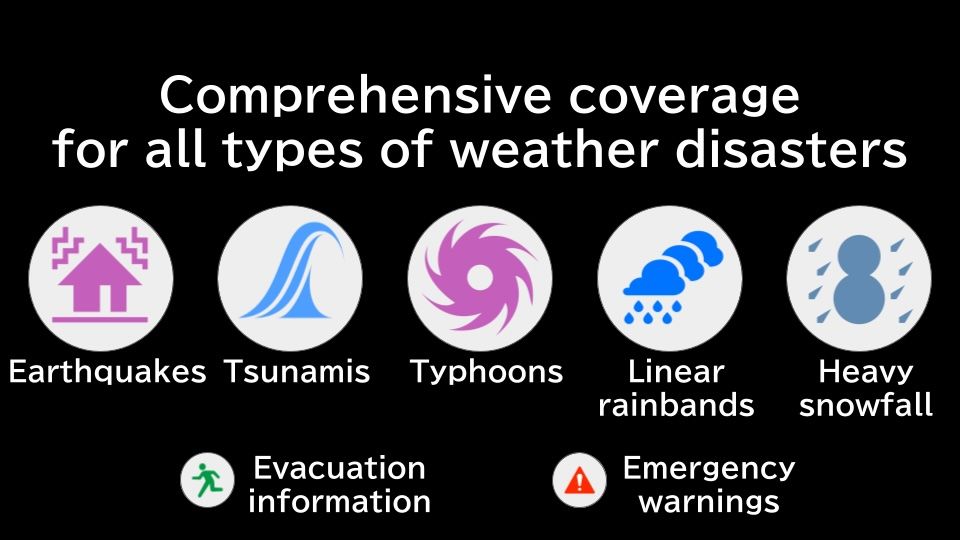
Weathernews doesn't just track earthquakes and tsunamis. We hold extensive data on evacuation information, weather warnings, and the full spectrum of meteorological conditions. As a private weather company, one of our core strengths is our high-precision forecasting for typhoons, linear rainbands, and heavy snowfall.
This forecasting capability opens up proactive possibilities. For example, when predictions indicate that a typhoon or heavy snow will disrupt public transportation, companies can recommend remote work in advance or review their disaster preparedness plans, helping to avoid risks and minimize potential damage before conditions deteriorate.
We've also addressed common operational pain points found in traditional systems, such as: • Notifications failing to send during earthquakes • Requiring manual triggers for tsunamis or weather-related disasters
Weathernews operates advanced cloud infrastructure built to handle concentrated traffic spikes, along with the expertise to deliver information reliably 24/7, 365 days a year. During events like guerrilla rainstorms or large-scale earthquakes, our consumer app has successfully delivered over 10 million push notifications in a single day without delays.
Building on this proven capability, we've created a system that fully automates emergency confirmation notifications triggered by any meteorological data or forecast.
End-to-End Support: From Daily Use and Advance Preparation to Immediate Response and Recovery
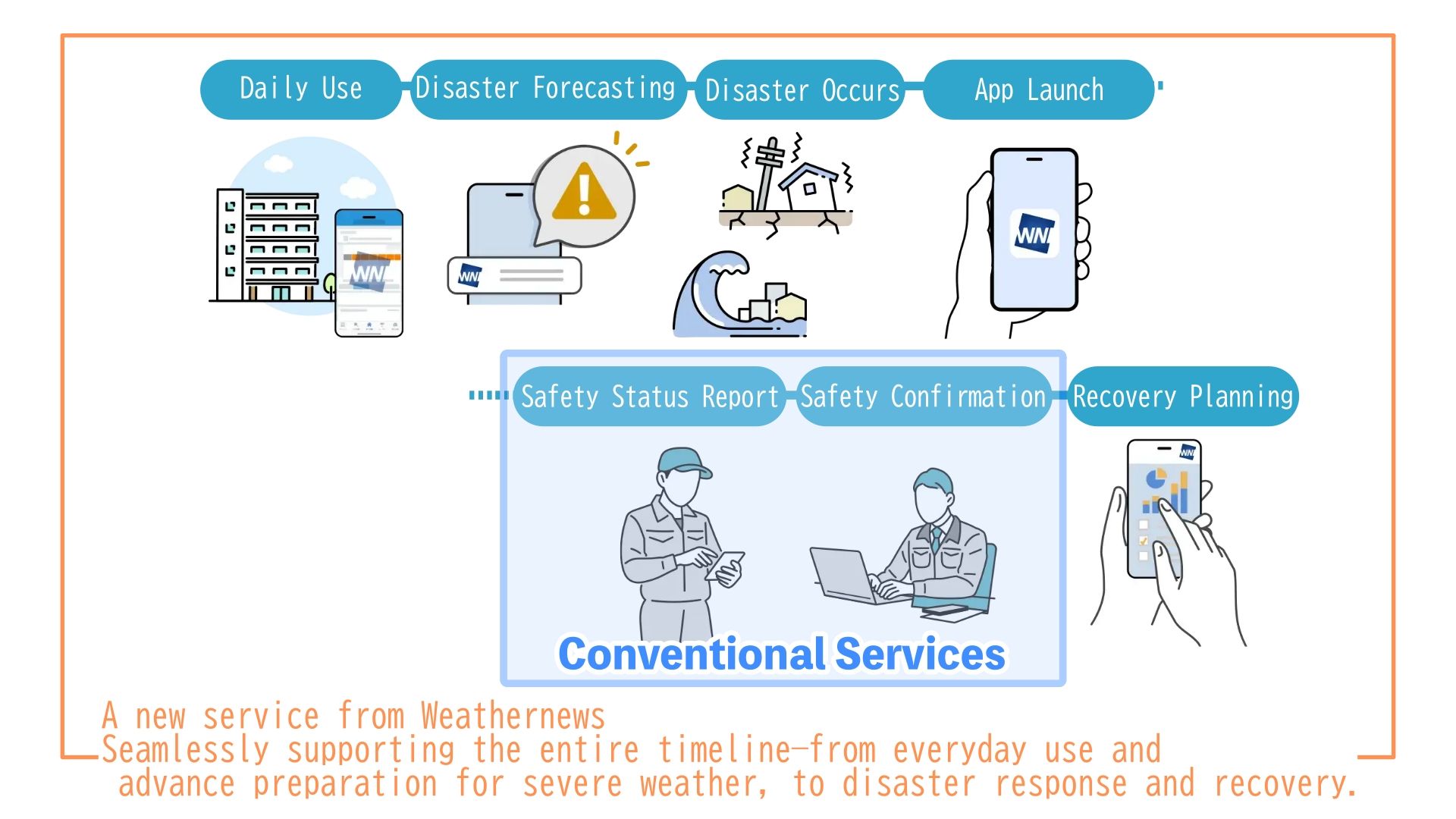
Traditional emergency confirmation tools are typically used only a few times a year, mostly during drills. When a real emergency strikes, employees often struggle with logins or navigating unfamiliar systems, which can critically delay response efforts.
Our BCP service takes a different approach. Because it's integrated into Weathernews for business, employees conduct safety confirmations within the same familiar interface they use every day with the Weathernews app. This familiarity dramatically reduces the risk of login issues or confusion when it matters most.
The service also supports administrative teams during the recovery phase. By sharing consistent weather data across the organization, teams can assess whether conditions might hamper restoration efforts and make informed, timely decisions about next steps.
Through a single app that employees already use daily for weather updates, we deliver comprehensive BCP support across every phase: from preventive measures before disaster strikes, to emergency confirmation in the immediate aftermath, all the way through recovery planning.
Using Location Data to Instantly Identify Those Who Need Immediate Attention
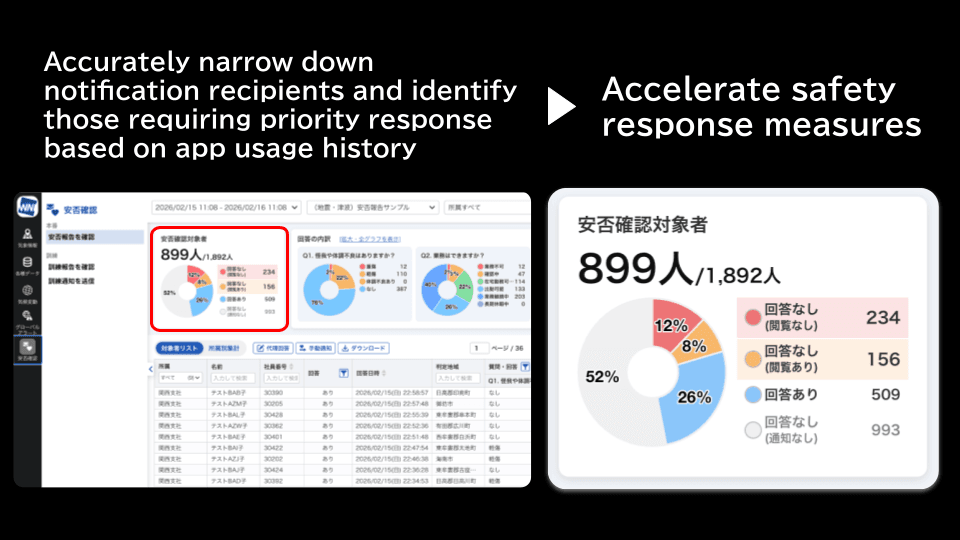
Weather apps naturally work hand-in-hand with location data, and over 90% of Weathernews app users have location services enabled.
By leveraging app activity data, we've evolved beyond the conventional two-status system of "responded" or "no response." Instead, we can categorize employee status into three meaningful levels: • Responded (safety confirmed) • No response, but app activity detected (device is operational) • No response and no app activity (potentially serious situation)
This three-tier approach allows us to instantly identify individuals in high-risk areas who haven't responded and haven't accessed the app(people who should truly be prioritized) significantly accelerating emergency response.
During disasters, employee location data is displayed on a map and can be cross-referenced with real-time weather information, warning alerts, live camera feeds, and damage reports from other users. It functions as a comprehensive dashboard for rapid decision-making.
We've also prepared for worst-case scenarios. In major disasters, communication infrastructure itself may fail. The Weathernews app supports the satellite communication service au Starlink Direct, automatically switching to a simplified, low-bandwidth display mode when conventional networks become unstable.
By preventing information blackouts under any circumstances and enabling continued safety confirmation and information delivery, we believe this system will strengthen corporate resilience and recovery capabilities.
Having experienced the Noto Peninsula Earthquake, I'm convinced of one thing: "As Japan's most widely used weather app, there must be something only we can achieve."
We're committed to strengthening corporate disaster preparedness through a comprehensive BCP service that leverages our unique weather expertise to go far beyond simple safety confirmation. Weather-related disasters cause hundreds of billions of yen in economic losses annually, and these events are becoming more frequent. Reducing this impact is our mission as Weathernews, and our commitment to contributing to society.
Share
March 27, 2026
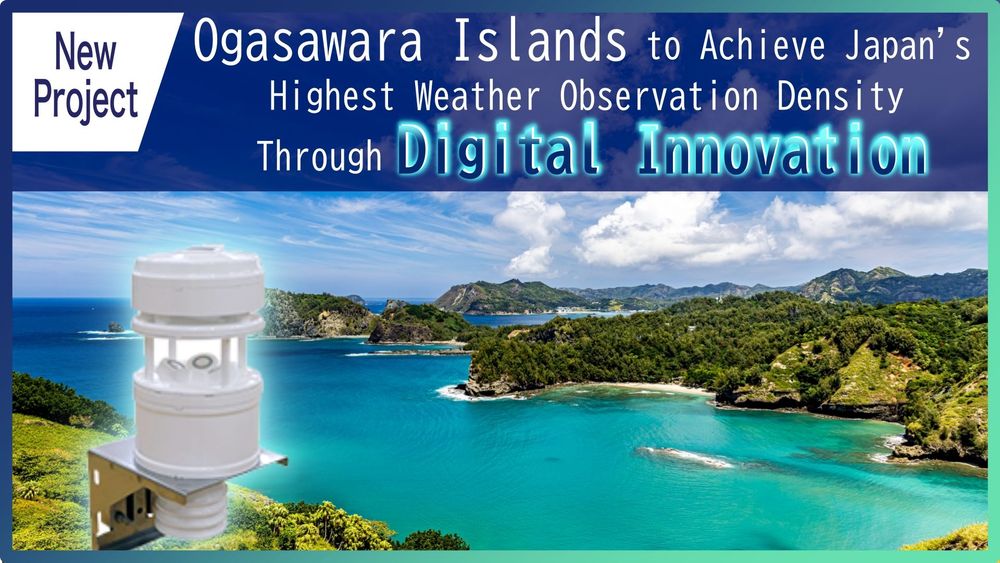
Ogasawara Islands to Achieve Japan's Highest Weather Observation Density Through Digital Innovation
March 16, 2026
Japan's Most Comprehensive Cherry Blossom Forecast: How Our Proprietary Bloom Prediction Model Leverages User-Generated Photos and High-Precision Data Across 1,400 Locations
March 13, 2026
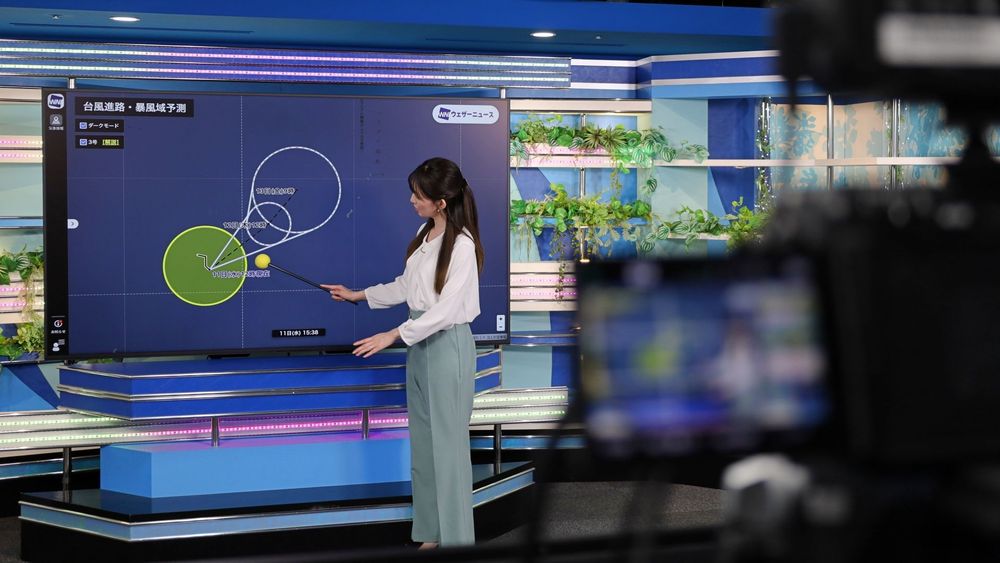
How TV Stations Are Transforming Weather Coverage A New Content Solution Helping Broadcasters Navigate Weather and Disaster Reporting