
January 15, 2026
The Inaugural "Weather & Climate Forecast Conference 2025" Brings Together Cutting-Edge Technology and Expertise — AI Unlocking New Value for the Weather Industry —



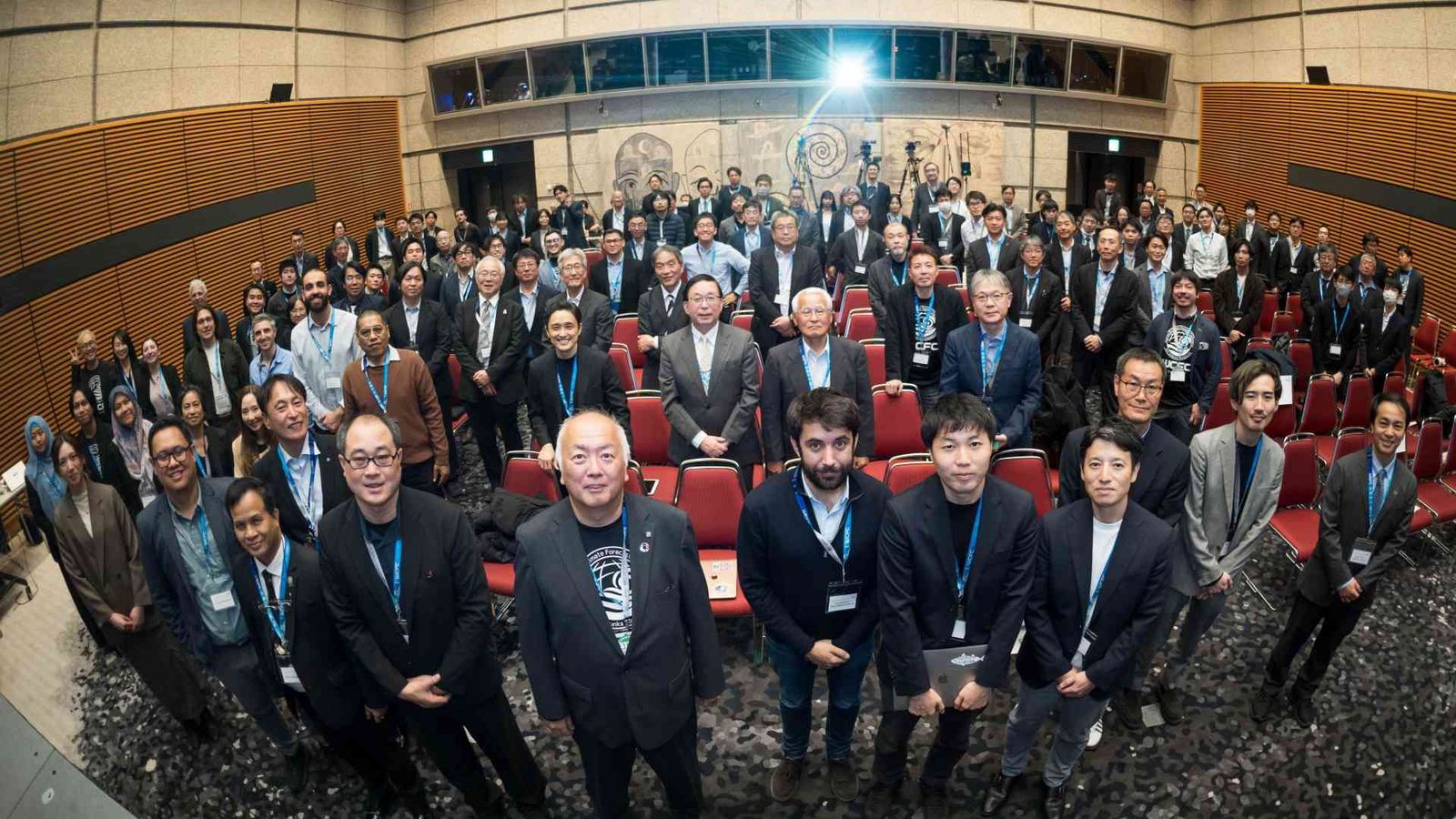
On December 16, 2025, the international conference "Weather & Climate Forecast Conference 2025," hosted by the WNI Weather Culture Creation Center (a general incorporated foundation), was held for the first time. Weathernews deeply resonated with the vision set forth by the conference and participated as a sponsor, delivering presentations on our latest meteorological technologies.
Under the theme "AI Unlocking New Value for the Weather Industry," the conference brought together numerous meteorological researchers and weather-related organizations from across Asia. Google DeepMind, a global leader in the evolution of AI weather models, also took the stage. With top runners from industry, government, and academia gathered in one place, it provided a valuable opportunity to share cutting-edge knowledge and insights.
In this blog post, we introduce the background of Weathernews' participation and the key highlights of our presentations.
Strengthening International Networks Through Industry–Government–Academia Collaboration: Fostering a Weather Culture for Disaster Preparedness
Weathernews founder Hiroyoshi Ishibashi established the WNI Weather Culture Creation Center in 2009 with a vision that extended beyond business—to enhance weather literacy and advance meteorological technologies across the Asia-Pacific region.
This conference serves as a realization of the Center’s "dream": supporting the development of meteorological infrastructure and the advancement of forecasting technologies throughout the Asia-Pacific. The event was designed as a platform for the international exchange and dissemination of cutting-edge technologies and knowledge related to weather and climate.
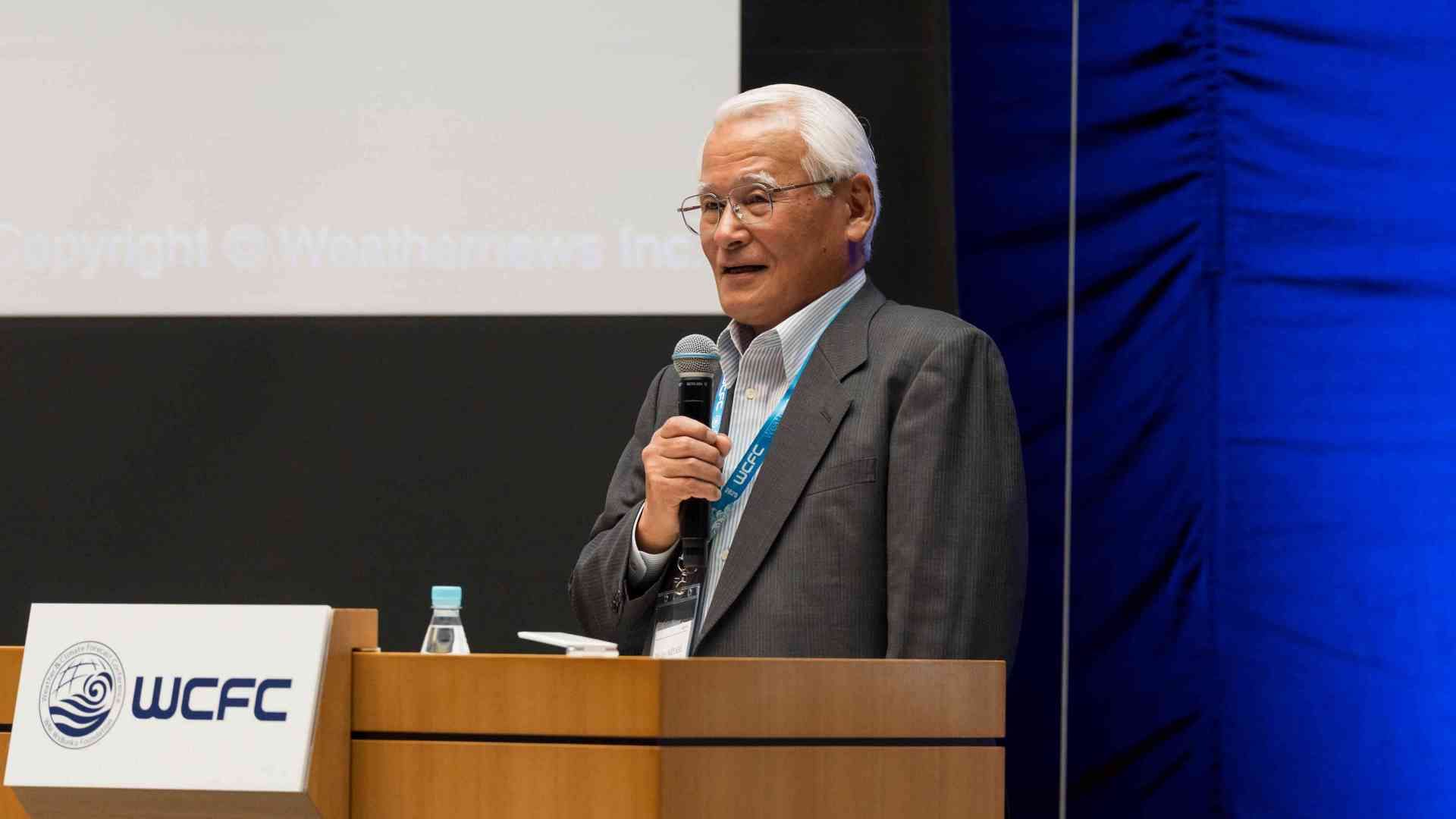
Weathernews, deeply aligned with these goals, proudly supported the conference as a sponsor and presented our latest AI-driven initiatives. In his opening remarks, Jiro Miyabe, Representative Director of the Center, shared the vision behind the event:
“When we witness the impacts of global warming in recent years, it feels as though we can hear Ishibashi’s voice. Now is the time for industry, government, and academia to work together and strengthen international networks. With the goal of fostering a new weather culture aimed at disaster risk reduction, we hope this conference will be a fruitful one that helps open the path to the future.”
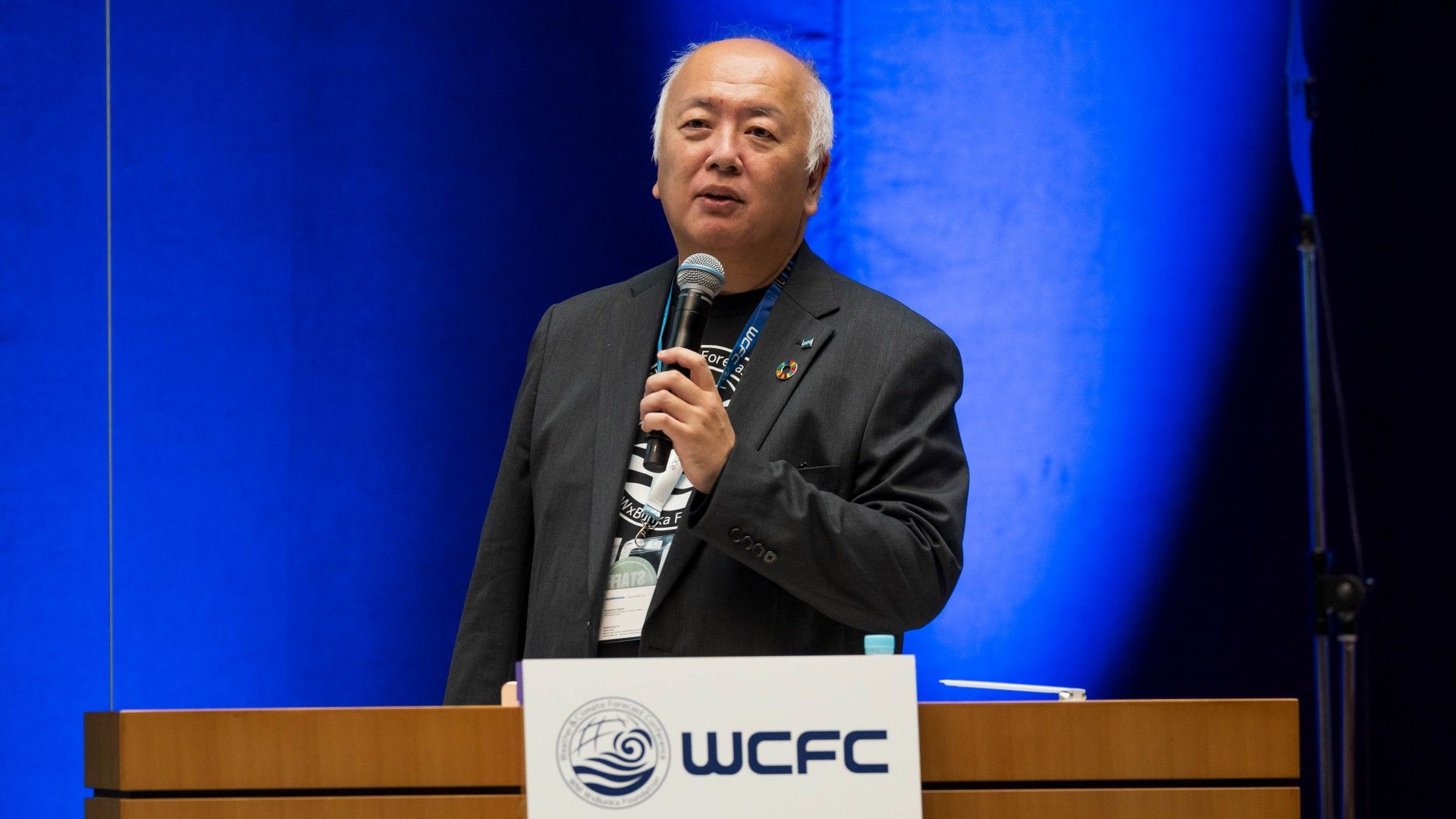
In the opening keynote, Yuichiro Nishi, Technical Director at Weathernews, reflected on the history of meteorological innovation in Japan. While presenting concrete examples of how AI models have dramatically improved forecast accuracy and expressing high expectations for the future, he also emphasized that “to ensure reliability, it is essential to establish mechanisms that enable AI to be used and evaluated appropriately.”
Three Presentations by Weathernews:
How AI Is Transforming Weather Forecasting
Weathernews delivered presentations on three themes: real-world use cases of AI models currently deployed in operational forecasting, the results of accuracy evaluations, and our unique approaches to information delivery using AI.
Forecast Center Kohei Sakamoto, Junpei Fujino: Applying AI Weather Models to the Asian Region and the Challenges Ahead
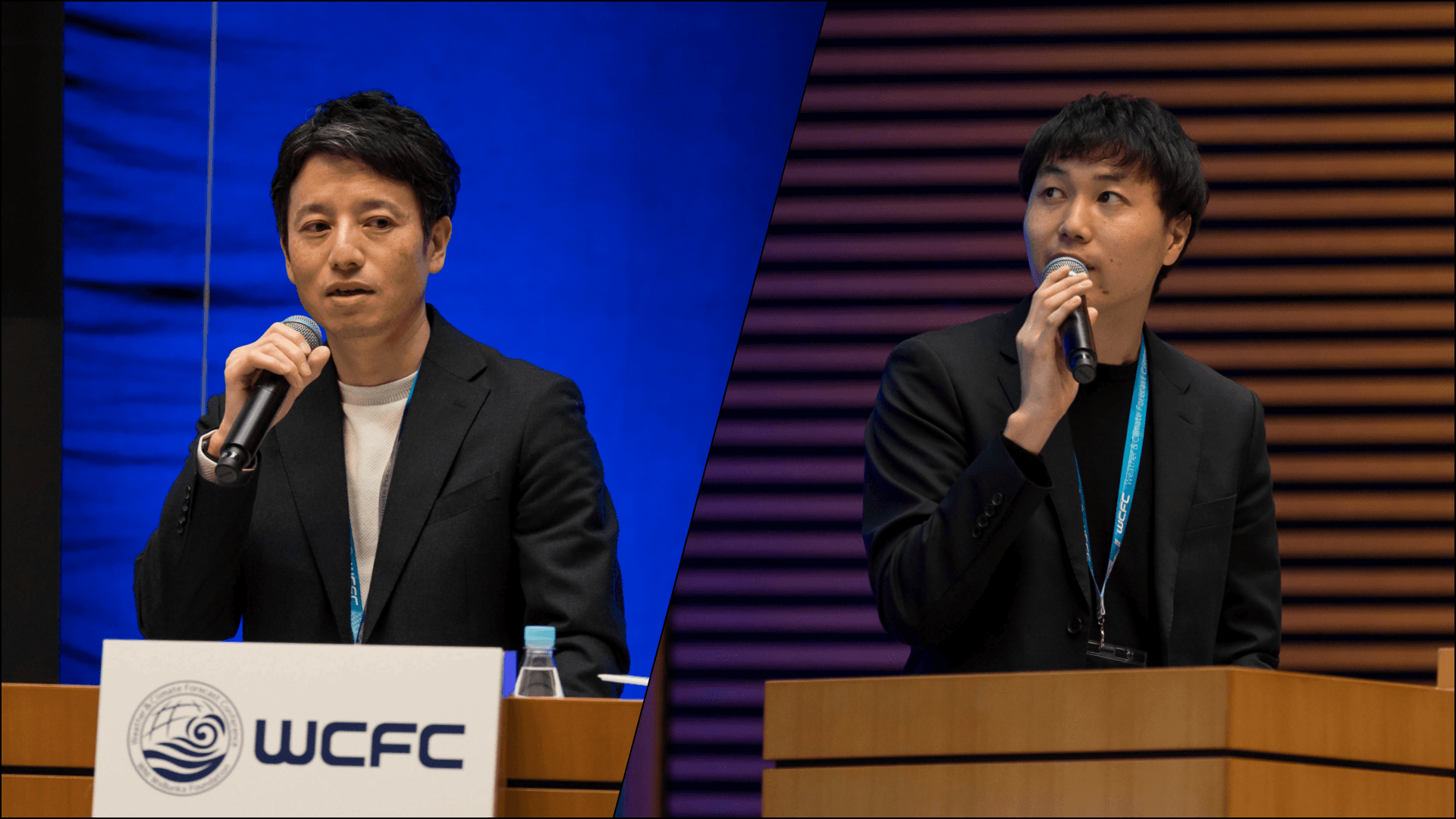
Kohei Sakamoto reviewed use cases of the AI weather model AIFS (ECMWF) currently in operation at Weathernews. He reported that for 10-day-ahead pressure patterns and typhoon tracks, the AI model achieved accuracy levels 10–20% higher than conventional physical models.
However, analysis also revealed that AI models currently tend to underestimate the "intensity" of localized heavy rainfall. While AI models will continue to move toward higher resolution, Weathernews believes that for successful social implementation, it is essential to understand each model’s strengths and limitations to apply them appropriately.
Junpei Fujino then introduced the "AI Nowcast Model," an in-house model developed to predict conditions 1 to 12 hours ahead. Currently, the only model updated at high frequency for this timeframe is the Japan Meteorological Agency’s LFM (Local Forecast Model). This limited data landscape prompted Weathernews to pursue independent development. By leveraging AI’s computational speed, we can meet the high update frequency required for short-range forecasting.
Behind our focus on AI lies the conviction that AI makes possible what was once difficult—such as forecast updates every 10 minutes—and that our vast meteorological data assets become even stronger when leveraged through AI. Looking ahead, a clearer division of roles is expected: major institutions and Big Tech will handle large-scale global models, while private companies pursue ultra-high-resolution local models.
Global Storm Center Yoshihiro Konno: Revolutionary Advances Brought by AI in Typhoon Forecasting
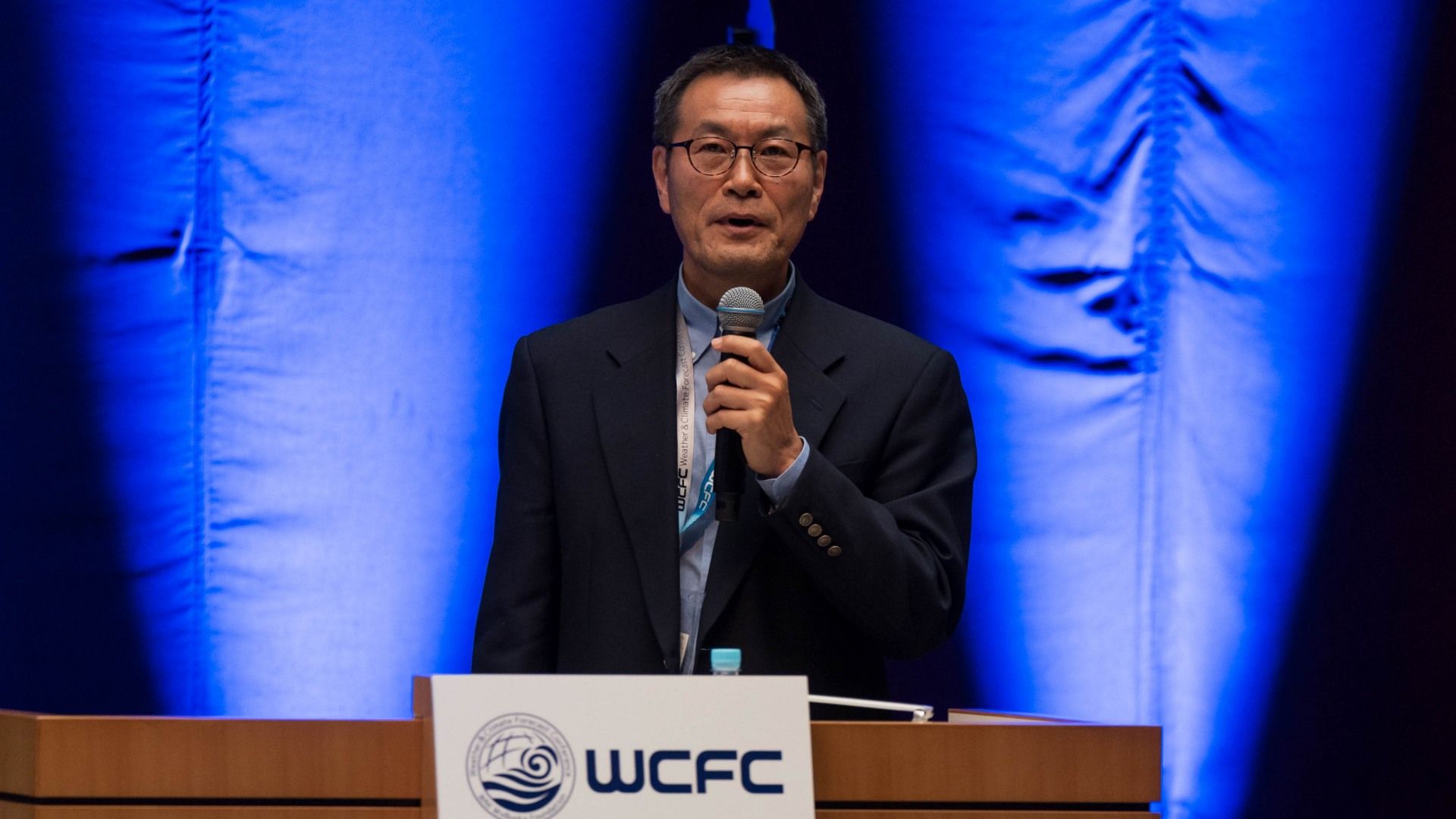
Yoshihiro Konno reported on the overwhelming superiority and practicality of AI in typhoon forecasting. Using the typhoons that caused severe damage in the Philippines and Vietnam in 2025 as examples, evaluations of Google DeepMind’s FGN Version 3 and ECMWF’s AIFS revealed that these models outperformed traditional physical models (such as the GFS) in terms of accuracy.
In particular, FGN Version 3 achieved 20% higher accuracy than physical models even in intensity forecasting, an area traditionally considered a weakness of AI. AI forecasts are stable from the early stages of storm development and demonstrate high reliability even in individual cases where statistically robust physical models can deviate significantly.
Weathernews has already integrated AIFS into daily operations1, achieving up to 24% higher accuracy in typhoon track forecasts compared with other institutions during the latter half of 2025. We aim to continue validating these rapidly evolving models and refining our techniques to return these benefits to society.
AI Center of Excellence (AI CoE) Akihiro Morimoto: An AI Agent That “Reads the Weather” to Support Decision-Making
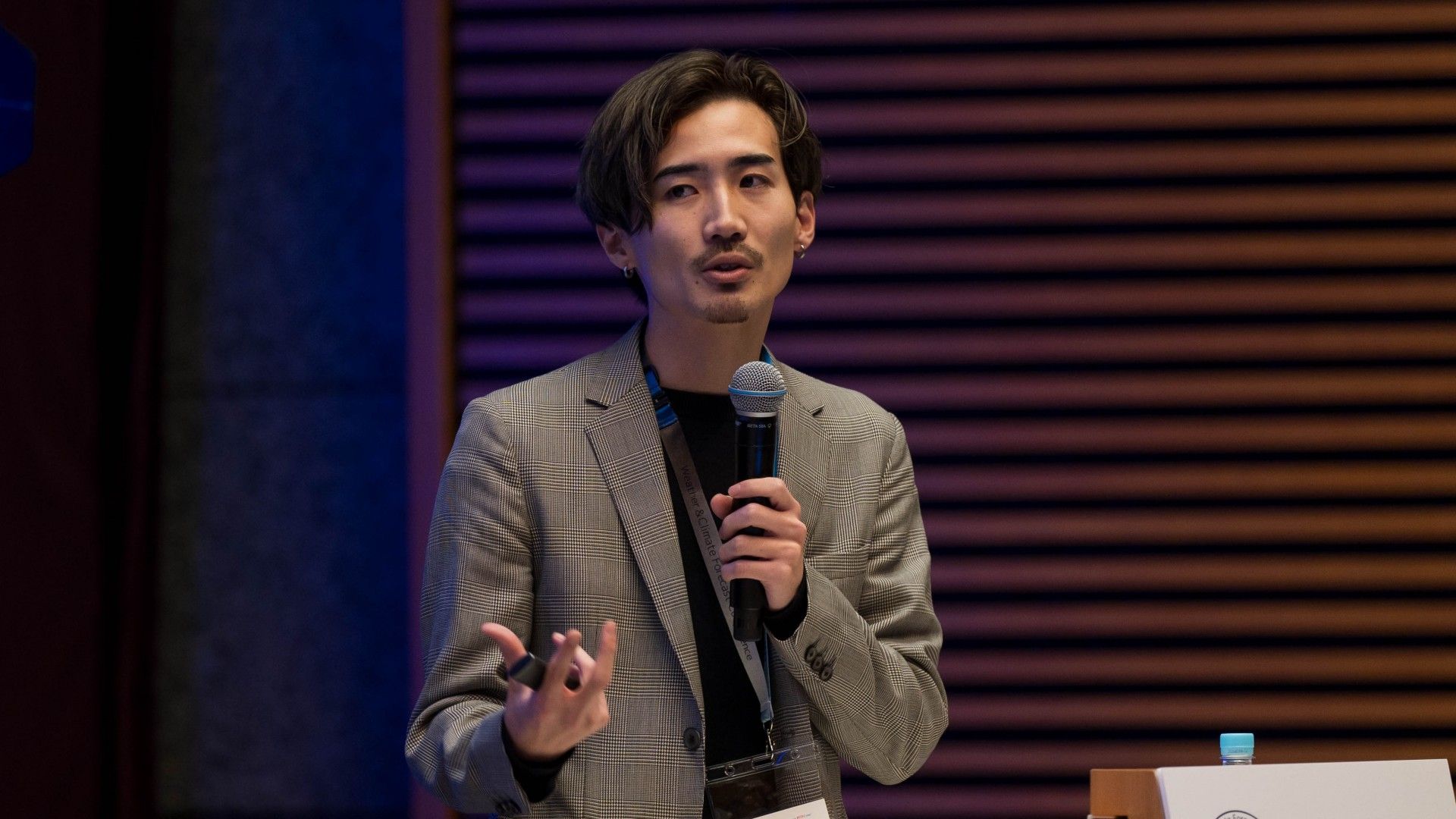
Akihiro Morimoto presented “Weather Agent,” an AI agent independently developed by Weathernews.
As weather forecasts become increasingly commoditized, we believe the focus must shift from simply competing on accuracy to determining how that information connects to users’ decision-making. By utilizing highly reliable proprietary data—including "Weather Reports" from our users—the Weather Agent supports user decisions more effectively.
In addition to the current method where AI automatically selects Weathernews APIs to answer questions, we are evaluating a "Text2SQL" approach. This allows the AI to access databases directly, improving its contextual understanding of meteorological data.
While many companies are developing AI agents, we anticipate a future where these agents collaborate with one another. As "weather professionals," Weathernews will continue to explore how to deliver our data more clearly and intuitively to the public in this new era.
A Paradigm Shift: Enhancing Disaster Preparedness Across Asia with Cutting-Edge Technology
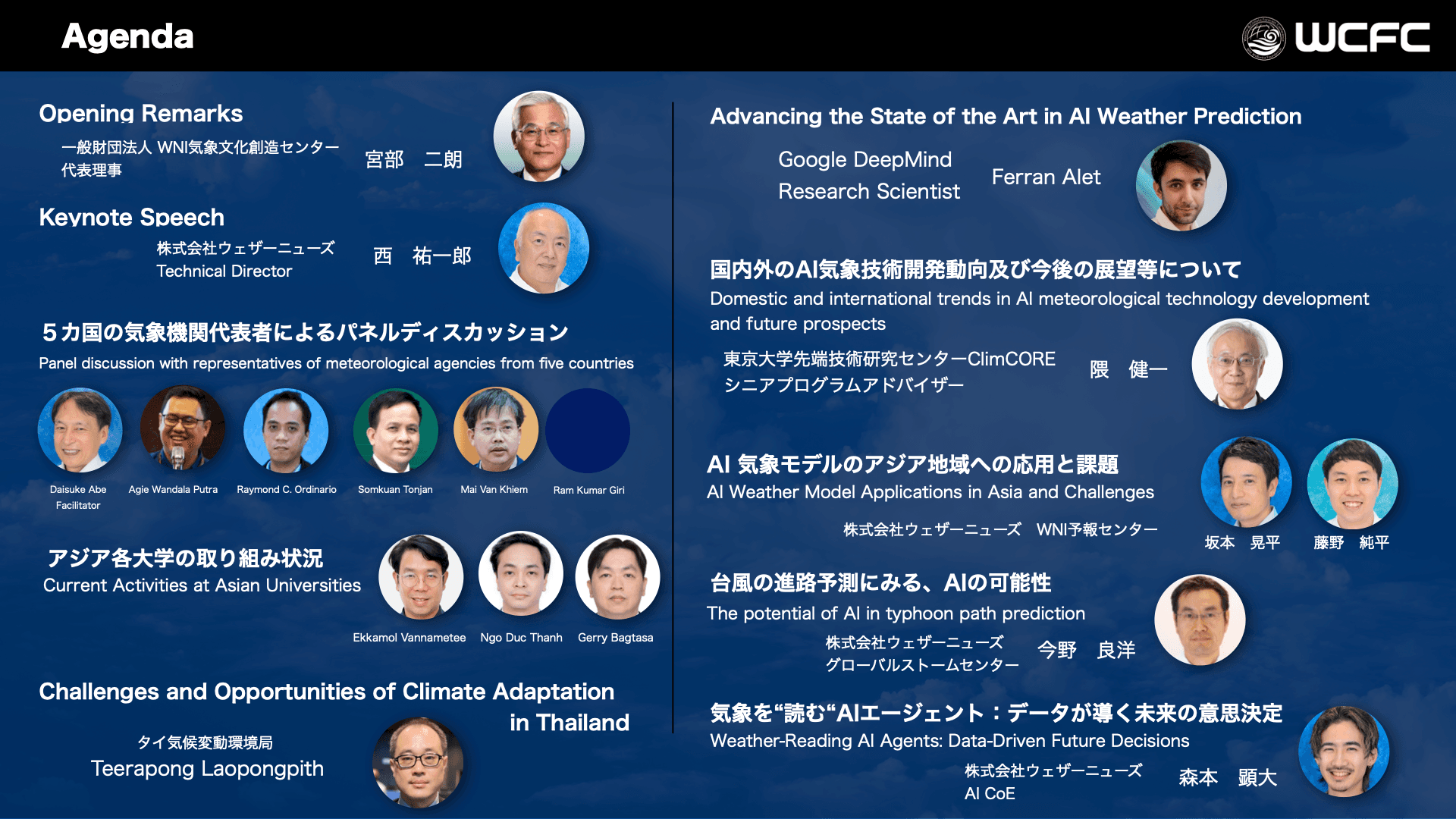
The event featured a panel discussion with representatives from national meteorological and hydrological services across Asia—BMKG (Indonesia), PAGASA (Philippines), TMD (Thailand), and VNMHA (Vietnam). They shared challenges and expectations regarding AI utilization in tropical regions, emphasizing that AI is expected to enable not only better accuracy but also faster communication to the public.
Additionally, Ferran Alet, Research Scientist at Google DeepMind, presented evaluation results and social implementation updates for the company's latest AI weather model announced in 2025, offering a glimpse into the rapid progress of state-of-the-art technology.
The next conference is scheduled for June 2026. Weathernews will continue to deepen collaboration among industry, government, and academia, actively contributing to the advancement and social implementation of meteorological technologies.
Footnotes
Share
March 27, 2026
Ogasawara Islands to Achieve Japan's Highest Weather Observation Density Through Digital Innovation
March 16, 2026
Japan's Most Comprehensive Cherry Blossom Forecast: How Our Proprietary Bloom Prediction Model Leverages User-Generated Photos and High-Precision Data Across 1,400 Locations
March 13, 2026
How TV Stations Are Transforming Weather Coverage A New Content Solution Helping Broadcasters Navigate Weather and Disaster Reporting