
December 22, 2025
Japan’s Largest Network: Why Weathernews Operates 1,000 Proprietary Pollen Monitoring Devices



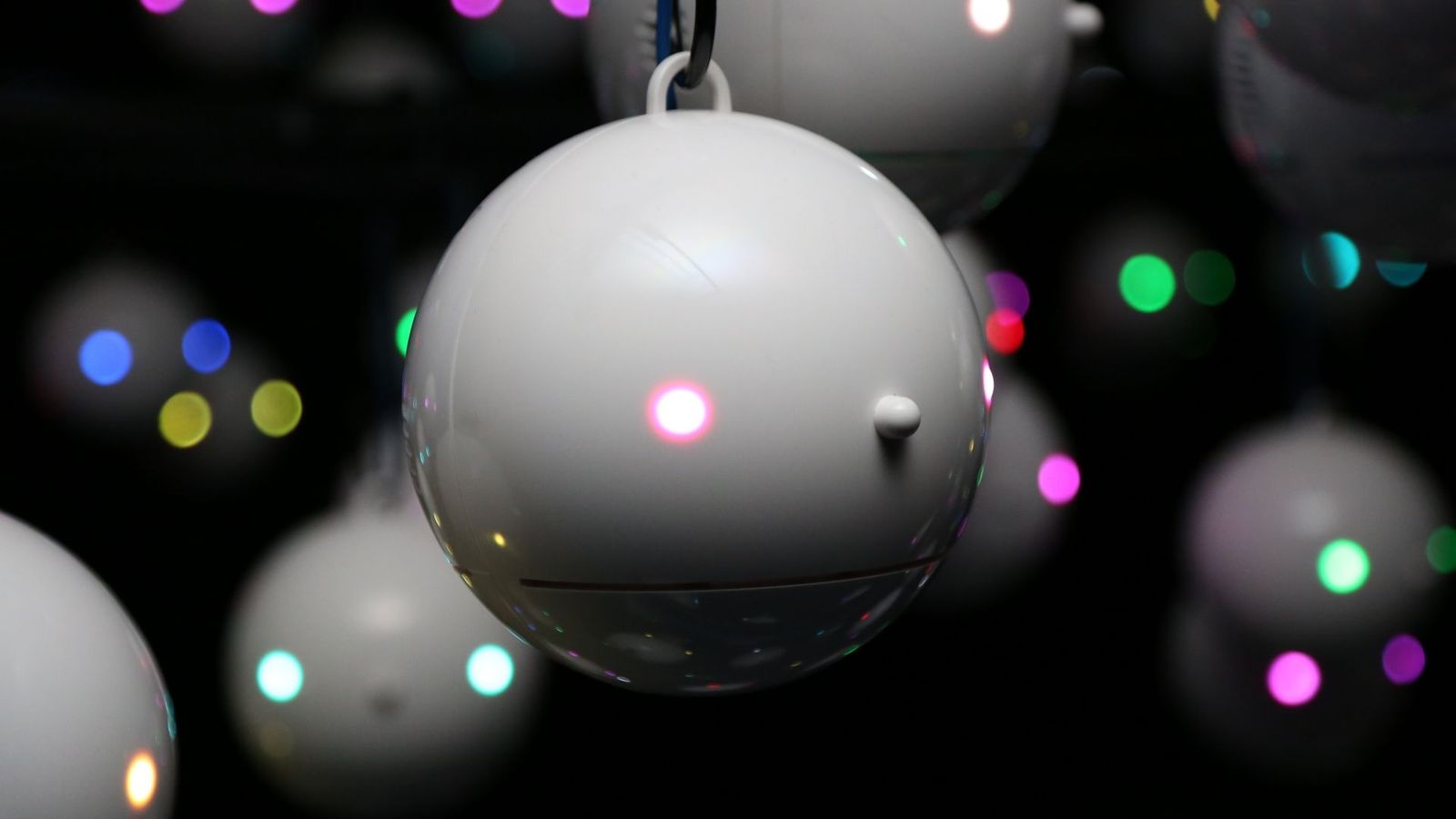
The peak pollen season is just around the corner, and dispersal levels are forecast to exceed seasonal averages nationwide. Every year, millions suffer from uncomfortable symptoms—itchy eyes, runny noses, and constant sneezing. The secret behind Weathernews' ability to deliver high-resolution pollen forecasts lies in our proprietary observation infrastructure deployed across Japan: an IoT-based pollen monitoring device called "Pollen Robo."
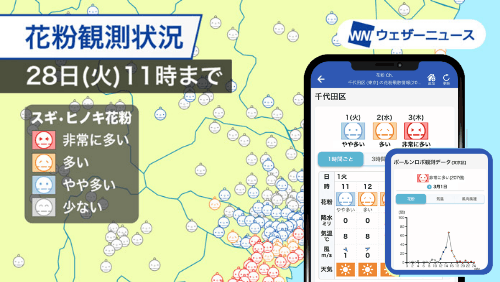
These distinctive devices are installed at approximately 1,000 locations nationwide, including private homes, hospitals, and schools, where they continuously monitor pollen levels in real time. In this article, we explore the evolution of Pollen Robo and how its observation data supports pollen forecasts and allergy countermeasures across Japan.
A Revolution in Pollen Monitoring: From Manual Observation to Automated, Real-Time Measurement
The Pollen Robo units currently installed across Japan represent the eighth generation since the first model was introduced in 2005. The original model relied on supporters manually reading observation results and reporting them by hand—an entirely analog process. From the second generation onward, communication capabilities were integrated, enabling automatic observations and real-time data transmission via the internet.
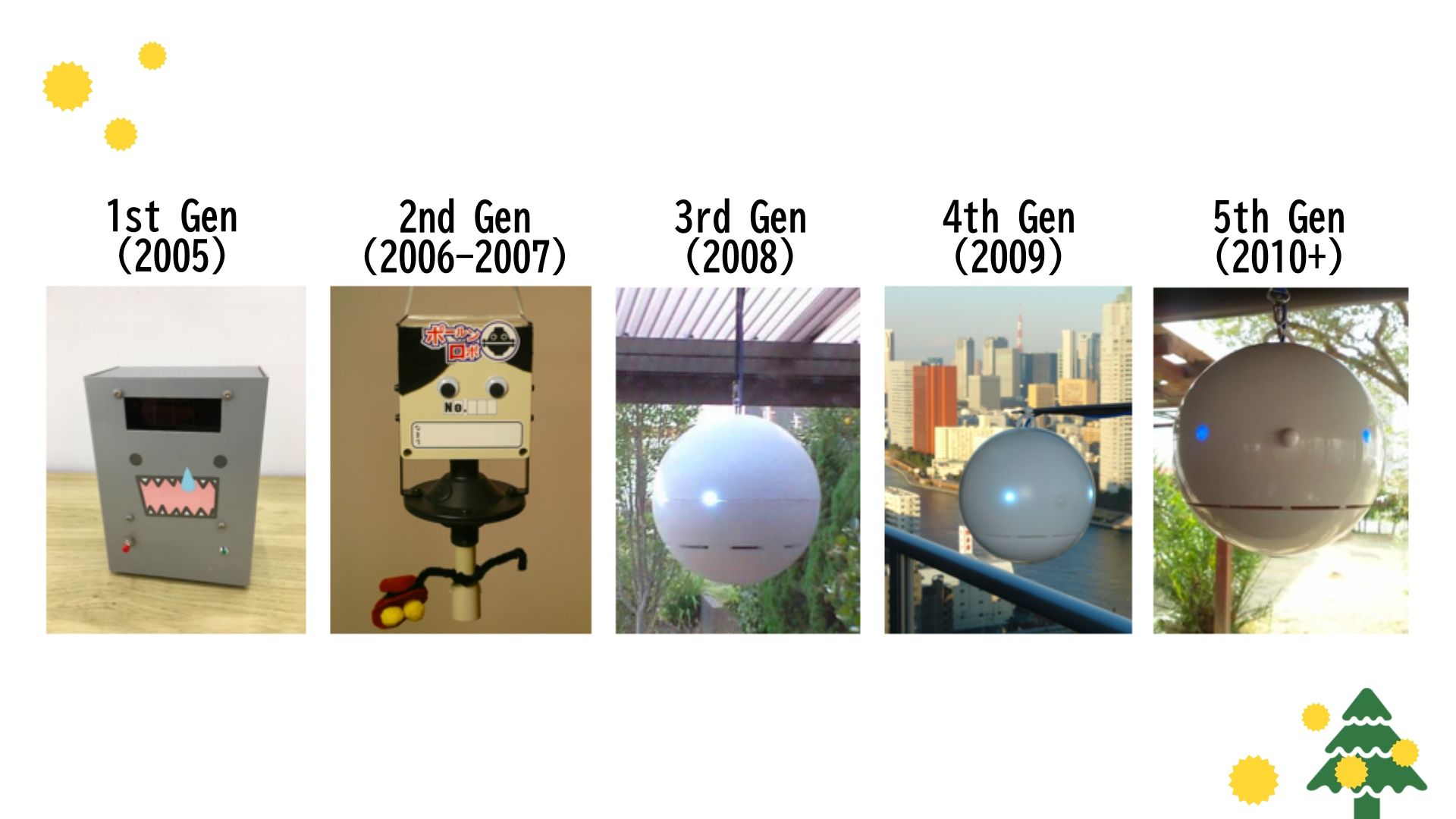
The design also evolved significantly over time. What began as a boxy shape was redesigned into a round, face-like sphere—making it easier to install under home eaves while encouraging users to develop an emotional connection with the device. This series of improvements culminated in the launch of Pollen Robo, bringing about a true revolution in pollen monitoring.
Before Pollen Robo was introduced, pollen observation relied primarily on the "Durham method," in which observers painstakingly counted pollen grains one by one under a microscope. While Weathernews still uses this traditional method in parallel to distinguish between cedar and cypress pollen, the advent of Pollen Robo enabled real-time monitoring of pollen dispersal conditions. As a result, Weathernews can now provide far more detailed and precise pollen forecasts than ever before1.
Highly Detailed Observation That Distinguishes Pollen from Dust
Although Pollen Robo is compact and palm-sized, it houses cutting-edge technology that accurately identifies pollen particles. Air is drawn in through a slit designed to resemble a mouth on the device's face, using a fan that intakes a fixed volume of air equivalent to human breathing. A built-in laser sensor emits light onto particles in the air. Pollen and dust differ in surface texture and size—pollen grains are smooth, while dust particles tend to be rough and irregular. The laser sensor precisely detects these differences, counting only particles identified as cedar or cypress pollen.
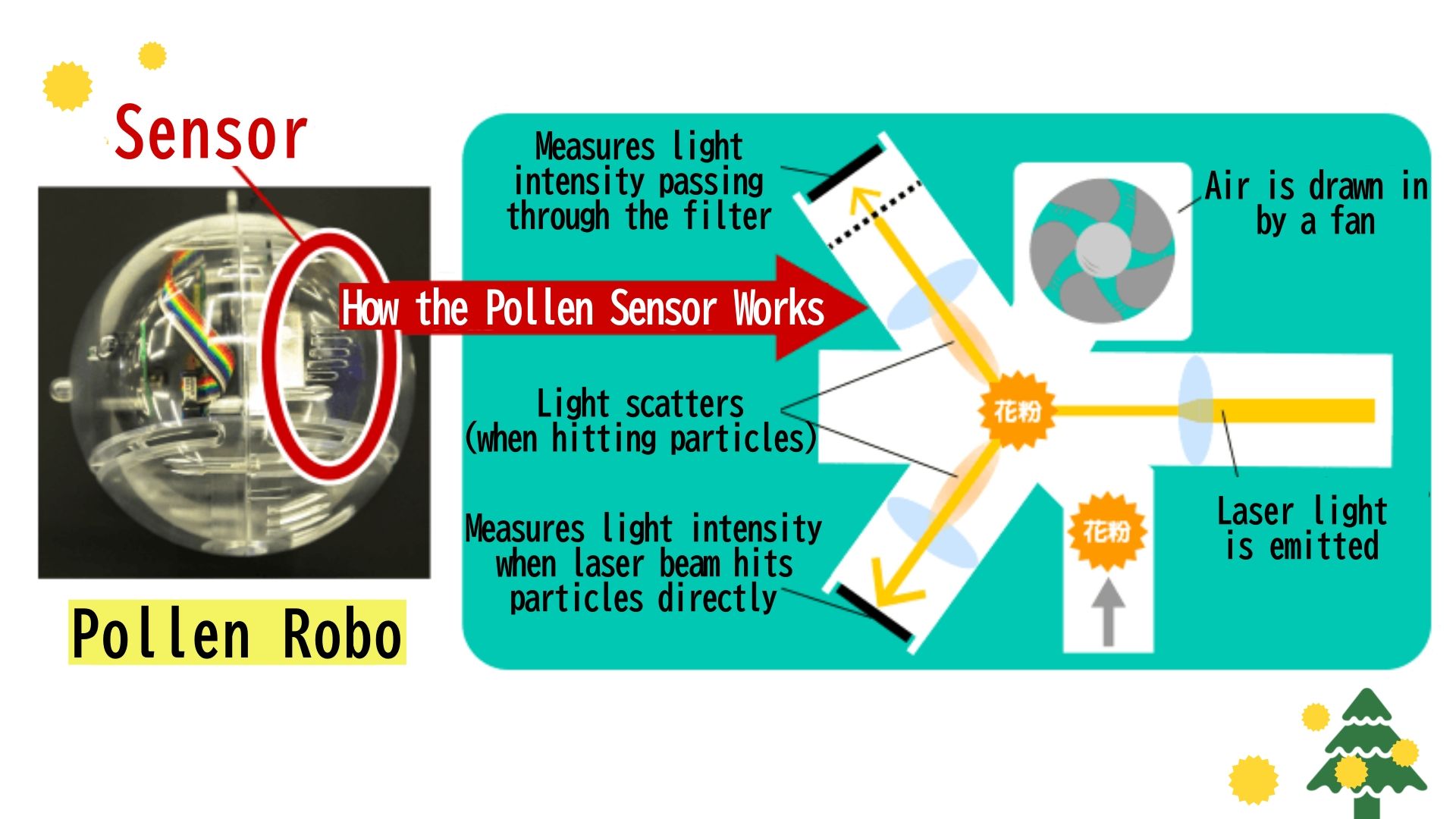
In addition, pine pollen—which differs significantly in shape and size from cedar and cypress pollen—is also identified and excluded from the count.
Based on the observed pollen count, the device's LED "eyes" illuminate in five levels: white, blue, yellow, red, and purple. This allows anyone to instantly see the current pollen levels at the installation site, providing a clear, real-time visualization of pollen dispersal.
The Secret Behind Managing 1,000 Devices Nationwide: Rigorous Quality Control for Pollen Robo
The reliability of Pollen Robo as an observation infrastructure depends on thorough inspections and operational management conducted by specialized staff.
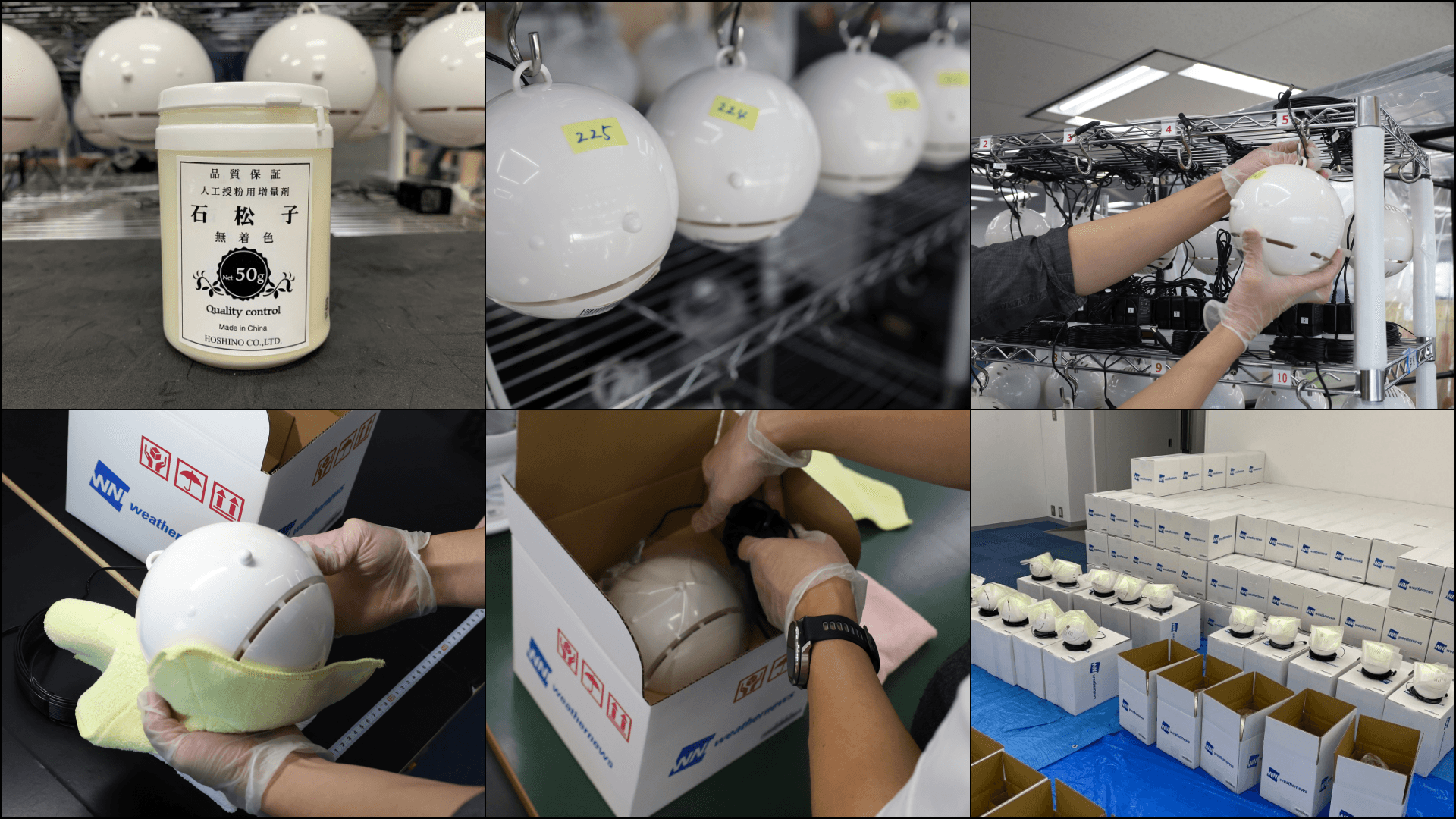
After each pollen season ends, devices are returned to Weathernews for cleaning, component replacement, and maintenance. Before being sent out for the following season to their hosts (known as "satoya"), every unit undergoes a mandatory pre-shipment inspection.
For this inspection, staff use a powder called sekishoshi2—spores of the clubmoss Lycopodium. Pollen Robo units are suspended inside an experimental chamber where the powder is evenly dispersed using circulators placed at four corners. This test verifies that each device can accurately count pollen particles.
Only devices that pass this rigorous inspection are shipped to installation sites nationwide, where they operate throughout the pollen season to help protect people's daily lives.
Once inspections are complete, Pollen Robo units are shipped to approximately 1,000 locations across Japan, with dispatch scheduled for around January 2026. From there, they begin monitoring pollen levels in communities nationwide throughout the season.
High-Resolution 1 km Mesh Pollen Forecasts Built Together with Users
In 2021, Japan's Ministry of the Environment ended its automated pollen observation program (commonly known as "Hanako-san"). Today, Weathernews is the only organization continuing large-scale, real-time pollen observation at approximately 1,000 locations nationwide. We recognize pollen information as essential living infrastructure and are committed to providing it responsibly. Data observed by Pollen Robo is transmitted to Weathernews every minute. This dense observation network—made possible through the cooperation of users across Japan—is the foundation that enables continuous improvements in forecast accuracy. Thanks to this comprehensive observation system, Weathernews delivers highly detailed pollen forecasts with pinpoint accuracy on a 1 km grid, updated hourly throughout the day. This data powers critical services including the "Pollen Countermeasure Alarm," which issues real-time alerts through the app when heavy pollen dispersal is detected, as well as announcements of pollen season start dates and peak periods nationwide. Driven by the desire to ease uncomfortable symptoms—even slightly—Pollen Robo continues keeping a vigilant eye on pollen levels in your community today, after passing strict quality inspections. We encourage you to make full use of the latest information available in the Weathernews app to prepare and protect yourself throughout the pollen season.
Footnotes
- 1:ウェザーニューズの花粉飛散情報はこちら ↩︎
- 2:Sekishōshi, used for quality control of Pollen Robo, is a powdered form of spores collected from a plant known as clubmoss (Hikagenokazura in Japanese). ↩︎
Share
![[Developer Interview] Building the World’s Most Accurate Wave Forecasting Model](https://gvs.weathernews.jp/wni_blog_media/large_20260331_TOP_177db7c4c9.JPG)
April 1, 2026
[Developer Interview] Building the World’s Most Accurate Wave Forecasting Model

April 1, 2026
Enhancing Safety for Vessels and Coastal Operations with a Weather IoT Sensor You Can Deploy Anywhere: Enabling Hyper-Local AI Forecasting in Ports

March 27, 2026
Ogasawara Islands to Achieve Japan's Highest Weather Observation Density Through Digital Innovation