
December 7, 2025
Will AI Revolutionize Typhoon Forecasting? Weathernews' Typhoon Experts Deploy Advanced AI Prediction Model



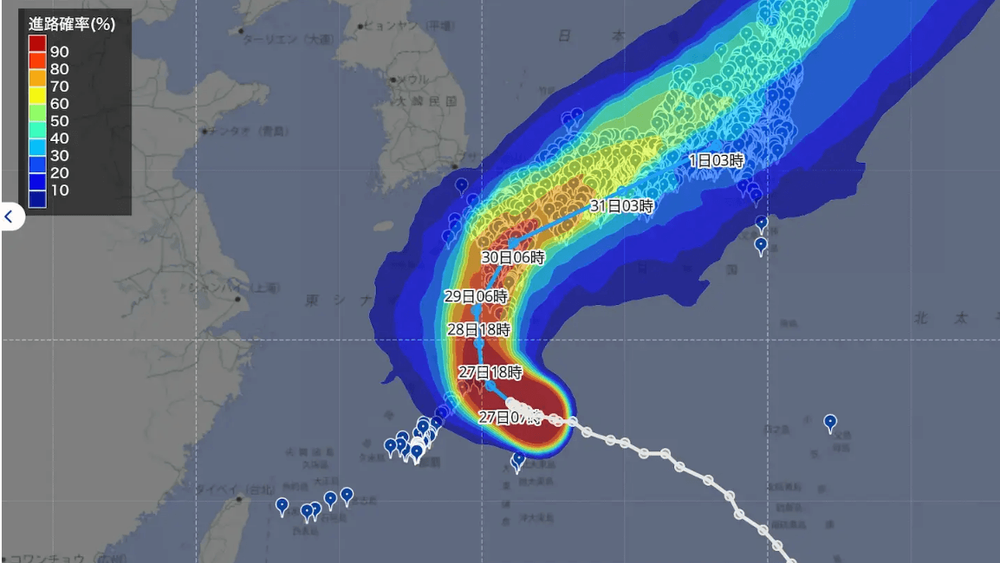
Typhoons strike Japan with devastating regularity, making accurate typhoon forecasts a matter of intense public concern. But the impact extends far beyond Japan's shores—these powerful storms threaten lives, property, and economic stability across the globe.
In this article, we explore one of Weathernews' most significant advances in AI-powered forecasting: our new typhoon track prediction model, which entered full operational deployment this year. We'll share how the model performs against traditional methods and explain what sets Weathernews' approach apart.
Combining Proprietary Observation Networks with AI: Weathernews at the Forefront of High-Resolution Forecasting
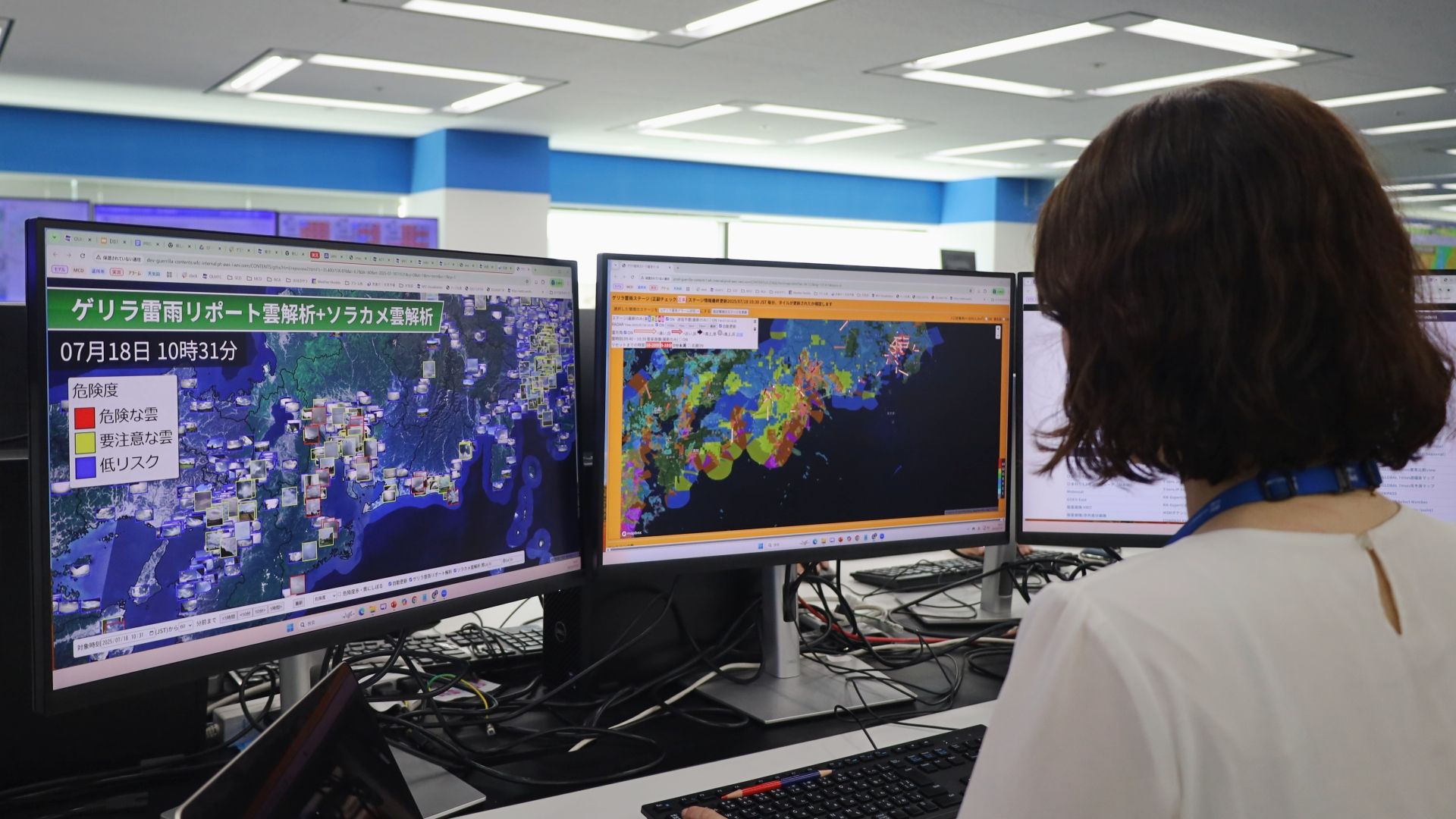
Weathernews is committed to advancing forecast accuracy through AI, and we're doing this by integrating cutting-edge AI technology with our uniquely extensive observation infrastructure. Take sudden "guerrilla thunderstorms," for instance. Predicting these localized downpours requires our proprietary AI-powered live camera network. We've deployed 2,500 compact webcams—called "Sorakame"—across Japan, and AI analyzes their real-time imagery to assess thunderstorm risk on a three-level scale1. But our data sources go even deeper. We leverage observations from 13,000 monitoring stations nationwide, along with weather reports submitted directly by app users, as training data for our AI models. Through AI-powered downscaling technology, we transform this wealth of information into hyper-local forecasts at 1-kilometer resolution—far more detailed than standard government forecasts, which typically range from 5 to 20 kilometers. Now, we're applying these same technologies and datasets to one of the forecasting challenges that matters most in Japan: predicting typhoon tracks.
AI Forecast Models Demonstrate Clear Advantages in Typhoon Track Prediction
At Weathernews, we have a team of expert forecasters who analyze a wide range of weather prediction models to deliver the most accurate forecasts.
Traditionally, our forecasting has centered on physical prediction models—sophisticated simulations that use supercomputers to solve complex equations representing atmospheric dynamics. However, in 2025, we began testing and evaluating a fundamentally different approach: AI prediction models that learn from vast amounts of historical weather data and identify patterns to forecast future conditions.
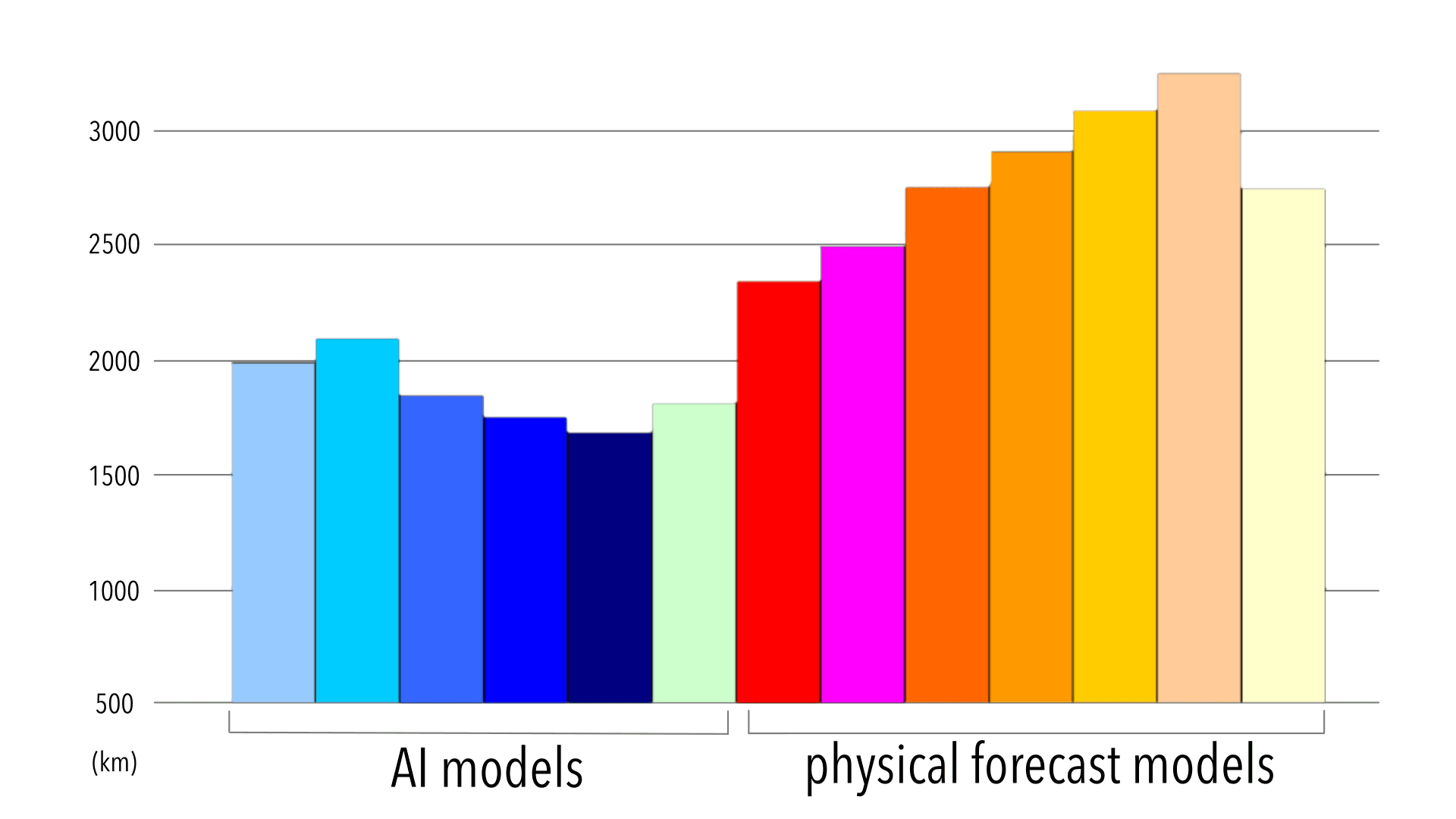
Figure 1 shows the results of our accuracy evaluation for typhoons through October. The performance of the AI forecast models exceeded our expectations. First, every AI model we tested demonstrated higher accuracy than the traditional physical forecast models. Furthermore, when we compared average error rates between AI and physical models, we found that AI models reduced typhoon track prediction error—the deviation between predicted and actual typhoon positions—by approximately 40%.
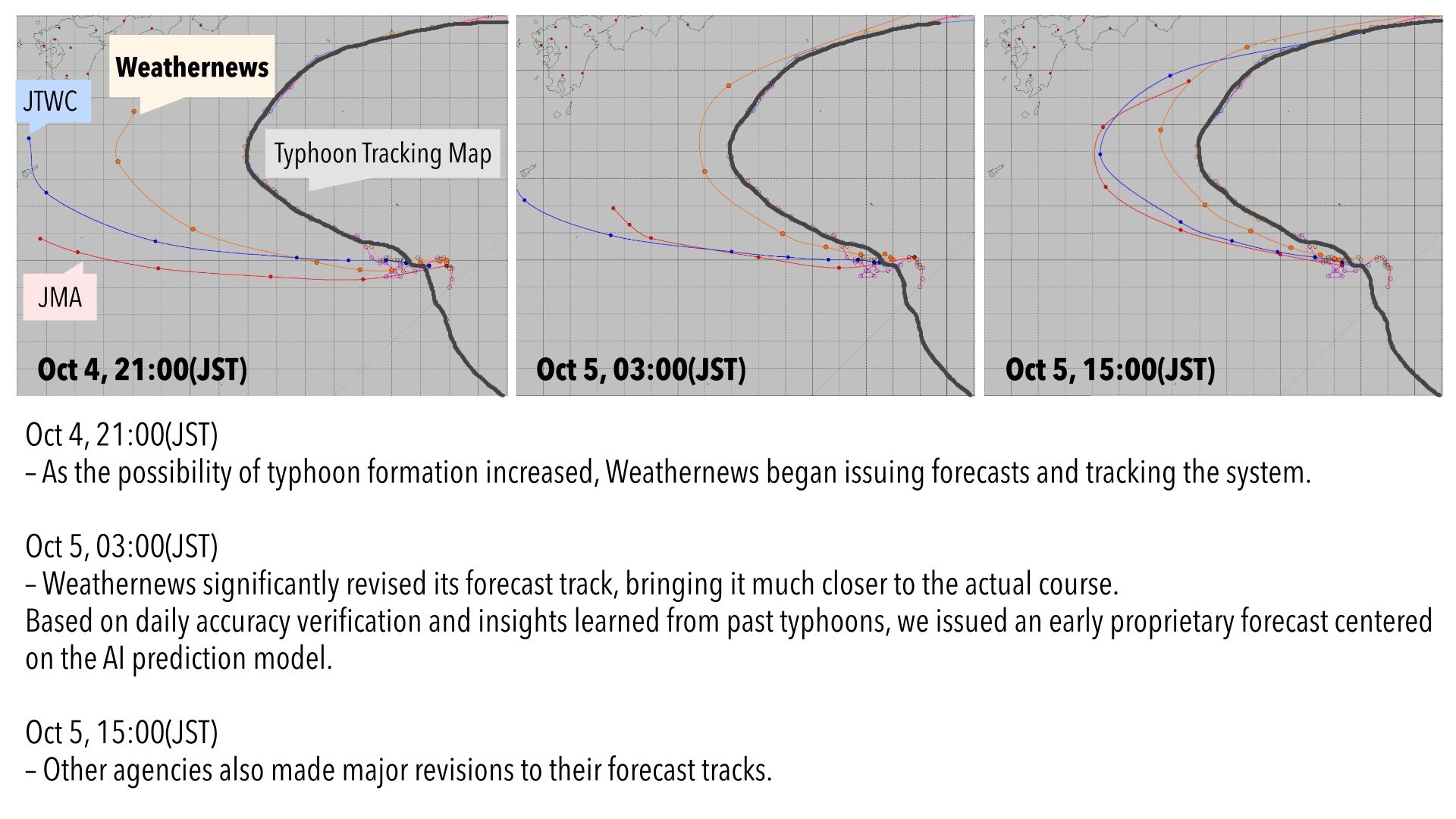
We also discovered something remarkable: in some cases, AI models were delivering accurate track predictions earlier than physical models. Weather forecasts typically become more accurate as you get closer to the event, but we observed instances where AI models held steady on nearly the same track a full week in advance, with minimal variation over time. When our Global Storm Center staff saw these results, they recognized the significant potential AI models could offer.
However, our evaluation also revealed AI's limitations. While AI models excel at track prediction, they fall short when it comes to rainfall forecasting. Physical models continue to deliver superior accuracy for precipitation—a critical reminder that AI isn't a complete replacement for traditional approaches.
Through this trial operation period, our expert forecasters systematically analyzed and documented each model's unique characteristics and behavioral patterns. This process has built a valuable knowledge base within our organization, helping us understand when and how to leverage each model's strengths.
Expert Forecasters Leverage AI to Deliver Superior Typhoon Forecasts
After thorough accuracy evaluation, Weathernews began incorporating AI forecast models into our operational typhoon predictions this summer. However, superior accuracy doesn't mean we simply adopt AI outputs without question. When creating typhoon track forecasts, our forecasters draw on accumulated institutional knowledge to compare results from multiple prediction models. They then weight the most reliable models appropriately to produce the optimal forecast for each situation.
We've also developed a hybrid approach that combines the best of both worlds: AI models for track prediction, where they excel, and physical models for rainfall forecasting, where they maintain an edge. This strategic integration allows us to deliver the most reliable forecasts possible.
The impact of AI on typhoon forecast accuracy has been dramatic, generating considerable excitement and anticipation throughout our organization. As one Global Storm Center staff member explained: "AI models will continue to evolve, and new models will keep emerging. By maintaining rigorous accuracy verification and deepening our understanding of each model's characteristics, we can establish optimal operational methods that will drive even greater improvements. Our ultimate goal is to provide highly accurate weather information earlier in the forecast window—because we believe that's where we can make the biggest contribution to disaster prevention and public safety."
Note: Figure 2 compares track predictions for Typhoon No. 22 from various forecasting agencies. By leveraging the Global Storm Center's expertise and incorporating AI model results, the Weathernews forecast (orange line) delivered a more accurate track prediction earlier than other agencies.
Access High-Precision Typhoon Track Forecasts Through Weathernews
You can access Weathernews' proprietary typhoon track forecasts through the Weathernews app (premium membership)2 or our enterprise weather information service, Weathernews for business3. These platforms allow users to compare results from 13 different forecast models side by side, making it easy to assess the range of possible tracks and timing variations. When typhoons threaten to disrupt transportation, we provide detailed impact forecasts specifying where disruptions are likely, when they'll begin, and how long they're expected to last. This comprehensive typhoon coverage consistently ranks among our most popular features in the Weathernews app.
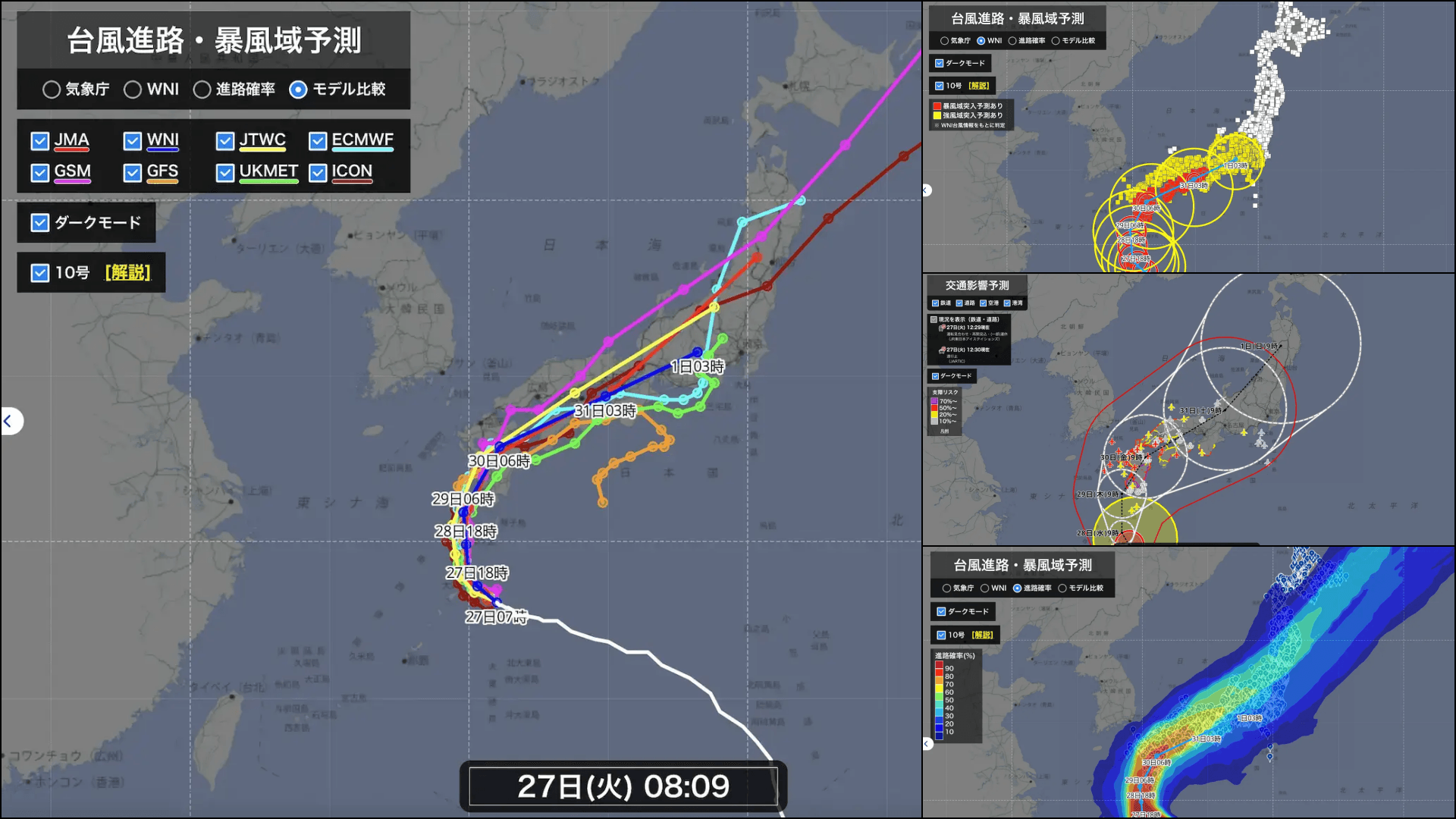
Under Japan's Meteorological Service Act, typhoon track forecasts disseminated through public channels—such as television, newspapers, or public websites—must be based exclusively on Japan Meteorological Agency (JMA) information. This regulation exists to prevent confusion during disaster situations and ensure consistent public messaging. Within this regulatory framework, Weathernews operates in full compliance with the law while providing our proprietary typhoon forecasts to specific users through private, subscription-based channels.
Our mission is to deliver highly accurate, actionable weather information that enables better decision-making for each user's unique needs. Weathernews remains committed to advancing typhoon forecast accuracy and contributing to a more resilient and sustainable society.
Footnotes
- 1:AI Predicts Torrential Rain Occurrence :2,500 Cameras Monitor Sudden Weather Changes ↩︎
- 2:Download the Weathernews app here ↩︎
- 3:Professional weather services for business ↩︎
Share
March 13, 2026
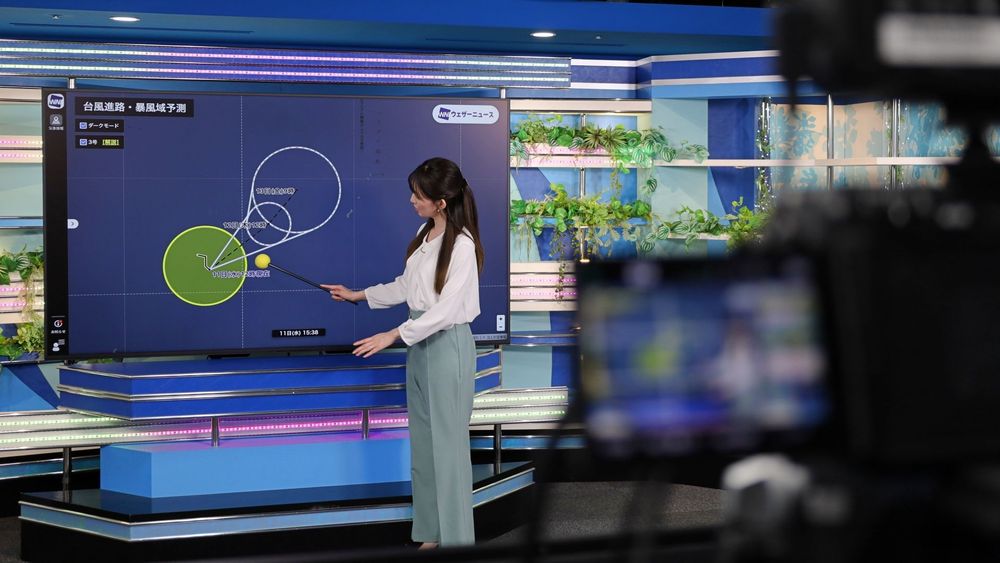
How TV Stations Are Transforming Weather Coverage A New Content Solution Helping Broadcasters Navigate Weather and Disaster Reporting
March 6, 2026
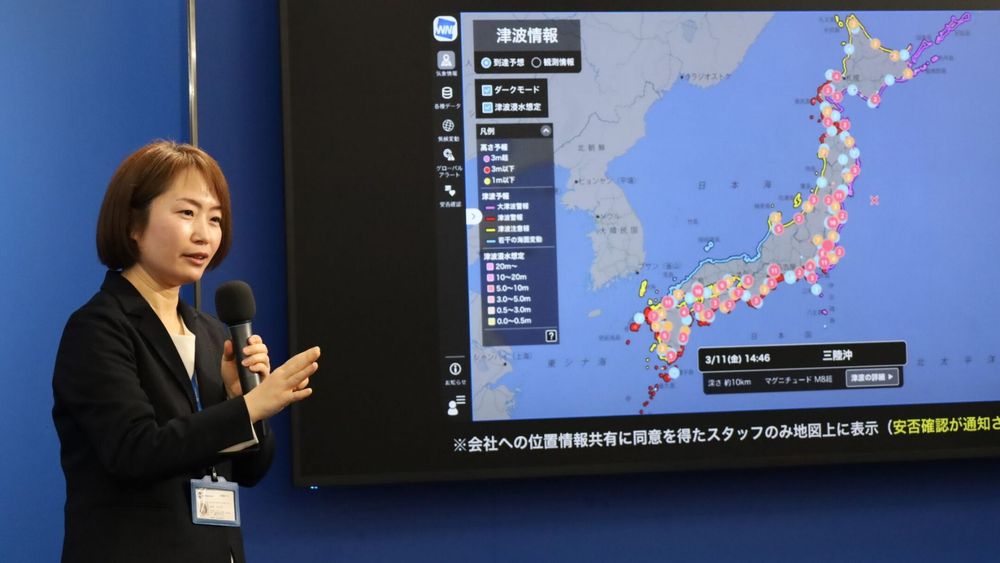
Weathernews Launches Comprehensive BCP Service: Emergency Confirmation Powered by Weather Expertise

March 6, 2026
Taking on Japan's Most Widespread Health Challenge with Data and Passion: Why Weathernews Continues to Strengthen Its Pollen Information and the Commitment Behind It